
How Much Does Storage Cost? A 2026 Pricing Guide
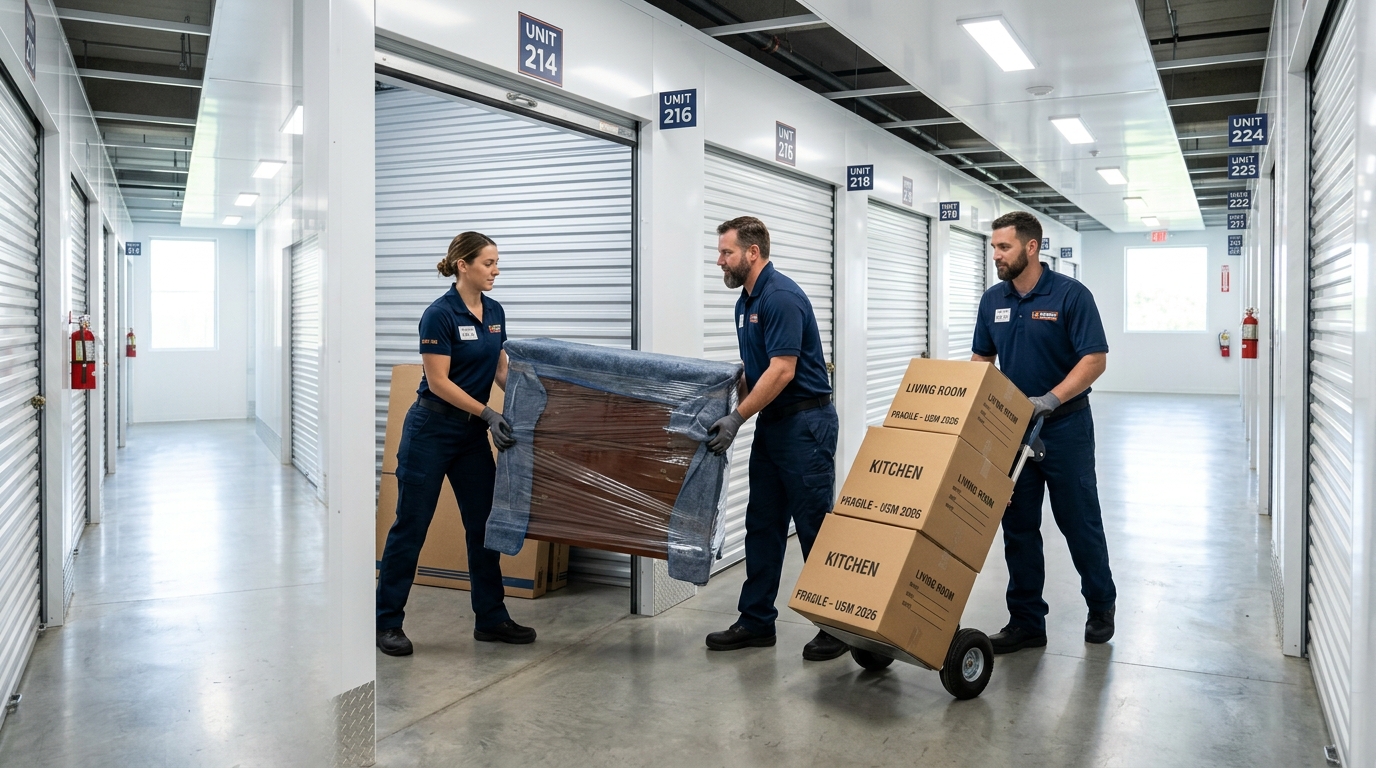
If you are asking yourself, «how much does storage cost» for an upcoming move or a house project, you are not alone. Storage prices vary widely depending on unit size, location, climate control, access, and how long you plan to rent the space. Without a clear guide, it is easy to underestimate your monthly storage cost or choose the wrong setup for your needs.
This 2026 pricing guide from Atlas Route Moving breaks down typical storage unit prices, what affects storage unit cost by size, how climate-controlled storage changes the bill, and what to consider for short-term versus long-term storage. You will also find realistic ways to save money without putting your belongings at risk.
Whether you are between homes, downsizing, remodeling, or relocating to another state, understanding self storage pricing helps you plan a realistic budget and choose between a do-it-yourself storage unit and a professional moving and storage solution. Throughout this guide, we will also highlight where Atlas Route Moving can step in with coordinated moving and storage services so you can manage your entire relocation with one organized team.
Use this guide as a field manual: reference the tables, compare options, and create a plan that fits your timeline, budget, and household or office inventory.
Key takeaways
- Most small storage units (5×5, 5×10) range from roughly the cost of a cell phone bill to a full utility bill per month in 2026, depending on location and climate control.
- Mid-size units (10×10, 10×15) that fit typical apartment or small home contents usually make up the bulk of storage budgets and are where climate-control premiums matter most.
- Climate-controlled storage often adds a noticeable monthly premium but can prevent damage to furniture, electronics, and documents over longer stays.
- Short-term storage (under 3 months) is about monthly price and access; long-term storage (6–12+ months) is more about discounts, protection, and location stability.
- You can lower monthly storage cost by choosing the right size, packing efficiently, sharing larger units, and bundling with professional moving and storage services.
- Access rules, insurance, late fees, and required locks or admin charges can add to the headline price; always compare total monthly cost, not just the advertised base rate.
- Coordinating moving crews, transportation, and storage through one company such as Atlas Route Moving often reduces surprises and saves time and effort.
How storage pricing works in 2026
Before you compare specific storage unit prices, it helps to understand how most storage providers structure their fees. Although every facility is slightly different, a few patterns are consistent across the industry.
Common elements of storage pricing
- Base monthly rate: The advertised price for a specific unit size and type (standard or climate-controlled).
- Promotional discounts: Introductory offers such as first month free or reduced rates for the first 2–3 months.
- Administrative or setup fees: One-time fees to open your account, process paperwork, or set up gate access.
- Required lock and supplies: Some facilities sell locks or basic supplies on-site; others let you bring your own.
- Insurance or protection plan: Optional or sometimes required coverage for your stored items, separate from any homeowners or renters policy.
- Late fees and access fees: Charges if payment is late or for special access outside normal hours (varies by facility).
When you ask, «how much does storage cost» for a specific move, you want to add all of these elements together, not just the monthly headline price.
Why prices vary between facilities
Even within the same city, storage unit cost by size can vary because of:
- Location demand: High-demand urban areas or college towns often charge more than suburban or rural areas.
- Building type: Newer indoor, multi-level facilities with elevators and advanced security usually cost more than basic drive-up units.
- Security level: Gated access, cameras, and on-site staff may raise prices but can offer better peace of mind.
- Access hours: 24/7 access typically costs more than limited access.
- Seasonal demand: Summer and end-of-month periods are often pricier due to moving season.
Professional moving and storage services, such as those offered by Atlas Route Moving, bundle some of these cost factors differently: you pay for a flexible storage solution as part of an overall moving plan rather than as a stand-alone self-storage rental.
Average monthly storage cost by unit size
One of the clearest ways to think about storage unit prices is by size. The exact numbers in your area will vary, but understanding typical ranges helps you budget more accurately.
Below is a general 2026 snapshot of how monthly storage cost tends to scale with unit size in many U.S. markets for standard (non-climate-controlled) units.
| Typical Unit Size | Common Use | Relative Monthly Cost Range* |
|---|---|---|
| 5×5 (25 sq. ft.) | Small closet; boxes, seasonal items | Low |
| 5×10 (50 sq. ft.) | Studio / small 1-bedroom essentials | Low to moderate |
| 10×10 (100 sq. ft.) | 1–2 bedroom apartment contents | Moderate |
| 10×15 (150 sq. ft.) | 2–3 bedroom home, larger furniture | Moderate to high |
| 10×20 (200 sq. ft.) | 3+ bedroom home or small office | High |
| 10×30 (300 sq. ft.) | Large home, inventory, or combination use | Very high |
*Because storage unit prices fluctuate by market and time of year, this table focuses on relative cost levels rather than dollar amounts. For a more precise estimate tied to your move, it is helpful to talk with a moving consultant or use a moving cost calculator that includes storage.
Choosing the right size to control cost
Choosing the right unit size is one of the biggest levers you have over monthly storage cost. Too small, and you may need a second unit; too large, and you pay for empty space.
- Inventory first: Make a quick list of major items you plan to store (beds, dressers, sofa, appliances, boxes, office equipment).
- Use a sizing guide: Reference a tool like the Atlas Route Moving storage unit sizes guide to match your inventory to a recommended unit.
- Think vertical: Professional movers stack boxes and wrap furniture to take advantage of a unit’s height, which can let you rent a smaller footprint without sacrificing capacity.
If you are not sure which unit you need, Atlas Route Moving can help plan the right combination of moving and storage so you do not pay for space you will not use.
Climate-controlled vs. standard storage costs
Another major driver of how much storage costs is whether your unit is climate-controlled. Climate-controlled spaces are usually located inside larger buildings with regulated temperature and, in many cases, humidity management.
How climate control affects pricing
Climate-controlled units usually carry a premium over standard units because they use more energy, require more infrastructure, and are often in newer or upgraded facilities. However, they can be more cost-effective in the long run if they prevent damage to sensitive items.
| Type of Storage | Best For | Relative Cost Impact |
|---|---|---|
| Standard (non-climate) | Tools, patio furniture, some plastic bins, basic household items for short-term storage | Lowest monthly cost; more exposure to heat, cold, and humidity |
| Climate-controlled | Furniture, electronics, photos, artwork, documents, long-term storage | Higher monthly cost; better protection for sensitive items |
When climate control is worth the extra cost
In many climates across the United States, summers are hot and humid and winters can be very cold. These conditions can warp wood furniture, crack leather, damage electronics, and fade photographs over time.
Climate-controlled storage is usually worth the extra cost if:
- You plan to store items for more than 3–6 months.
- You are storing wood furniture, musical instruments, artwork, or electronics.
- Your storage location experiences extreme temperatures or humidity.
- You would be upset or financially impacted if your items warped, cracked, or molded.
Atlas Route Moving offers coordinated moving and storage solutions that can include climate-controlled options for customers who need higher protection levels. To decide whether climate control makes sense for your situation, review the detailed advice in the Atlas Route Moving climate-controlled storage guide and discuss your inventory with a moving specialist.
Short-term vs. long-term storage pricing
How long you plan to store items changes both your total cost and how you should think about the monthly rate.
Short-term storage (under 3 months)
Short-term storage is common when you are:
- Waiting for a new home to close or be built
- Doing a short renovation
- Staging a home for sale
- In between leases for a month or two
In this case, the most important pricing factors usually are:
- Move-in and move-out timing: Some facilities charge a full month even if you only use part of it. Others prorate.
- Setup and admin fees: If you only need storage for 4–8 weeks, a high one-time admin fee can make a big difference.
- Access and convenience: Paying slightly more to be closer to your new or old home might save you multiple trips and truck rentals.
Long-term storage (6–12+ months)
Long-term storage is more common for:
- Extended relocations
- Downsizing and keeping heirlooms
- Business inventory or records
- Military or overseas assignments
For long-term storage, your focus shifts to:
- Reliability and stability: You want a facility, and possibly a moving and storage company, that is likely to remain consistent.
- Discounts for length of stay: Some providers offer lower monthly storage cost for longer commitments or autopay.
- Protection and security: Over a year or more, climate control, security, and proper packing dramatically reduce the risk of loss or damage.
Atlas Route Moving routinely works with customers who need short-term and long-term storage integrated into their moving plans. Our consultants can help you weigh whether a stand-alone self-storage unit or a full moving-and-storage solution will be more cost-effective over your full timeline.
Key factors that affect how much storage costs
Beyond size and climate control, several other variables influence how much you actually pay each month.
| Cost Factor | How It Impacts Price | What to Watch For |
|---|---|---|
| Location | Urban, high-demand areas usually cost more than suburban or rural. | Balance driving distance with savings; remote locations may mean more trip time. |
| Unit type | Indoor, upper-floor, and drive-up units all price differently. | Drive-up is convenient but may be more exposed to temperature swings. |
| Access hours | 24/7 access may add a premium to monthly storage cost. | If you only visit a few times a year, you may not need 24/7 access. |
| Security features | More cameras, gates, and staff presence can increase prices. | Compare security level to the value of what you are storing. |
| Insurance / protection | Optional or required protection adds to monthly cost. | Check if your homeowners or renters insurance already covers storage. |
| Promotions and increases | Introductory rates may rise after a set period. | Ask what your rent will be after the promo period ends. |
When you talk with a storage provider or a moving company that offers storage, ask specific questions about each of these points. That is how you turn a generic «how much does storage cost» question into a detailed, accurate estimate for your situation.
How to estimate your storage cost step by step
Here is a simple process you can use to estimate self storage pricing or combined moving-and-storage costs before you make calls or request quotes.
Step 1: Clarify your inventory
- List large items (beds, sofas, appliances, desks).
- Estimate box count by room (for example, 6–10 boxes per bedroom, 10–15 for kitchen).
- Identify any extra-large or unusual items (pianos, safes, large artwork).
Step 2: Choose an approximate unit size
Use your inventory to choose a starting size. A quick rule of thumb:
- Studio / small 1-bedroom: consider 5×10 or 10×10.
- 1–2 bedroom apartment: often 10×10 or 10×15.
- 3+ bedroom home: often 10×20 or larger.
For more precise planning, you can reference the Atlas Route Moving storage unit sizes guide or consult a moving specialist.
Step 3: Decide on standard vs. climate-controlled
Ask these questions:
- Will you store for more than 3–6 months?
- Are you storing furniture, electronics, instruments, or important documents?
- Is your local climate very hot, cold, or humid?
If you answer yes to two or more of these, climate-controlled storage is likely worth the additional monthly storage cost.
Step 4: Estimate how many months you will store
Be realistic. If you think you might need storage for 2–3 months, it can be safer to assume 4–6 months for budgeting, especially if your housing or renovation schedule could shift.
Step 5: Compare pricing structures
When you reach out for quotes, ask each provider to clarify:
- Base monthly rate for your size and type of unit
- Introductory promotions and when they end
- Admin or setup fees
- Required insurance or optional coverage costs
- Any move-in or move-out fees
As you speak with each provider, write the numbers into a simple comparison table like the one below:
| Provider | Unit Size / Type | Total Estimated Monthly Cost* |
|---|---|---|
| Self-storage A | 10×10 standard | Base + insurance + taxes |
| Self-storage B | 10×10 climate-controlled | Base + insurance + any fees |
| Moving & storage provider | Container or vault storage | Storage + handling + transportation |
*This table is for comparison structure only; fill it in with your actual price quotes.
Atlas Route Moving can provide a single, organized quote that includes packing, transportation, and storage services, so you can compare that to renting a self-storage unit and handling all the logistics yourself.
Ways to save on storage without risking your items
Lowering your monthly storage cost should not mean putting your belongings in a risky situation. These strategies can help you reduce self storage pricing while still protecting your items.
Right-size your unit
- Declutter before you store; do not pay monthly to store items you will donate later.
- Use uniform boxes so they stack efficiently.
- Break down bed frames and tables where safe and practical.
- Ask movers to stack items vertically and safely to use full unit height.
Share a larger unit
For some families or small businesses, sharing a bigger unit with a trusted friend or partner can lower per-person costs. Make sure you clearly agree on:
- Who is responsible for the contract and payments
- How the space is divided
- What happens if one party needs out earlier
Leverage bundled services
When you work with a moving company that also provides storage, you may get:
- Reduced or combined handling fees
- More efficient loading and unloading
- Fewer truck rentals or trips
- Consolidated billing and scheduling
Atlas Route Moving, for example, can coordinate your packing, moving, and storage from door to door. This can be especially cost-effective if you are already hiring movers for a local or long-distance relocation.
Ask about long-term or autopay discounts
Some facilities and moving-and-storage providers offer:
- Discounts for prepaying several months in advance
- Reduced rates for 6- or 12-month commitments
- Small discounts for autopay enrollments
Sample wording to ask by phone or email:
«I expect to store my belongings for at least 9–12 months. Do you offer any long-term or autopay discounts that would reduce my monthly storage cost over that period?»
Comparing self storage vs. moving-and-storage services
Another way to think about how much storage costs is to compare traditional self-storage units with full moving-and-storage solutions from a company like Atlas Route Moving.
| Option | What You Handle | Cost Considerations |
|---|---|---|
| Traditional self storage | You rent the unit, move items in and out, and manage packing and transport. | Lower unit price, but you pay separately for trucks, fuel, labor, and multiple trips. |
| Moving-and-storage service | Movers pack, transport, and place items into secure storage, then deliver to your new location. | Higher combined service cost, but fewer separate rentals and better coordination; strong value for busy households and long-distance moves. |
Self storage may be best if you:
- Are on a tight budget and can handle the heavy lifting yourself.
- Live very close to the facility and expect to access items frequently.
- Have minimal furniture and mostly boxed items.
Moving-and-storage services may be better if you:
- Have a full household or office to relocate.
- Are moving long distance or across state lines.
- Prefer professionals to handle packing, loading, and unloading.
- Want one organized plan for moving and storing your belongings.
If you are unsure which option is more cost-effective, you can request estimates for both approaches and compare the total expense, including your time and any extra rentals. The moving services pages on the Atlas Route Moving website outline how storage can be integrated into local and long-distance moves.
How to prepare items for storage to avoid extra costs
Good preparation not only protects your belongings but can also reduce your required storage size and minimize surprises.
Pre-storage checklist
- Sort belongings into store, donate, recycle, and discard piles.
- Clean and dry appliances thoroughly to prevent odors and mold.
- Disassemble large furniture when practical (beds, tables, shelves).
- Use sturdy boxes and label all sides clearly by room and contents.
- Wrap delicate items in bubble wrap or paper; use moving blankets for furniture.
- Plan an aisle inside the unit for safe access without restacking everything.
Avoiding common packing mistakes
| Common Mistake | Potential Problem | Better Approach |
|---|---|---|
| Using weak, mismatched boxes | Boxes collapse, wasting space and risking damage. | Use strong, similarly sized boxes that stack well. |
| Packing heavy items in large boxes | Boxes are hard to move and may break. | Use small boxes for books and heavy items; large boxes for lighter items. |
| Not protecting furniture | Scratches, dust, or moisture damage during storage. | Use moving blankets and plastic wrap around vulnerable surfaces. |
| Overfilling the unit to the door | Difficult or unsafe to access anything inside. | Leave a small aisle and keep labels visible. |
Professional movers from Atlas Route Moving can handle packing and loading in a way that maximizes your space and minimizes risk. If you prefer to pack yourself but want professional help for fragile items, consider partial full-service moving support combined with storage.
Questions to ask before you book storage
Before you sign any storage agreement or moving-and-storage contract, ask clear questions about pricing, rules, and protection. Here are some good starting points:
- What is the full monthly cost of this unit, including taxes and required fees?
- Are there any introductory rates? If so, what will the rate be after the promotion ends?
- Is insurance or a protection plan required? What does it cover?
- What are your access hours, and is there any charge for off-hours access?
- How are payments handled? Are there late fees or automatic rent increases?
- Do you prorate rent for move-in or move-out, or do you charge by full calendar month?
- What security measures are in place (gates, cameras, staff, lighting)?
- Are there any limits on what I can store (for example, liquids, food, vehicles)?
Sample wording for email or phone:
«I am planning to store the contents of a two-bedroom apartment for about six months. Could you walk me through the total monthly storage cost, including any required fees or insurance, and let me know how often rates typically change?»
What to keep with you instead of in storage
Regardless of how much storage costs, some items simply should not go into a unit because of safety, legal, or practical reasons.
Keep these items with you:
- Passports, birth certificates, Social Security cards, and other vital documents
- Cash, jewelry, and small valuables
- Medications and medical devices you may need quickly
- Irreplaceable family photos or digital backups
- Important work files or laptops
- Keys, remote controls, and essential moving documents
Many storage agreements also restrict storing:
- Perishable food
- Flammable or hazardous materials (paint, gasoline, chemicals)
- Live plants or animals
Keeping essentials with you helps avoid extra trips, emergency access needs, or the stress of not knowing exactly where critical items are during your move or renovation.
How Atlas Route Moving can help with storage
When you work with Atlas Route Moving, storage is not an afterthought. It is part of a coordinated moving plan designed around your timeline, budget, and inventory. Instead of juggling multiple vendors and schedules, you can rely on one organized team to handle:
- Professional packing and labeling of your items
- Careful loading and transport to storage
- Secure storage services suited to your inventory and duration
- Delivery and placement of your belongings in your new home or office
This approach can be especially helpful if you are:
- Moving long-distance or interstate
- Relocating on a tight timeline
- Downsizing or renovating and need flexible storage dates
- Balancing work, family, and relocation tasks
Helpful Atlas Route Moving services
To see how a coordinated plan could affect your total moving and storage budget, you can explore Atlas Route Moving’s service areas, review detailed moving guides on the Atlas Route Moving blog, and then connect with our team for a personalized estimate.
Frequently asked questions
How much does a small storage unit typically cost each month?
Small units such as 5×5 or 5×10 are usually at the lower end of monthly storage cost ranges. Exact prices depend on your city, whether you choose standard or climate-controlled storage, and any promotions or fees. They tend to be comparable to a modest monthly utility bill in many markets.
Is climate-controlled storage worth the extra cost?
Climate-controlled units usually cost more, but they can be worth it for long-term storage or for sensitive items such as furniture, electronics, instruments, or important documents. In hot, cold, or humid climates, the added protection often outweighs the extra monthly cost.
How long should I plan to rent storage during a move?
It depends on your situation. Many customers use storage for one to three months between homes, while others store for six months or longer during renovations or relocations. When budgeting, it is wise to add some buffer time in case closing dates or project schedules change.
Do storage prices include insurance for my belongings?
Not always. Some storage facilities offer or require a protection plan, while others expect you to rely on your homeowners or renters insurance. Always ask what is covered, what is excluded, and whether coverage limits match the value of what you are storing.
Can I save money by renting a larger unit and sharing it?
Sharing a larger unit with a trusted person can reduce your individual monthly cost if the arrangement is clear and both parties are reliable. Make sure you agree on payments, access, and how to handle changes before you sign.
What is the difference between self storage and moving-and-storage services?
With self storage, you rent a unit and handle packing, transportation, and access yourself. With moving-and-storage services, a moving company such as Atlas Route Moving packs, transports, stores, and then delivers your belongings as part of a coordinated plan. The combined service cost can be higher than a bare storage unit but may save time, effort, and extra rentals.
How do I choose the right storage unit size?
Start with your inventory and match it to typical size recommendations, such as 5×10 or 10×10 for smaller households and 10×15 or 10×20 for larger homes. Guides like the Atlas Route Moving storage unit sizes guide are helpful, and a moving consultant can provide a more precise recommendation based on your specific items.
Can I access my stored items whenever I want?
Access rules depend on the facility or service. Many self-storage locations offer extended or 24/7 access, while some moving-and-storage solutions provide access by appointment. Always confirm access hours and any related fees before renting.
What fees should I watch for besides the monthly rate?
Ask about administrative or setup fees, lock or supply costs, required insurance, late fees, rate increases after introductory periods, and any move-in or move-out charges. These can significantly change your true monthly storage cost.
How can Atlas Route Moving help me manage storage costs?
Atlas Route Moving can help you right-size your storage plan, choose between standard and climate-controlled options, and bundle storage with packing and moving services. By coordinating everything through one licensed, insured provider, you can reduce surprises and better control your total relocation budget.
Related moving guides
Sources referenced in this guide
For this 2026 storage pricing guide, Atlas Route Moving draws on:
- Industry practices and rate structures commonly used by U.S. self-storage providers
- Federal Motor Carrier Safety Administration consumer guidance about interstate moving and storage responsibilities
- U.S. Department of Transportation moving guidance regarding carrier responsibilities and documentation
- Typical building management move-in and move-out requirements for residential and commercial properties
- Standard moving and storage contracts, including written estimates, bills of lading, and storage agreements
- Common carrier tariffs, valuation options, and service-level terms used in professional moving and storage
These resources, combined with Atlas Route Moving’s hands-on experience coordinating moves and storage for U.S. households and businesses, inform the practical recommendations in this guide.
If you are planning a move and want help translating this guidance into a specific plan for your home or office, you can review Atlas Route Moving’s storage services, explore our service areas, and request a free moving quote tailored to your timeline and budget.
This guide is general moving information, not legal, insurance, or regulatory advice. Moving requirements, pricing, access rules, and coverage options may vary by location, move type, building rules, and service agreement.