
How to Choose a Long-Distance Moving Company
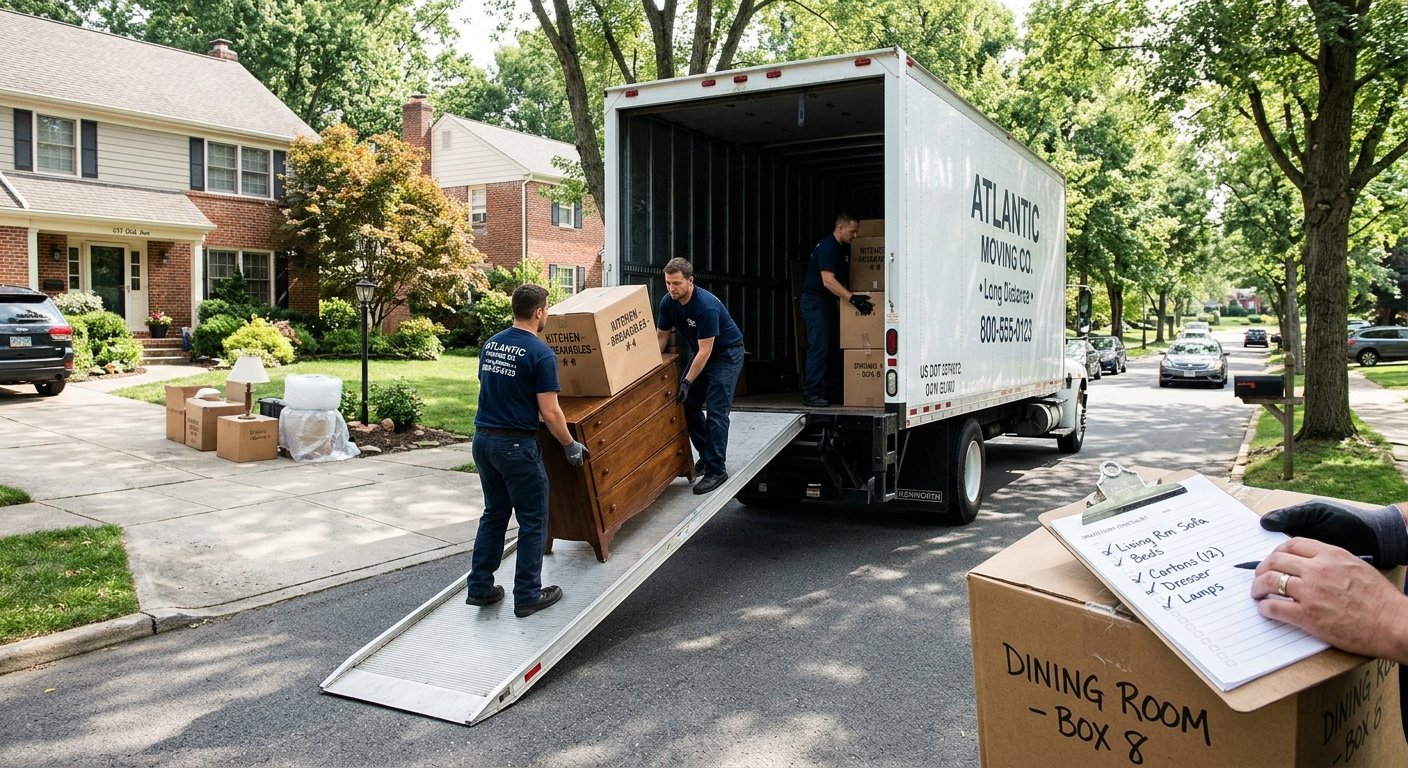
You only move across the country a few times in your life, so choosing the wrong mover can be an expensive mistake. The most reliable way to choose a long distance moving company is to check their federal license, understand their estimate in writing, and look closely at how they communicate before you sign anything.
What makes a long-distance mover legit?
For a move that crosses state lines, your mover is an interstate household goods carrier. That matters because federal rules apply.
A legitimate long-distance mover will:
- Have a valid USDOT number and, for interstate moves, an FMCSA operating authority.
- Use written estimates, not prices given only over the phone or text.
- Give you the required federal booklets and disclosures about your rights and responsibilities.
- List a real business address and working phone number.
- Explain how they charge for weight, distance, and extra services in plain language.
If any of those pieces are missing, slow down. You may be looking at a broker that will resell your move, or worse, a scammer.
Step 1: Build a smart shortlist (before you dive into details)
Don’t start by hunting for the “best long distance movers” nationwide. Focus on finding 3–5 companies that actually serve your route and pass a basic smell test.
As you collect names, quickly screen out companies that:
- Won’t visit your home or do a video survey but promise a “guaranteed” price anyway.
- Refuse to email you anything in writing.
- Only advertise with vague claims like “nationwide movers” and no real company details.
- Ask for a large cash, Zelle or wire deposit just to hold a date.
When you have a few that seem serious, you’re ready to vet them properly.
Step 2: Verify their USDOT and FMCSA license
Any company that moves household goods across state lines must be registered with the U.S. Department of Transportation and the Federal Motor Carrier Safety Administration (FMCSA).
Here’s how to vet a long distance mover at the federal level:
-
Ask for their USDOT number and business name as registered.
If they won’t give it to you, that’s a deal-breaker. -
Look them up in the FMCSA database.
Confirm that:- Status is active (not inactive or out of service).
- They are authorized for “interstate” or “interstate & intrastate” household goods.
- The business name matches what’s on their website and paperwork (watch for multiple unrelated names).
-
Check complaint and safety history in the same system.
A few complaints over many years isn’t unusual; a pattern of the same issue is a warning sign.
If you’re unsure how to read the FMCSA information, ask the company to walk you through it. A good mover won’t be offended—this is basic due diligence for any interstate move.
Step 3: Understand the type of estimate they’re offering
The estimate is where most money problems start. You want to know how your price can change, not just the starting number.
For interstate moves, you’ll usually see one of these:
- Binding estimate – A flat price based on a detailed inventory and services listed. If you don’t add items or services, the price should not go up.
- Non-binding estimate – An educated guess. Final charges are based on actual weight and services. The initial estimate can go up or down.
- Binding not-to-exceed (sometimes called “guaranteed not to exceed”) – You pay the lower of the estimated amount or the actual charges. If the shipment weighs less, you pay less; if it weighs more, your cost is capped.
No matter which you choose, your estimate should be in writing and include:
- Your name and both addresses (origin and destination).
- Pickup and delivery window (even if it’s a range, it should be stated).
- Itemized inventory list or clear description of what’s being moved.
- All access details that might affect price: stairs, elevator, long carry, parking limitations, shuttles, etc.
- Which services are included (packing, unpacking, disassembly, crating, storage, etc.).
- Any potential extra fees and how they are calculated.
If the company won’t label the estimate as binding, non-binding, or not-to-exceed, or they only send a one-line “quote,” that’s a red flag.
Step 4: Insist on a real home or video survey
Reputable long distance movers base their estimates on a visual survey of what you’re moving, either in person or by live video.
During that survey, the mover should:
- Walk room by room, opening closets and storage areas.
- Note large or fragile items that need special handling.
- Ask what you’re donating, selling, or leaving behind.
- Ask about building rules, stairwells, service elevators, loading docks or gated entries.
If someone gives you a “guaranteed” price based only on your own list or a short phone call, they’re likely underbidding to win the job and planning to raise the price later.
Step 5: Read reviews with a skeptical eye
Reviews are helpful, but they aren’t the whole story. Look for patterns, not perfection.
As you scan reviews, pay attention to:
- Recent feedback – Ownership and crews change. Prioritize reviews from the last 6–12 months.
- How the company responds – Do they explain and offer solutions, or blame the customer?
- Specific details – Useful reviews mention weight estimates, delivery windows, final price vs. quote, and how claims were handled.
Be cautious if you see many complaints about:
- Final price being much higher than the estimate, with little explanation.
- Long delivery delays with poor communication.
- Items held “hostage” until extra money is paid.
No mover will have a 100% perfect record, but a trustworthy company will show consistent, reasonable behavior over time.
Step 6: Watch for these red flags
Most long-distance moving horror stories involve the same warning signs. Walk away if you see any of the following:
- Very large up-front deposits or requests for cash, wire, or app payments before anyone has visited your home or done a video survey.
- No physical address on the website, or only a P.O. box.
- Multiple business names that don’t match across the website, email signature, and contract.
- Pressure tactics like “you must book today to keep this low rate.”
- Refusal to provide a copy of the estimate and contract for you to review in advance.
- Vague or evasive answers about licensing, insurance, or who will actually perform the move.
There are many qualified interstate movers out there. You don’t need to gamble on a company that feels even slightly off.
Step 7: Ask these questions before you book
Use this quick checklist of questions to compare companies side by side. Take notes on each mover’s answers.
- Licensing and role
- Are you a carrier, a broker, or both? If you’re a broker, who will actually move my belongings?
- What is your USDOT number and the exact company name on file?
- Estimate and pricing
- Is this estimate binding, non-binding, or not-to-exceed?
- What could cause my price to change on moving day?
- How do you charge for stairs, long carries, shuttles, parking problems, and extra packing?
- Timing and logistics
- What pickup and delivery window can you realistically commit to?
- Will my shipment be transferred to another truck or company along the way?
- What happens if weather, road closures, or other delays affect delivery?
- Protection and claims
- What valuation options do you offer, and what do they actually cover?
- How does your claims process work if something is damaged or missing?
- Crew and service
- Will the crew who loads my shipment also be the crew who delivers it?
- Do you use temporary labor at either end, and if so, how are they supervised?
You’re not being difficult by asking these questions. You’re protecting everything you own.
Step 8: Compare more than just price
Once you have 2–3 written estimates, line them up and compare:
- Scope – Are they all moving the same items and providing the same services? A cheaper quote may leave out packing, stairs, or shuttles.
- Estimate type – A slightly higher binding not-to-exceed estimate may be safer than a low non-binding estimate.
- Timing – One mover may offer a tighter delivery window or more realistic schedule.
- Communication – Who has answered your questions clearly and quickly so far?
It’s reasonable to choose a mover that isn’t the absolute lowest price if they’re more transparent and reliable. You’re paying for the outcome, not the quote.
Step 9: Read the paperwork before you sign
Before you reserve your dates, carefully review:
- The estimate – Check that everything you discussed is listed, including packing, special handling, and known access issues.
- Bill of lading / order for service – This is the contract that governs your move. Make sure names, addresses, dates, and estimate type are correct.
- Valuation election – Confirm which level of protection you are choosing and what it means in dollars if something is damaged.
- Claims and dispute language – Understand how quickly you must report problems and how the process works.
If you don’t understand a clause, ask the company to explain it in simple terms. If they brush you off or say “everyone signs that,” consider it a warning.
A simple interstate mover checklist
Use this quick checklist as you decide how to choose a long distance moving company:
- ✅ I confirmed the mover’s USDOT number and FMCSA authority are active.
- ✅ I know whether they are a carrier, broker, or both.
- ✅ They did an in-home or live video survey of my belongings.
- ✅ I received a written estimate marked binding, non-binding, or not-to-exceed.
- ✅ All likely extra charges and access issues are listed in the estimate.
- ✅ I reviewed recent, detailed reviews and looked for patterns.
- ✅ I asked key questions about timing, valuation, and claims.
- ✅ I read the contract and understand what could change the price.
- ✅ I’m comfortable with how the company communicates and answers concerns.
When to consider a different mover
If you’re feeling uneasy about a company but can’t quite say why, ask yourself:
- Are they avoiding specifics about who will handle my move?
- Is the quote much lower than others, with less detail?
- Have they added surprise fees already, before moving day?
- Have they been slow or inconsistent in replying to basic questions?
If the answer to any of these is “yes,” it’s worth getting one more quote from a mover that is clear and straightforward. The company you choose will have your belongings for days or weeks—your comfort with them matters.
How Atlas Route Moving can fit into your search
If you’re comparing options for an interstate move, Atlas Route Moving can be one of the companies on your shortlist. You can review their long-distance moving services and then apply the same checklist from this guide: ask for licensing details, a clear survey, and a written estimate that matches the work you need.
Whether you choose Atlas Route Moving or another provider, the process above will help you move forward with confidence instead of guesswork.
Related moving guides
Frequently asked questions
How many long-distance moving quotes should I get?
For an interstate move, it’s smart to get written estimates from at least two, and ideally three, different movers. This gives you a realistic price range and helps you see which company explains their services and terms most clearly. If one quote is much lower than the others without a good explanation, treat that as a warning sign, not a bargain.
Is it better to choose a broker or a carrier for a long-distance move?
A carrier is the company that actually owns or operates the trucks and employs the crews that move your belongings. A broker arranges your move and hires carriers on your behalf. Neither is automatically good or bad, but you should always know which you are dealing with and who will be responsible for your shipment. Many people prefer working directly with a carrier so there are fewer handoffs and less confusion about who to call if issues come up.
What is a reasonable deposit for a long-distance mover?
Policies vary, but reputable interstate movers usually do not ask for a large nonrefundable cash or wire deposit before they have done a proper survey and provided a written estimate. Some may request a small deposit or credit card hold to reserve your date. Be wary of companies that demand a high up-front payment, insist on cash or wire, or pressure you to pay before you have seen and signed the contract.
Can my long-distance moving price change after I sign a binding estimate?
A true binding estimate should not increase as long as you do not add items or services and access conditions do not change from what was described in the estimate. If you decide to ship more items, request extra packing, or the crew runs into unexpected obstacles such as new stair flights or very long carries, additional charges may apply. The key is that any reasons for a price change should be clearly listed in the written estimate and contract.
How far in advance should I book a long-distance mover?
For most interstate moves, aiming to book a mover 6 to 8 weeks before your preferred pickup date gives you time to gather quotes, compare them, and secure your choice. If you are moving during peak season, such as summer or the end of the month, it can help to start even earlier. Last-minute bookings are sometimes possible, but your options may be limited and pricing less flexible.