
How to Move a Refrigerator Safely
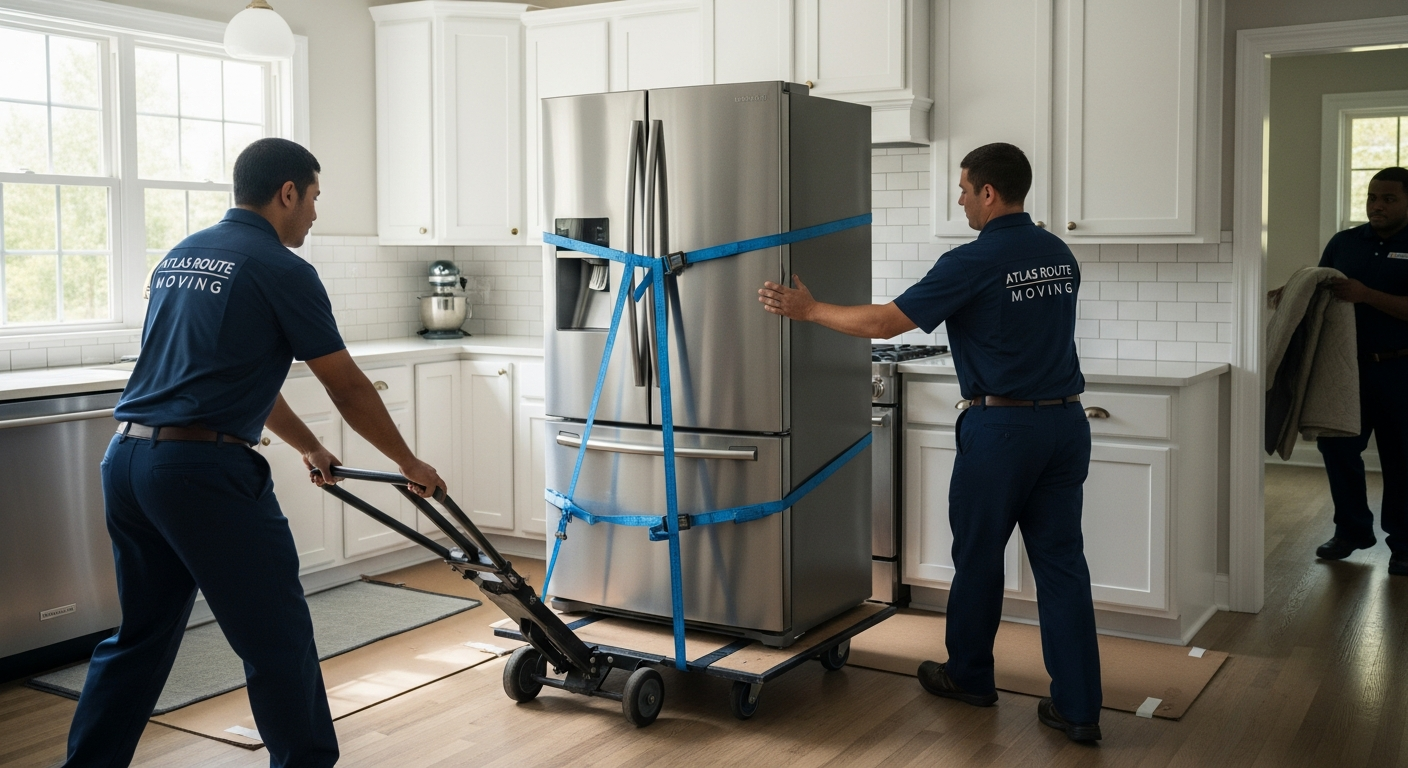
Moving a refrigerator is one of the trickiest parts of any home or apartment move. Fridges are heavy, awkward, and expensive, and if they are tipped or handled incorrectly, they can be damaged internally in ways you may not notice until days later. Add in water lines, ice makers, and the need to defrost a refrigerator for moving, and it becomes a project that deserves a careful plan.
This guide walks through exactly how to move a refrigerator safely from a mover's perspective. You will learn when to unplug and defrost, how to protect floors and walls, how to strap the fridge to a dolly, what angle to use, how long your refrigerator should stand upright before you plug it back in, and when it makes sense to call in professional help.
Whether you are moving a fridge across the kitchen, down the hall, into storage, or to a new home across town, these fridge moving tips will help you avoid leaks, dents, and internal damage. We will also explain how Atlas Route Moving can handle the heavy lifting as part of our local moving services if you decide you would rather not tackle this job on your own.
Use this article as a step-by-step checklist before moving day so that your refrigerator arrives clean, dry, upright, and ready to cool again once you are settled in.
Key takeaways
- Unplug and defrost your refrigerator at least 24 hours before moving to prevent leaks, odors, and mold.
- Measure the fridge, doorways, and stairwells in advance and plan a clear, protected path with floor and wall coverings.
- Secure shelves, drawers, doors, and loose parts before you tilt or move the appliance to avoid internal damage.
- Keep the refrigerator upright during the move and during loading; if it must be tilted, allow extra upright rest time before powering it on.
- Use a quality appliance dolly with straps, tilt the fridge only slightly, and move slowly with at least two adults.
- Wait 4–24 hours after delivery (depending on how it was transported) before plugging the fridge back in so oil and refrigerant can settle.
- Consider professional movers for tight spaces, stairs, very large fridges, or when your building has strict move-in/move-out rules.
Why refrigerators are different from other heavy items
When you think about how to move a refrigerator, it may be tempting to treat it like any other heavy piece of furniture. In reality, moving a fridge combines two challenges: it is both a large, awkward object and a sensitive appliance filled with delicate components and fluids.
Inside your refrigerator are:
- A compressor that pumps refrigerant
- Cooling coils and delicate lines
- Fans, electronic control boards, and sensors
- Insulation and door seals that must remain aligned
If a refrigerator is laid flat, dropped, or badly jolted, compressor oil and refrigerant can move into places they do not belong. That can lead to poor cooling performance, strange noises, or a complete breakdown days or weeks after the move.
Other reasons moving a fridge is different from moving a dresser or sofa:
- It contains water (defrost drains, ice makers, water dispensers) that can leak during transit if not properly drained.
- It needs defrosting time before moving and upright rest time after.
- It can easily damage floors, door frames, and walls if you do not protect them.
- It often requires more than one person and a specialized appliance dolly.
Because of these factors, professional movers approach fridge moves with a set plan, extra padding, and clear communication before moving day. This guide helps you replicate that level of planning, even if you are attempting a partial DIY approach.
Planning and measuring before you move a fridge
Planning is the single most important part of moving a refrigerator safely. Before you unplug anything, confirm that the fridge can physically travel from its current location to your front door and into its new location without forcing, scraping, or hazardous tilting.
Step 1: Measure your refrigerator
Use a tape measure and write down the:
- Height
- Width
- Depth (including handles)
Be sure to include door handles and any protruding parts. Many people measure only the body of the fridge and then discover the handles make it too wide to pass through a doorway.
Step 2: Measure doorways, hallways, and stairs
Measure all relevant spaces between the fridge's starting point and the truck or building exit:
- Kitchen doorway and any nearby openings
- Hallways and turns
- Stairwells, including headroom clearance
- Elevator cab door width and interior depth (for apartments or condos)
- Front door or garage door
Write these down side-by-side with the fridge measurements and mark the tightest spots.
| Item to measure | What to record | Why it matters |
|---|---|---|
| Refrigerator dimensions | Height, width, depth (with handles) | Confirms if it can clear openings and turns. |
| Doorways | Width at narrowest point | Ensures the fridge can pass without forcing. |
| Hallway corners | Width and turning radius | Prevents getting stuck at turns. |
| Stairs / elevators | Width, depth, headroom, railings | Determines if a different route is needed. |
Step 3: Plan your path and protections
Once measurements are confirmed, walk the exact path the refrigerator will take and visualize each step:
- Remove rugs, runners, or clutter.
- Protect hardwood, tile, or vinyl with moving blankets, cardboard sheets, or floor runners.
- Protect door frames and walls at tight turns with pads or towels.
- Confirm where the dolly will be positioned and how it will be turned at each corner.
"Our refrigerator will go straight from the kitchen into the hallway, then turn left to the front door. We'll lay down cardboard along that route and pad the door frames at the hallway and entry door."
If anything looks too tight or risky, this is the time to consider removing doors (either the refrigerator doors or the room/entry doors) or scheduling professional local movers who can bring specialty equipment and extra hands.
How to defrost and clean a refrigerator for moving
One of the most important parts of learning how to move a refrigerator is understanding defrost timing. Moving a fridge that is still full of frost and ice can lead to water leaks, odors, and mold during or after the move.
When to unplug and defrost a refrigerator for moving
A good rule of thumb is to unplug and defrost your fridge at least 24 hours before moving. For very thick ice buildup or older freezers, 24–48 hours is even better.
| Fridge condition | Recommended unplug time before move | Notes |
|---|---|---|
| Newer frost-free fridge | 12–24 hours | Usually minimal ice; still allow time for drying. |
| Standard fridge/freezer with light frost | 24 hours | Most common recommendation for moving a fridge. |
| Heavy ice buildup or chest freezer | 24–48 hours | May require extra time and towels for melting ice. |
Defrosting steps
- Empty food. Use up, donate, or discard perishables. Place any items you are keeping in coolers with ice packs.
- Unplug the refrigerator. Pull the plug from the wall and secure the cord out of the way.
- Open doors. Prop doors open slightly to allow warm air to circulate and ice to melt faster.
- Capture water. Place towels at the base of the fridge and, if applicable, remove or empty the defrost drain pan.
- Speed up defrost (optional). You can place bowls of warm water on shelves to help loosen ice more quickly.
Never use sharp tools like knives or screwdrivers to chip ice; you can easily puncture the interior lining or damage coils.
Cleaning to prevent odors and mold
Once all ice has melted and the interior is at room temperature, clean the inside thoroughly. This is especially important if the fridge will be stored or transported for more than a day.
- Remove shelves, bins, and drawers and wash them with warm soapy water.
- Wipe interior walls and gaskets with a mild cleaner or a mix of water and baking soda.
- Dry everything completely with towels.
- Leave a box or small open container of baking soda inside to absorb residual odors.
"We unplugged and fully defrosted the refrigerator 24 hours before the movers arrived, cleaned all shelves and door seals, and left the doors slightly open overnight so the interior was dry and odor-free on moving day."
Disconnecting water lines and ice makers
Many modern refrigerators include an ice maker and water dispenser that are connected to your home's water supply. Safe appliance moving requires that these lines be properly shut off and disconnected before moving a fridge.
Shutting off the water supply
- Locate the shutoff valve for the refrigerator's water line. It may be behind the fridge, under the sink, in a nearby cabinet, or in the basement.
- Turn the valve clockwise to shut it off.
- Dispense water and run the ice maker for a few moments to relieve pressure and empty remaining water.
Disconnecting the line
If you are comfortable doing so, you can disconnect the water line connection at the back of the fridge. Place a towel and a small container underneath to catch any residual drips.
If you are not experienced with plumbing connections, consider having a plumber or appliance technician disconnect the water line before moving day, or ask your movers in advance whether they handle this task.
Managing ice makers
- Turn off the ice maker using its switch or control panel.
- Empty the ice bin completely and dry it.
- Secure the bin and other loose parts with tape or packing materials.
Label the water line and small parts (nuts, clamps, brackets) in a plastic bag so they do not get lost during the move. Attach this bag to the refrigerator or place it in a clearly labeled "appliance parts" box.
Protecting, packing, and securing the refrigerator
Once your fridge is defrosted, dry, and disconnected from power and water, the next step in how to move a refrigerator safely is protecting it for transit. This means securing all moving parts and wrapping the exterior to prevent scratches and dents.
Securing interior components
- Remove glass shelves and drawers where possible and wrap them individually in bubble wrap or paper.
- If shelves are fixed or you prefer to leave them in place, secure them with painter's tape or stretch wrap so they cannot slide out.
- Secure door bins with tape or remove and pack them separately.
Place all smaller parts in a clearly labeled box: "Refrigerator shelves & parts" so they are easy to reassemble in your new home.
Securing refrigerator doors
For moving a fridge, it is critical that the doors do not swing open when you tilt or move the appliance.
- Wrap the doors closed with stretch wrap, going all the way around the unit several times.
- Alternatively, use moving straps or tape designed for appliances, making sure not to place tape directly on painted or stainless surfaces where it could leave residue.
Do not rely solely on the door handles to keep doors shut; they are not designed to hold the full weight of a swinging door during transit.
Padding and external protection
Professional movers typically use thick moving blankets and stretch wrap to create a padded shell around the fridge. You can mirror this approach:
- Place moving blankets over the front, sides, and top of the refrigerator.
- Secure blankets in place with stretch wrap or straps.
- Add extra protection in areas you know will be tight (door frames, narrow halls).
This helps prevent cosmetic damage to the appliance as well as walls and doors along the route.
Quick protection checklist
- All food removed and interior dry
- Glass shelves, drawers, and bins removed or secured
- Water lines and ice maker disconnected and drained
- Cord secured against the back of the fridge
- Doors strapped or wrapped shut
- Moving blankets and wrap around the exterior
Using a dolly and moving the refrigerator safely
An appliance dolly is essential when you move appliances like refrigerators, freezers, or washing machines. These dollies are heavy-duty, usually have straps, and include a wider base and sometimes stair rollers.
Choosing the right dolly
When moving a refrigerator, look for:
- A dolly rated for at least 600–800 lbs (many large fridges weigh 250–400+ lbs).
- Built-in straps to secure the fridge to the dolly.
- Large rubber wheels to protect floors and handle thresholds.
Loading the refrigerator onto the dolly safely
- Position the dolly on the side of the refrigerator, not at the front or back. This typically keeps the center of gravity more stable and fits through doorways more easily.
- With at least two adults, slightly tilt the fridge toward the dolly and slide the dolly's base plate under it.
- Center the fridge on the dolly and tighten the straps firmly around it.
- Test stability by gently moving the dolly a few inches; the fridge should not wobble.
Proper dolly angle and movement
Keeping the refrigerator as upright as possible is essential. Most professionals aim for a slight tilt, just enough to balance on the dolly while rolling.
| Action | Best practice | Risk if ignored |
|---|---|---|
| Tilting angle on dolly | Slight backward tilt, fridge mostly upright | Too much tilt can shift oil and stress seals. |
| Moving speed | Slow, controlled steps; do not rush | Rushing increases risk of losing control or hitting walls. |
| Handling thresholds | Lift slightly and roll gently over | Hard jolts can damage internal components. |
Managing stairs and tight spaces
Stairs are where moving a fridge becomes most hazardous. In many cases, this is where it makes sense to hire professionals experienced in heavy-item moves.
- Have at least two strong adults, preferably three (one above, one below, and one spotting/clearing path).
- Move one step at a time, keeping the fridge firmly against the dolly and the dolly against the stairs.
- Communicate clearly before each movement: "One step down, ready, go."
If at any point the move feels out of control or unsafe, stop and reassess. For some staircases and very heavy fridges, the safest answer may be to bring in a professional team such as Atlas Route Moving that is accustomed to handling large appliances as part of their local moving services.
Transporting and storing a refrigerator upright
Once you reach the moving truck or storage unit, the biggest goal is to keep the refrigerator upright and stable. The way you load and secure it can affect how well it cools after the move.
Upright vs. laid down
The safest option is always to transport a refrigerator upright. This keeps the compressor oil where it belongs and minimizes stress on internal parts. If the fridge must be transported at an angle due to vehicle height, keep the angle as small as possible and avoid laying it completely flat.
Positioning in the truck
- Place the refrigerator against a wall of the truck or near the front for stability.
- Use straps to secure it tightly to the wall or anchor points.
- Keep it separate from items that could topple into it, like tall bookcases or unsecured furniture.
Storing a refrigerator
If the refrigerator will go into storage:
- Store it upright, never on its side or back.
- Keep the doors cracked open slightly to prevent mold and odors.
- Ensure the interior is completely dry and clean before storage.
For long-term storage, consider using a breathable cover; avoid fully sealing it in plastic, which can trap moisture inside.
How long to wait before plugging the refrigerator back in
After moving a fridge, compressors and internal lines need time for refrigerant and compressor oil to settle. Plugging the refrigerator in too soon after a move can lead to mechanical stress and reduced cooling performance.
General upright rest time guidelines
| How the fridge was transported | Recommended wait time before plugging in | Reason |
|---|---|---|
| Always upright, minimal tipping | 4–6 hours | Allows oil and refrigerant to settle after minor tilting. |
| Partially laid on side for short time | 8–12 hours upright | More time needed for fluids to return to the compressor. |
| Transported on side for several hours | 12–24 hours upright | Reduces risk of compressor damage on restart. |
Always refer to your manufacturer's manual if available, as some brands provide specific instructions for moving and restarting.
Steps after setting the refrigerator in place
- Remove all moving blankets, straps, and tape.
- Reattach shelves, drawers, and bins.
- Reconnect the water line (if applicable) and check for leaks.
- Ensure the fridge is level front-to-back and side-to-side.
- After the recommended wait time, plug in the refrigerator.
Allow several hours for the fridge to cool down to a safe food-storage temperature before restocking food. Many models take 12–24 hours to reach full operating temperature after being completely warmed up.
Common refrigerator moving mistakes and how to avoid them
Understanding how to move a refrigerator includes knowing what not to do. Here are frequent mistakes movers see and how to prevent them.
| Common mistake | Risk / consequence | Better approach |
|---|---|---|
| Not defrosting before moving | Water leaks, mold, odors, slippery floors | Unplug and defrost 24–48 hours before move. |
| Laying the fridge flat in the truck | Compressor damage, poor cooling later | Keep upright and secured with straps. |
| Moving without a dolly | Back injuries, dropped appliance, floor damage | Use an appliance dolly with straps. |
| Leaving food inside | Spoilage, spills, added weight and shifting | Empty completely and use coolers for essentials. |
| Not securing shelves and doors | Broken glass, damaged hinges and bins | Remove or tape all loose parts; strap doors closed. |
Other mistakes to watch for
- Skipping measurements: Trying to squeeze the fridge through undersized openings can damage both the appliance and your home.
- Rushing on stairs: Most accidents happen when someone loses footing or rushes through a turn.
- Plugging in immediately after tilt-heavy transport: This can shorten the life of your compressor.
Taking time to plan, defrost, secure, and move slowly will prevent most of these issues.
DIY vs. hiring pros to move a refrigerator
Many people can safely move a mid-size refrigerator on a ground-floor, straight-shot route with the right tools and help. But certain situations call for professionals.
When DIY can be reasonable
- Single-story homes with a direct, wide doorway to the driveway or garage
- Smaller or standard-size top-freezer refrigerators
- At least two strong adults and access to an appliance dolly
- Flexible schedule that allows for careful planning and defrost time
When hiring local movers is the safer choice
- Large French-door or built-in refrigerators
- Moves involving stairs, tight corners, or elevators
- Apartment buildings with strict move-in/move-out windows or insurance requirements
- Situations where injury risk or property damage would be costly
Professional movers like Atlas Route Moving handle refrigerators regularly as part of whole-home moves. Crews are trained on the right way to move appliances, they bring purpose-built dollies, straps, and blankets, and they understand building access rules in many local service areas.
Comparing the trade-offs
| Option | Pros | Cons |
|---|---|---|
| DIY fridge move | Potential cost savings, flexible timing, learning experience | Higher risk of injury, damage, or mistakes if you lack equipment or experience. |
| Professional local movers | Experienced crews, proper tools, safer handling, smoother schedule coordination | Professional service cost; scheduling needed in advance. |
If you are already hiring movers for your household, adding the refrigerator to your item list is usually the simplest and safest option.
Questions to ask movers about appliance moving
If you decide not to move the fridge on your own, it helps to know what to ask moving companies so you understand what is included and what you are responsible for.
- Do you move refrigerators and large appliances regularly?
- Do I need to defrost and clean the fridge before your crew arrives?
- Will your movers disconnect or reconnect water lines and ice makers?
- How will you protect my floors, doorways, and the refrigerator itself?
- Is there an extra charge for stairs or tight access with heavy appliances?
- How should I prepare the refrigerator on moving day?
"We're planning to move our refrigerator with our household goods. Can you walk us through what we should do before your team arrives and what your crew will handle?"
Transparent communication upfront ensures there are no surprises and that your fridge is ready when the crew gets there.
Moving-day checklist: refrigerator edition
Use this quick checklist to confirm you have covered all the essentials for moving a fridge safely.
Day before the move
- Unplug refrigerator and freezer.
- Defrost for at least 24 hours (longer if heavy frost).
- Remove all food and dispose of or store in coolers.
- Clean and dry interior completely.
- Turn off and empty ice maker and water dispenser.
Morning of the move
- Confirm interior is dry and odor-free.
- Remove or secure shelves, drawers, and bins.
- Disconnect water line or confirm a pro will do it.
- Secure power cord and tape it to the back of the unit.
- Wrap doors closed with straps or stretch wrap.
- Pad fridge with moving blankets and wrap.
During the move
- Use an appliance dolly with straps.
- Move at a slight tilt, keeping the fridge mostly upright.
- Protect floors and door frames along the route.
- Take stairs slowly with clear communication.
After delivery
- Place refrigerator in its final location and level it.
- Leave upright for 4–24 hours depending on how it was transported.
- Reconnect water lines and test for leaks.
- Plug in after the rest period and allow it to cool fully before restocking food.
How Atlas Route Moving can help with refrigerator moves
Even when you know how to move a refrigerator step by step, you may decide that having professionals manage the heavy lifting is worth it. A fridge is one of the most valuable appliances in your home, and an awkward or rushed move can lead to repairs that cost more than the move itself.
Atlas Route Moving handles refrigerators as part of broader household moves across our local service areas. Our crews use appliance dollies, moving blankets, straps, and floor protection to move appliances with care. We plan access routes ahead of time and coordinate with you so the fridge is defrosted and ready when the team arrives.
Helpful Atlas Route Moving services
If you are planning a local move and want your refrigerator, furniture, and boxes handled professionally, you can explore our local moving services and request a free moving quote to discuss your specific home layout and appliance needs.
Related moving guides
Frequently asked questions
How long should a fridge be off before moving?
Most refrigerators should be unplugged and off for at least 24 hours before moving to allow full defrosting and drying, especially if there is frost buildup. Newer frost-free models may need slightly less time, but 24 hours is a safe standard.
Do I really need to defrost a refrigerator for moving?
Yes. Moving a fridge that has not been defrosted can cause water leaks, slippery floors, and mold or odors inside the appliance. Defrosting also reduces weight and protects internal components from ice shifting during the move.
Can I move a refrigerator lying down?
Transporting a refrigerator on its side is not recommended because compressor oil and refrigerant can flow into places they should not be. If it must be laid down briefly, keep the time limited and then leave it upright for 12–24 hours before plugging it back in.
How long should a fridge stand upright after moving before turning it on?
If the refrigerator was kept mostly upright, 4–6 hours is usually adequate. If it was laid on its side for part of the trip, extend the rest time to 12–24 hours to allow fluids to settle back into the compressor.
Can movers disconnect my refrigerator water line?
Some movers will disconnect water lines and ice makers, while others prefer that a plumber or appliance technician handle it. Confirm with your moving company in advance so you know whether this is included or your responsibility.
Is it safe to move a full fridge?
No. You should never move a refrigerator with food or liquids inside. The contents can shift, leak, and add unnecessary weight, making the appliance harder and more dangerous to move.
What equipment do I need to move a fridge myself?
At minimum, you need an appliance dolly with straps, moving blankets, stretch wrap or tape, floor protection (cardboard or runners), and at least one strong helper. For stairs or tight spaces, additional help and professional equipment are strongly recommended.
How much does it cost to have movers move my refrigerator?
Costs vary by region, access, and whether the refrigerator is part of a larger household move. Local movers often include appliance handling in their hourly rates. The most accurate way to understand pricing is to request a free moving quote and share details about your home layout and fridge size.
Can I store my refrigerator in a storage unit?
Yes, as long as it is thoroughly cleaned, dried, stored upright, and the doors are left slightly open to prevent odors and mold. Avoid sealing it tightly in plastic, which can trap moisture.
Do I need to remove refrigerator doors to move it?
In some tight hallways or doorways, removing the refrigerator doors (or even the home's interior doors) can make the move safer and prevent damage. Measure first and only remove doors if necessary, following manufacturer instructions.
Sources referenced in this guide
General best practices for moving a refrigerator safely draw on several types of guidance and documents:
- Manufacturer appliance manuals and moving instructions specific to each refrigerator model
- Federal Motor Carrier Safety Administration consumer guidance on protecting household goods during moves
- U.S. Department of Transportation moving guidance on safe loading and handling
- Building management move-in and move-out rules for elevators, protection, and scheduling
- Written moving estimates and bills of lading that outline services movers will and will not perform
- Service agreements and valuation options for household goods moves, including appliance handling
When in doubt, combining your manufacturer's instructions with professional moving advice is the safest way to plan a refrigerator move.
This guide is general moving information, not legal, insurance, or regulatory advice. Moving requirements, pricing, access rules, and coverage options may vary by location, move type, building rules, and service agreement.