
Moving Across the Country: A Complete Cross-Country Checklist
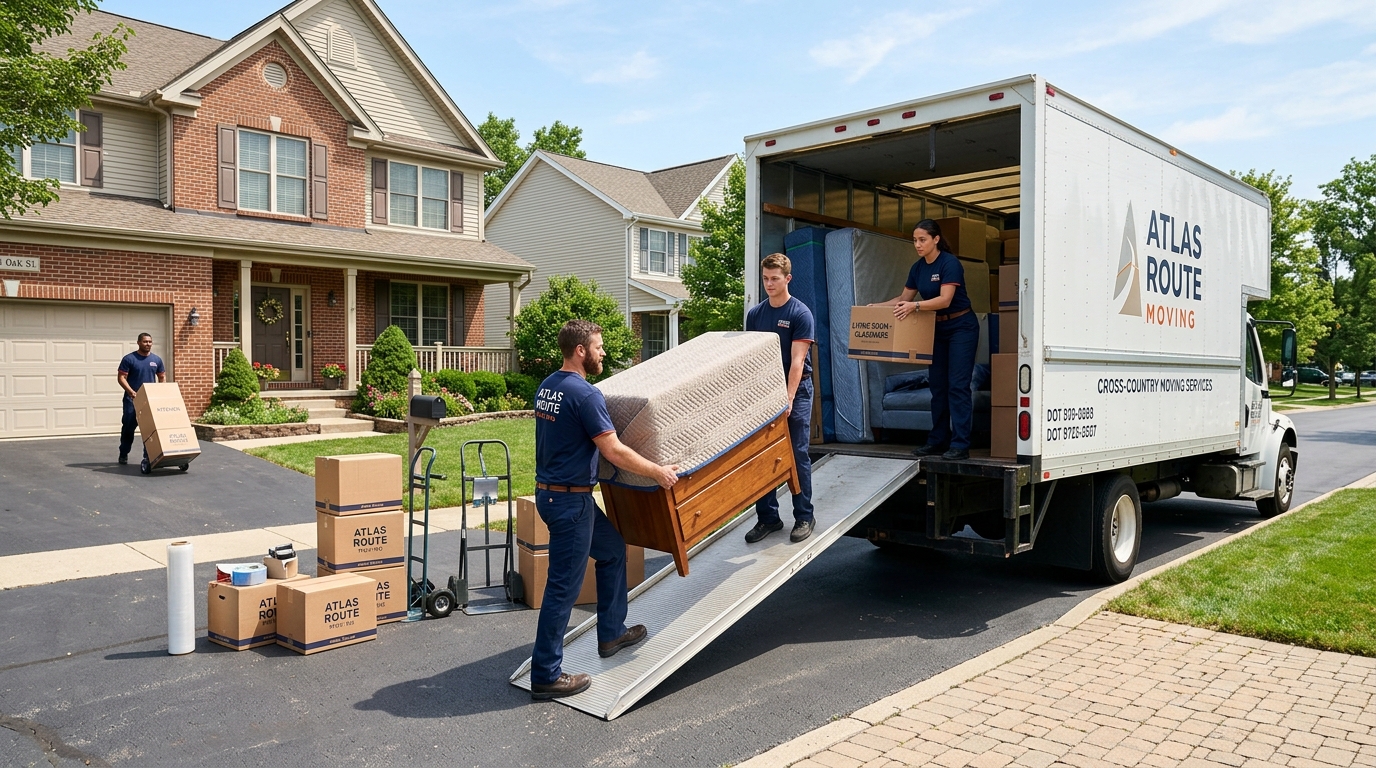
Moving across the country is a big step. You are not just changing addresses, you are changing jobs, schools, routines, and sometimes time zones. With so many details to juggle, it is easy to feel overwhelmed or to forget something important until it is too late.
The difference between a stressful coast to coast move and a smooth long distance relocation often comes down to planning. Timing, packing, access at each home, inventory, travel logistics, and clear communication with your movers all matter. A solid cross country move checklist helps you stay in control from the first quote to the moment the last box is unpacked.
This guide walks you through moving across the country step by step, starting about eight weeks before moving day and going all the way through arrival and settling in. You will see what to do each week, how to compare interstate moving estimates, what affects your final cost, how to handle your car and pets, what to keep with you on moving day, and how Atlas Route Moving can help with long-distance moving services when you are ready to book.
Use this as a working checklist. Mark off items as you go, adjust the timeline to fit your actual move date, and refer back whenever you need a reminder. The more prepared you are, the more your movers can focus on what they do best: safely getting your belongings from your old home to your new one across the country.
Key takeaways
- Start planning your cross country move at least 6–8 weeks in advance so you have time to compare movers, declutter, and book ideal dates.
- Request in-home or detailed virtual surveys so your long-distance mover can provide accurate volume estimates and pricing.
- Decide early which items will be moved, sold, donated, or stored to avoid paying to ship things you do not really need.
- Pack with distance in mind: sturdy boxes, labeling by room, and extra padding for fragile items reduce the risk of damage.
- Plan travel logistics for your family, vehicle, and pets separately from the moving truck; they rarely arrive on the same day.
- Keep critical items with you on moving day, including documents, medications, basic supplies, and a small toolkit.
- Work with a licensed, insured mover like Atlas Route Moving for clear expectations, professional crews, and coordinated support throughout your long distance relocation.
8-week planning timeline for moving across the country
When you are relocating across the country, time disappears quickly. This week-by-week cross country move checklist gives you a realistic structure. Adjust the dates if you are closer than eight weeks out, but try to follow the order of steps.
8 weeks before your move
- Confirm your move date range with your employer, landlord, or real estate closing.
- Research licensed, insured long-distance movers that handle interstate relocations.
- Visit the long-distance moving services page from Atlas Route Moving to understand service options.
- List all locations involved (origin home, destination home, storage, office, etc.).
- Start a moving binder or digital folder for estimates, receipts, and checklists.
Sample note to yourself: «This week I will gather at least three detailed quotes and confirm that each company offers interstate, long-distance moving services.»
7 weeks before your move
- Schedule in-home or virtual surveys so movers can see what you plan to move.
- Walk through your home and mark items to sell, donate, recycle, or discard.
- Research your new area for building rules, elevator reservations, and parking.
- Start a rough inventory by room (furniture, boxes, special items).
- Discuss time-off needs with your employer and support coverage if applicable.
6 weeks before your move
- Review all written estimates and narrow your choice of mover.
- Ask about packing, storage, and valuation options (coverage levels for your belongings).
- Decide whether you will pack yourself, use professional packing services, or choose a combination.
- Begin selling or donating large items you do not want to move across the country.
- Gather important records: medical, dental, school, pet vaccination, and financial documents.
5 weeks before your move
- Book your chosen moving company and confirm dates, services, and delivery window in writing.
- Reserve elevators, loading docks, and parking at both origin and destination, if required.
- Research your route, flights, or hotels for your own travel across the country.
- If you are moving a vehicle, explore options such as shipping, towing, or driving it.
- Notify key contacts of your move date (childcare providers, close friends, nearby family).
4 weeks before your move
- Start packing non-essential items by room (decor, books, off-season clothing).
- Order or purchase sturdy boxes, tape, labels, and packing paper.
- Schedule disconnection/connection for utilities at both homes (electric, gas, water, internet).
- Update or schedule forwarding of mail and subscriptions.
- Confirm pet arrangements (airline crate, vet visit, travel plan, medications).
3 weeks before your move
- Finalize travel bookings for you and your family (flights, rental cars, hotels if needed).
- Finish sorting storage spaces: attic, basement, garage, and closets.
- Prepare an «open first» box for each key room (kitchen, bathroom, kids’ rooms).
- Confirm building rules again and share them with your moving coordinator.
- Take photos of valuable or fragile items before packing for documentation.
2 weeks before your move
- Continue packing room by room, labeling every box with room and basic contents.
- Set aside items you will not send with the movers (documents, jewelry, cash).
- Arrange for short- or long-term storage if your move involves a gap in housing, and review secure storage services if you need them.
- Confirm arrival details and contact information with your moving company.
- Service your car if you are driving across the country (fluids, tires, emergency kit).
1 week before your move
- Pack the majority of your remaining items, leaving out only essentials for the final days.
- Prepare a «moving across the country essentials» bag (see the dedicated section below).
- Defrost and clean the refrigerator and freezer at least 24 hours before moving day.
- Arrange childcare or pet care on moving day if needed.
- Do a final walkthrough to identify any items that require special handling.
Moving day
- Meet the crew, walk them through your home, and identify fragile or high-priority items.
- Confirm the inventory list and condition of major pieces as they are loaded.
- Make sure all utilities are off and all windows/doors are locked before you leave.
- Carry your essentials and important documents with you.
- Take final meter readings and photos of the empty property if relevant.
Arrival and delivery
- Arrive at your new home ahead of the truck if possible, so you can guide the crew.
- Verify that utilities are on and access is clear for the moving truck.
- Check off items against the inventory as they are unloaded.
- Place boxes in the correct rooms to make unpacking easier.
- Inspect your home and key items while the crew is still present and note concerns.
Here is a quick summary timeline to keep handy on your refrigerator or in your moving binder:
| Time before move | Key tasks | Focus |
|---|---|---|
| 8–6 weeks | Research movers, get surveys and estimates, book dates | Planning and selecting services |
| 6–4 weeks | Declutter, sell/donate items, start packing non-essentials | Reducing volume and starting packing |
| 4–2 weeks | Confirm logistics, utilities, travel, pet and vehicle plans | Logistics and detailed prep |
| 2–0 weeks | Finish packing, set aside essentials, clean and finalize home | Final packing and move-out |
What affects the cost of moving across the country
Every long distance relocation is different. Understanding the major cost factors helps you budget, compare estimates fairly, and avoid surprise charges.
Main cost drivers for a cross-country move
- Distance and route: Coast to coast moves generally cost more than regional interstate moves due to fuel, tolls, and driver time.
- Shipment weight or volume: The more you ship, the more your move costs. Decluttering can significantly reduce your price.
- Service level: Full-service packing, unpacking, crating, and storage add convenience but also add to the cost.
- Timing and flexibility: Peak dates (summer weekends, month-end) often carry higher rates. Flexibility on dates may save money.
- Access and complexity: Long carries, stairs, elevators, and tight parking can increase labor time and cost.
- Special items: Pianos, safes, fine art, large glass pieces, and exercise equipment may require special handling.
- Valuation options: Higher coverage levels for your belongings come with additional costs.
The table below summarizes how these factors can impact your budget when you are moving across the country.
| Cost factor | How it impacts price | What you can do |
|---|---|---|
| Distance and route | Longer interstate mileage increases transportation costs | Be flexible on exact dates to improve truck routing |
| Shipment weight/volume | Heavier or bulkier loads usually cost more overall | Declutter and avoid shipping items you do not need |
| Service level (packing, unpacking) | Adds labor and materials costs, but saves time and effort | Mix full-service packing with DIY for less fragile items |
| Access challenges | Stairs, long walks, and limited parking add labor time | Reserve loading zones and elevators; clear paths |
| Special items | Custom crating or extra movers may be needed | Identify these early so they are in the quote |
When you speak with Atlas Route Moving about long-distance moving services, be as detailed as possible about your home layout, shipment size, and any unusual items. Clear information up front makes your estimate more accurate and your actual move day smoother.
How to compare cross-country moving estimates
Not all long-distance quotes are structured the same way. When relocating across the country, it is important to compare more than just the bottom-line number.
Key elements to review in each estimate
- Services included: Does the price cover loading, transportation, unloading, and basic placement of furniture? Is packing, unpacking, or debris removal included or separate?
- How pricing is calculated: Is it based on weight, volume, or a hybrid? Are labor, fuel, tolls, and basic materials included?
- Coverage/valuation: What level of protection for your belongings is included? Are there options for higher coverage?
- Access assumptions: Does the quote assume elevator access, short carries, and direct parking? Are extra fees listed for unexpected access issues?
- Time frame: What is the estimated delivery window for your cross country move, and are there options for more specific delivery timing?
- Deposits and payments: How much is due to reserve your date, and when are remaining payments due?
Questions to ask your potential movers
- Is this estimate binding, non-binding, or binding-not-to-exceed?
- How do you handle changes in inventory or access between estimate and move day?
- Are packing materials included, or billed separately?
- What are your policies on delays, weather, or route changes during long-distance relocation?
- Who is my main point of contact before, during, and after the move?
Sample wording you can use:
«Can you walk me through exactly what is included in this estimate for moving across the country and what would count as an extra charge?»
When you compare estimates side by side, it often helps to build a simple comparison table in your notes:
| Item | Mover A | Mover B |
|---|---|---|
| Service level (packing, loading, unloading) | e.g., full packing + loading/unloading | e.g., self-pack + loading/unloading |
| Estimated total cost | $____ | $____ |
| Delivery window | e.g., 5–7 days | e.g., 7–10 days |
| Valuation/coverage level | Basic + option to upgrade | Included higher coverage |
This kind of side-by-side comparison makes it easier to see real differences between estimates and decide what matters most: price, timing, service level, or coverage.
Creating an accurate inventory and move plan
A clear inventory is one of the most powerful tools you have when moving across the country. It helps your mover plan truck space, staffing, and timing, and it helps you stay organized from origin to destination.
How to build your inventory
- Walk room by room with a notebook or spreadsheet.
- List major furniture pieces and approximate box counts per room.
- Note fragile items, high-value items, and anything requiring special handling.
- Mark items that will be moved, sold, donated, or stored.
- Share this list with your moving consultant so your quote reflects your actual shipment.
Here is a simple example inventory layout that works well for a cross country move checklist:
| Room | Items to move | Notes |
|---|---|---|
| Living room | Sofa, 2 armchairs, TV stand, 1 TV, 6 boxes | TV needs special packing |
| Primary bedroom | King bed, dresser, 2 nightstands, 10 boxes | Mattress cover required |
| Kitchen | Table, 4 chairs, 12 boxes | Fragile dishware |
In addition to your personal notes, your mover will typically create a formal inventory on move day that lists each item or box and its condition. Keeping your own list helps you verify that everything arrives and that nothing important is overlooked in the quote.
Planning for storage during a long distance relocation
Sometimes moving across the country involves an overlap or a gap between homes. If you need storage:
- Clarify whether your items will stay on the truck, be vaulted in a warehouse, or move to a separate storage facility.
- Identify items you might need to access in storage and group them together.
- Ask how storage fees are calculated (by volume, by month, or by day).
- Discuss delivery timing from storage to your final destination.
Atlas Route Moving offers secure storage services that can be combined with long-distance moving, which may simplify logistics when you are relocating across the country in stages.
Packing strategy for a cross-country move
Packing for a move across town is one thing; packing for moving across the country is another. Boxes will be handled multiple times, travel hundreds or thousands of miles, and possibly share space with other shipments. Good packing significantly reduces the chance of damage.
DIY vs. professional packing
Consider your time, budget, and risk tolerance when choosing between self-packing and professional packing.
- DIY packing: More control and can save on labor, but requires time, energy, and proper materials.
- Partial packing: You pack most everyday items, and professionals pack fragile or high-value items (art, glass, electronics).
- Full-service packing: Movers pack everything, often in one day, saving you considerable time and effort.
If you are short on time or have many delicate items, using professional packing services for at least part of your shipment is often a smart investment.
Essential packing tips for a coast to coast move
- Use new or like-new, sturdy boxes in a few standard sizes so they stack well.
- Heavier items in smaller boxes; lighter items can go in larger boxes.
- Fill empty space with packing paper or soft items to prevent shifting.
- Clearly label each box with room and a short description on at least two sides.
- Mark «FRAGILE» and «THIS SIDE UP» wherever appropriate.
- Do not pack hazardous materials (paint, aerosols, flammables) in the moving truck.
Here is a simple packing materials checklist for a long distance relocation:
| Material | Recommended use | Notes |
|---|---|---|
| Small boxes (1.5 cu. ft.) | Books, tools, canned goods, heavy items | Do not overload; keep easily liftable |
| Medium boxes (3.0 cu. ft.) | Kitchen items, toys, decor, linens | Most versatile size |
| Large boxes (4.5 cu. ft. +) | Pillows, bedding, light bulky items | Avoid heavy items to prevent crushing |
| Dish packs / specialty cartons | Dishes, glassware, stemware | Double-walled for extra protection |
Labeling for cross-country delivery
Because your shipment may travel with others and be handled by multiple teams, clear labeling is crucial. Use a simple system:
- Color or letter code by room (e.g., «K» for kitchen, «LR» for living room).
- Number each box and keep a master list of box numbers and contents.
- Highlight priority boxes («Open First») with tape or a bright marker.
Sample labeling idea: «BR1-Box 3: Sheets, pillowcases, pajamas» so you can quickly find first-night bedding in your new home.
Travel logistics, vehicles, and pets
When you are moving across the country, your household goods travel one way and your family, vehicles, and pets travel another. Planning these pieces early keeps everyone safer and less stressed.
Planning your own travel
- Decide whether you will fly or drive; factor in cost, timing, and comfort.
- Book flights or map your driving route, including overnight stops if necessary.
- Plan for time on both ends of the move to handle walkthroughs and deliveries.
- Keep confirmation numbers, addresses, and emergency contacts handy.
Options for moving your car across the country
Your car does not usually go on the moving truck. Typical options include:
- Driving it yourself, either alone or as a family road trip.
- Hiring a separate auto transport company.
- Using a trailer or towing setup for a second vehicle or small car.
For deeper planning on this part of your cross country move checklist, see the related guide Shipping Your Car When Moving on the Atlas Route Moving blog.
Moving with pets during a coast to coast move
- Schedule a vet visit several weeks before you move across the country to update vaccinations and obtain records.
- Discuss travel anxiety, motion sickness, or sedation if your pet has a history of stress.
- Make sure your pet’s microchip and ID tags are up to date with your cell phone number.
- Prepare a pet travel kit: food, water, bowls, leash, carrier, medications, favorite blanket or toy, and waste bags or litter.
- Never send pets on the moving truck. They should travel with you or through specialized pet transport services.
How to prepare before the movers arrive
The day before and the morning of your move set the tone for the entire process. A bit of preparation helps your crew work efficiently and helps protect your belongings.
Day-before checklist
- Finish packing all non-essential items and label every box clearly.
- Separate items that will not go on the truck (documents, valuables, medications).
- Disassemble simple furniture if you are doing any of that work yourself.
- Unplug and secure electronics; take photos of cable setups for easier reconnection.
- Confirm arrival time and contact information with your moving coordinator.
Morning-of checklist
- Clear pathways for movers, including stairs, hallways, and entryways.
- Protect floors if needed, especially in wet or snowy weather.
- Secure pets in a separate room or have them out of the home for the day.
- Review your inventory and walk the crew through your home on arrival.
- Identify items requiring special attention (antiques, delicate artwork, glass).
Taking 30–60 minutes to prepare your home before the crew arrives can save significant time during loading and helps your long-distance movers get off to a strong start.
Moving day checklist: departure and arrival
Moving day for a cross-country relocation has two parts: departure day at your origin and delivery day at your new home. Both are important for a smooth experience.
Departure day checklist
- Meet the driver and crew; confirm your name, addresses, and contact phone numbers.
- Walk the crew through the home and point out what is staying versus going.
- Review and sign necessary paperwork such as the bill of lading.
- Monitor the loading process periodically while staying out of the crew’s way.
- Do a final walkthrough after the truck is loaded to ensure nothing is left behind.
Delivery day checklist
- Arrive early and make sure parking and access are available for the truck.
- Walk the driver through the new home, noting room names for box placement.
- Check off items from the inventory as they are unloaded.
- Direct furniture placement so major items land in roughly the right spots.
- Inspect key pieces and note any concerns on the delivery paperwork.
Atlas Route Moving’s crews work to keep you informed throughout your long distance relocation, but having your own cross country move checklist ensures you are an active part of each step.
What to keep with you during a coast to coast move
Your shipment and the moving truck may be on the road for several days or longer, depending on distance and delivery window. Always plan for the possibility that you will arrive before your belongings.
Essential items to keep with you
- Wallet, keys, passports, and IDs
- Important documents (move paperwork, medical, financial, school records)
- Medications and basic first aid supplies
- Electronics and chargers (phones, laptops, tablets)
- Basic toiletries and a few changes of clothing
- Snacks, water, and comfort items for kids
- Pet supplies and food, if applicable
First-night box suggestions
In addition to your personal essentials, pack a clearly labeled «First Night» or «Open First» box for each of these areas:
- Bedroom: sheets, pillows, light blankets, pajamas
- Bathroom: towels, toilet paper, soap, toothbrushes, shower curtain if needed
- Kitchen: a few plates, cups, utensils, pan, dish soap, paper towels, trash bags
- Kids: favorite toys, nightlight, comfort items
Label example: «OPEN FIRST – Kitchen Essentials» in large letters so your movers can place it where you will find it quickly.
Common cross-country moving mistakes to avoid
Many challenges during a long distance relocation are preventable. The table below highlights some frequent mistakes and how to avoid them.
| Common mistake | Why it causes problems | How to avoid it |
|---|---|---|
| Waiting too long to book a mover | Fewer date options, potential rush fees or limited availability | Book 6–8 weeks out, especially for summer and month-end moves |
| Underestimating inventory | Truck space and price may not match reality; risk of delays or extra charges | Share accurate, updated lists with your mover before moving day |
| Poor packing or unlabeled boxes | Increased risk of damage and frustrating unpacking experience | Use quality materials and clear labels; consider pro packing for fragile items |
| Not planning for delivery window | Stress if you arrive before or after the truck; hard to arrange time off | Confirm realistic delivery window and keep essentials with you |
By keeping these pitfalls in mind as you follow your cross country move checklist, you can sidestep many of the issues that make moving across the country feel harder than it has to be.
How Atlas Route Moving supports long-distance relocations
Atlas Route Moving provides professional long-distance moving services across the United States, including local, interstate, and coast to coast moves. When you are relocating across the country, having an experienced, organized team on your side can simplify every step.
Service options for moving across the country
- Full-service long-distance moving: Professional crews handle loading, transportation, and unloading at your new home.
- Packing services: Choose full or partial professional packing services to protect fragile or high-value items.
- Storage solutions: Combine your move with secure storage services if your new home will not be ready right away.
- Apartment, house, and office moves: Support for a wide range of home sizes and small offices.
- Senior and specialty moves: Extra care and planning for seniors or households with unique needs.
To see how these options can fit your cross country move checklist, explore Atlas Route Moving’s moving services and service areas pages, then contact the team to discuss your specific move.
Helpful Atlas Route Moving services
Once you have reviewed your options, you can use the moving cost calculator to estimate your budget, then request a free moving quote tailored to your home size, locations, and timing.
Related moving guides
Frequently asked questions
How far in advance should I book movers when moving across the country?
For a cross-country move, it is wise to book 6–8 weeks in advance, especially if you are moving during peak season (summer, weekends, or month-end). Earlier booking gives you better date choices and helps your movers plan staffing and routing.
How long does a cross-country move usually take?
Transit time for a coast to coast move can range from a few days to a couple of weeks, depending on distance, route, and your specific service plan. Use your written estimate and discussions with your mover to understand the expected delivery window for your shipment.
How can I estimate the cost of moving across the country?
Costs depend on distance, shipment size, service level, and access at each home. A detailed survey is the best way to get an accurate quote. You can also use the Atlas Route Moving moving cost calculator as a starting point before requesting a formal estimate.
Should I pack myself or hire professional packers for a long distance relocation?
If you have the time and are comfortable packing, you can save money by packing many items yourself. For fragile, high-value, or complex items, many customers choose professional packing services to reduce risk. A mix of both approaches works well for many cross country moves.
What should I not pack on the moving truck for a coast to coast move?
Avoid packing hazardous items such as flammables, aerosols, and some cleaning chemicals. Also keep valuables, important documents, medications, and irreplaceable items with you, not on the truck. Your moving consultant can provide a detailed list of non-allowable items.
How do I move my car when relocating across the country?
Most families either drive their car, hire auto transport, or tow it with another vehicle. The best option depends on your budget, schedule, and comfort level. Atlas Route Moving can discuss how your vehicle plans fit into your overall move timeline.
How can I reduce the stress of moving across the country with kids and pets?
Communicate early, maintain routines where possible, and pack comfort items in easy reach. Plan frequent breaks if driving, keep important supplies handy, and aim to set up bedrooms and basic spaces first at your new home.
What if my new home is not ready when my belongings arrive?
Discuss this possibility with your mover before booking. Short-term storage can bridge gaps between move-out and move-in dates. Atlas Route Moving can coordinate storage as part of your long-distance moving plan when needed.
Can I change my inventory after I get my estimate?
Yes, but changes can affect your price and logistics. Inform your mover as soon as you add or remove major items so they can adjust your plan and truck space accordingly.
What should I do if something is damaged during a cross-country move?
Notify your mover as soon as you notice the issue and review the claims process described in your paperwork. Photos, original inventory notes, and clear documentation help resolve claims more smoothly.
Sources referenced in this guide
Information in this guide reflects practical experience with long-distance moving and generally available consumer guidance from the following types of sources:
- Federal Motor Carrier Safety Administration consumer guidance
- U.S. Department of Transportation moving guidance
- State transportation and consumer protection agencies
- Building management move-in and move-out requirements
- Written moving estimates, inventories, and bills of lading
- Carrier tariffs, valuation options, and service agreements
For detailed rules about interstate moving, you can review information from federal and state agencies and compare it with the terms outlined in your specific service agreement with your mover.
This guide is general moving information, not legal, insurance, or regulatory advice. Moving requirements, pricing, access rules, and coverage options may vary by location, move type, building rules, and service agreement.