Overview
Packing is the part of moving almost everyone underestimates. It always takes longer than expected, demands more materials than you think, and quietly determines whether your belongings arrive intact or in pieces. Professional packing services exist because packing well is a genuine skill, and doing it for an entire household is a major undertaking. At Atlas Route Moving, our packing services are designed to save you time, protect what matters, and remove the single most stressful task from your move.
This in-depth guide covers everything about packing for a move: how professional packing works, what it costs, how to pack every type of room and item, which materials to use, and how to avoid the mistakes that lead to damage. Whether you want your entire home packed for you, need help with just the fragile items, or plan to pack yourself with expert guidance, you will find what you need below.
What Are Professional Packing Services?
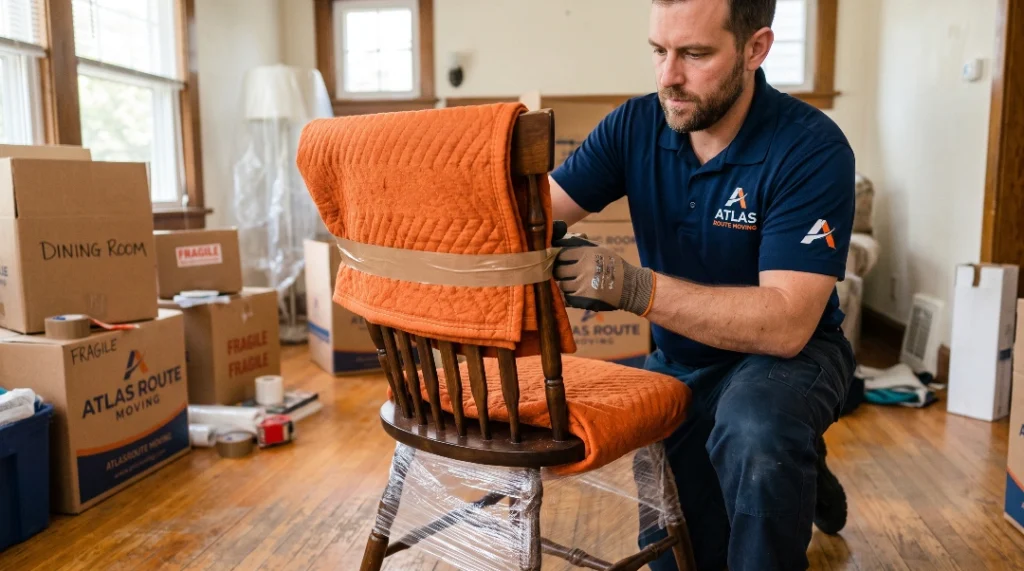
Professional packing services mean a trained team comes to your home and packs your belongings for you, using quality materials and techniques refined over hundreds of moves. Packers wrap fragile items, box up your possessions room by room, label everything clearly, and prepare it all so it is ready to load safely. You can choose full packing, where the entire home is handled, or partial packing, where the team focuses on the kitchen, fragile items, or whichever areas you find most daunting.
The value goes beyond convenience. Experienced packers know how to protect a wine glass so it survives a bumpy road, how to box a television so the screen is safe, and how to fill a carton so nothing shifts. They work quickly and methodically, often packing in a day what might take you a week of evenings and weekends. For many people, packing services are the difference between a move that feels manageable and one that feels impossible.
How Much Do Packing Services Cost?
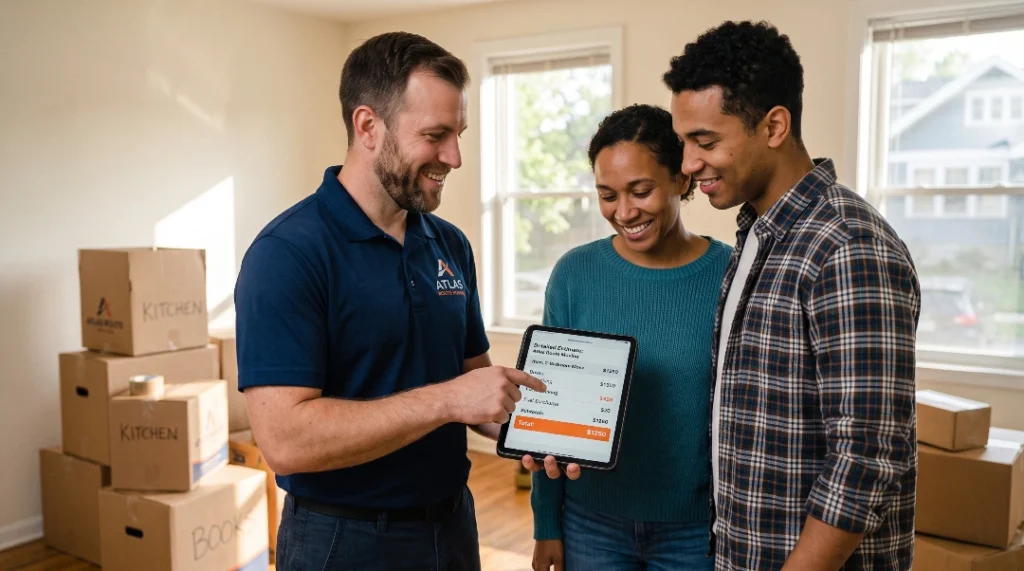
The cost of packing services depends on the size of your home, how much you own, the amount of fragile or specialty items, and whether you want full or partial packing. Materials are typically included, which is a meaningful value because quality boxes, paper, bubble wrap, and tape add up quickly when you buy them yourself.
Partial packing is a popular middle ground. Many customers pack their own clothing, books, and everyday items but hand off the kitchen, artwork, and fragile decor to professionals. This keeps costs down while ensuring the trickiest items get expert care. The best way to understand your specific cost is to request a quote that reflects your home and your priorities, and our team is happy to recommend the right level of service for your budget.
Full Packing vs. Partial Packing
Deciding between full and partial packing comes down to your time, your budget, and your comfort level. Both options deliver professional protection where it counts.
Full packing
With full packing, you barely lift a box. The team packs everything from the kitchen to the closets to the garage, so all you need to do is point them in the right direction. This is ideal for busy families, anyone short on time, people with large homes, and those who simply want the entire process handled by professionals.
Partial packing
Partial packing lets you save money by handling the easy items yourself while professionals tackle the hard parts. Fragile kitchenware, glassware, artwork, electronics, and specialty items benefit most from expert packing. If you enjoy packing your personal belongings but dread the china cabinet, partial packing is the perfect fit.
The Right Packing Materials for Every Item
Great packing starts with the right supplies. Using flimsy boxes or skimping on padding is the fastest route to damage. Our packing services include professional-grade materials, but understanding them helps whether we pack for you or you pack yourself.
- Small boxes: For heavy items like books, canned goods, and tools, so no single box becomes too heavy.
- Medium boxes: The workhorse for most household goods, from kitchenware to toys.
- Large boxes: For light, bulky items like pillows, bedding, and lampshades.
- Dish barrels and cell kits: Reinforced boxes with dividers for glassware and dishes.
- Wardrobe boxes: Tall boxes with a hanging bar so clothes move straight from closet to box wrinkle-free.
- Packing paper and bubble wrap: For wrapping and cushioning fragile items.
- Quality tape: Strong packing tape to seal every box securely on top and bottom.
- Markers and labels: To identify contents and destination rooms at a glance.
How to Pack Every Room in Your Home
Each room has its own challenges. Here is how professionals approach the trickiest areas, with tips you can use yourself.
The kitchen
The kitchen is the most time-consuming room because it is full of fragile, oddly shaped, and heavy items. Dishes should be wrapped individually and packed vertically on their edges, like records, which is far stronger than stacking them flat. Glasses get bubble wrap and go into cell kits. Pots and pans nest together with paper between them, and small appliances are wrapped and boxed with their cords secured.
The bedroom
Bedrooms pack relatively quickly. Wardrobe boxes keep hanging clothes effortless, while folded clothing can often stay in dresser drawers if the furniture is sturdy. Bedding and pillows fill large boxes, and jewelry and valuables should be packed separately to travel with you.
The living room
Electronics need careful handling, ideally in their original boxes or with plenty of padding and secured cords. Photograph the cable connections before unplugging so setup is simple later. Artwork, mirrors, and lamps each require specific wrapping to prevent cracks and scratches.
The bathroom
Bathrooms are quick but messy if liquids leak. Seal the tops of toiletries with tape under the lid, pack them upright, and keep a small kit of essentials aside so you are not unpacking shampoo on your first night.
The garage and storage areas
Garages hide heavy tools, chemicals, and awkward equipment. Hazardous materials such as paint, fuel, and propane cannot be transported and must be disposed of properly. Tools should be packed in small, sturdy boxes, and sharp items wrapped for safety.
Packing Fragile and Valuable Items
Fragile items are where professional packing truly earns its value. The principle is simple: every fragile item should be wrapped individually, cushioned on all sides, and packed so it cannot move. Empty space is the enemy, because anything that can shift can break.
Dishes, glassware, stemware, vases, ceramics, and figurines each get wrapped in paper or bubble wrap and nestled with plenty of padding. Mirrors and framed art are protected with corner guards and wrapped, then packed on edge rather than flat. Electronics are cushioned and boxed with attention to screens and connectors. For truly valuable or irreplaceable pieces, custom crating provides the highest level of protection, and our team can arrange it when needed.
Labeling and Organization That Saves Hours
A well-packed home is only half the battle; a well-labeled one is what makes unpacking painless. Every box should be labeled on the side, not the top, so you can read it when boxes are stacked. Note both the contents and the destination room, and mark fragile boxes clearly so they are handled with extra care and placed on top during loading.
Many people find a simple numbering or color-coding system invaluable. Assign each room a color, mark boxes accordingly, and post a matching color at the door of each room in your new home so the crew knows exactly where everything goes. This small step turns a chaotic unload into a smooth, organized process and gets you settled far faster.
How Long Does Packing Take?
One of the biggest reasons people underestimate packing is time. A professional team can pack an average home in a day, sometimes less, because they work efficiently with the right materials and plenty of hands. Doing it yourself, the same job can stretch across a week or more of evenings, especially once you factor in gathering supplies and the inevitable distractions of sorting through your belongings.
If you are packing yourself, start early and pace the work room by room, beginning with the items you use least. Leaving packing until the last minute is the most common moving mistake and leads to rushed, careless packing that risks damage. If your timeline is tight, professional packing can compress a week of work into a single organized day.
Unpacking Services: The Other Half of the Job
Packing gets the attention, but unpacking is its own challenge. After a long move, facing a wall of boxes can feel overwhelming. Our unpacking services complete the circle by unpacking your belongings, placing them where you want them, and removing the empty boxes and packing debris so you can enjoy your new home instead of drowning in cardboard.
Unpacking is especially valuable for busy households, seniors, and anyone who wants to be functional immediately rather than living out of boxes for weeks. Even partial unpacking of key rooms like the kitchen and bedrooms can transform those crucial first days in a new home. Ask about adding unpacking to your packing service for a truly door-to-door experience.
Common Packing Mistakes to Avoid
Even careful people make packing mistakes that lead to damage or frustration. Avoiding these common errors protects your belongings and your sanity.
- Overfilling boxes: Heavy boxes break, hurt backs, and are hard to stack. Keep weight reasonable.
- Leaving empty space: Gaps let items shift and break. Fill every box completely with padding.
- Using weak or used boxes: Flimsy cartons collapse. Quality boxes are worth every penny.
- Skimping on tape: Seal both the top and bottom of every box thoroughly.
- Not labeling: Unlabeled boxes turn unpacking into a guessing game.
- Packing hazardous materials: Flammables and chemicals cannot be moved and must be handled separately.
- Waiting until the last minute: Rushed packing is careless packing. Start early.
Why Choose Atlas Route Moving for Packing
Our packing team brings experience, care, and quality materials to every home. We treat your belongings as if they were our own, wrapping each fragile piece thoughtfully and packing every box to travel safely. Because we also handle your move, packing and transport are seamlessly coordinated, which means fewer hands touching your items and a smoother overall experience.
Most of all, we understand that packing is about trust. You are letting us handle your dishes, your keepsakes, and the small things that make a house a home. We take that responsibility seriously, and our goal is for you to open every box in your new home and find exactly what you hoped: everything safe, organized, and ready for your fresh start.
Frequently Asked Questions About Packing Services
Do you provide the packing materials?
Yes. Quality boxes, paper, bubble wrap, and tape are included in our packing service, so you do not have to source and buy materials yourself.
Can I pack some items myself?
Absolutely. Many customers choose partial packing, handling easy items themselves and letting us pack the kitchen, fragile items, and specialty pieces.
How far ahead should packing happen?
Professional packing is usually done the day before or the morning of your move, so your belongings are freshly packed and ready to load without sitting around.
Will you unpack too?
Yes. Unpacking is available as an add-on, so we can unpack your boxes, place your items, and remove the debris to help you settle in faster.
How do you protect fragile items?
We wrap each fragile item individually, cushion it on all sides, and pack it so it cannot shift, using specialized boxes and custom crating for the most delicate pieces.
Ready to Take Packing Off Your To-Do List?
Packing does not have to be the part of your move that keeps you up at night. With a professional team, quality materials, and a plan, your belongings can be packed safely and efficiently while you focus on everything else a move demands. Atlas Route Moving is ready to handle as much or as little of the packing as you like. Contact us today for your free packing quote and let us protect what matters most.
Packing Your Essentials Box First
Before you pack a single ordinary box, prepare an essentials box, sometimes called a first-night or open-first box. This is the collection of things you will need immediately upon arriving at your new home, before you have the time or energy to unpack anything else. Keeping these items separate and clearly marked saves you from tearing open a dozen cartons in search of a phone charger or a roll of toilet paper.
A good essentials box includes toiletries, medications, a few days of clothing, phone and device chargers, basic tools, paper towels, cleaning wipes, snacks, water, and any items your children or pets need. Add a small kit for the kitchen with a knife, a few utensils, and some paper plates so you can eat without unpacking the whole kitchen. Load this box last so it comes off the truck first, or better yet, carry it in your own vehicle.
Eco-Friendly Packing and Reducing Waste
Moving generates a surprising amount of waste, but thoughtful packing can reduce it significantly. Instead of buying single-use materials for everything, use what you already own. Suitcases, laundry baskets, and storage bins make excellent containers. Towels, blankets, and clothing can wrap and cushion fragile items, doing double duty and saving on bubble wrap.
When the move is over, break down boxes and reuse or recycle them, or pass them along to someone else who is moving. Choosing quality boxes that can make several trips, and returning to reusable materials wherever possible, keeps your move gentler on both your budget and the environment. Our team is happy to advise on sustainable options that still keep your belongings fully protected.
Packing for Specific Situations
Not every move is the same, and the right packing approach depends on your circumstances. Understanding a few common scenarios helps you plan appropriately.
Packing for a long-distance move
When belongings travel hundreds of miles, packing must be sturdier than for a local move. Boxes are handled more times and endure hours of road vibration, so every carton needs to be strong, well-filled, and sealed thoroughly. Fragile items deserve extra cushioning, and a detailed inventory becomes especially valuable.
Packing for storage
If your belongings are going into storage, protect them from dust and time. Use sturdy boxes rather than bags, avoid overpacking, and consider extra protection for items sensitive to temperature. Label everything clearly so you can find what you need without unpacking the entire unit.
Packing on a tight timeline
Sometimes a move comes up fast. In these cases, professional packing is a lifesaver, compressing a week of work into a single organized day. If packing yourself, focus first on essentials and fragile items, and do not be afraid to ask for help.
A Room-by-Room Packing Supply Estimate
Running out of boxes mid-pack is one of the most frustrating parts of a move. While every home is different, these rough guidelines help you gather enough supplies before you start.
- Kitchen: Plan for several small and medium boxes plus dish barrels, since kitchenware is heavy and fragile.
- Bedrooms: Medium boxes for folded items, wardrobe boxes for hanging clothes, and large boxes for bedding.
- Living room: Medium boxes for books and decor, plus specialty boxes for electronics and framed art.
- Bathrooms: A few small boxes, with liquids sealed and packed upright.
- Garage and storage: Small, sturdy boxes for heavy tools, and proper disposal for anything hazardous.
It is always better to have a few extra boxes than to stop packing to buy more. Any unused supplies can usually be returned or passed along to the next person planning a move.
Packing Tips From Our Professional Movers
After countless moves, our packers have learned what makes the biggest difference. These field-tested tips will improve any packing job.
- Pack one room at a time and finish it completely before moving on, which keeps you organized.
- Keep a roll of tape, a marker, and scissors in every room so you are never searching for tools.
- Take a photo of complex electronics before unplugging so reconnecting is effortless.
- Wrap the handles and lids of pots and appliances so they do not swing loose.
- Never mix items from different rooms in the same box, which makes unpacking confusing.
- Put a list of contents inside each box as well as on the outside for easy reference.
The Atlas Route Moving Packing Promise
When you trust us with your packing, you are trusting us with the small, irreplaceable pieces of your life. We honor that with careful hands, quality materials, and genuine attention to every fragile item. Our promise is simple: we pack your belongings as if they were our own, so that when you open each box in your new home, you find everything exactly as it should be. Contact us whenever you are ready, and let us make packing the easiest part of your move.
What Professional Packers Cannot Pack
For safety and legal reasons, there are certain items professional movers cannot pack or transport. Knowing these in advance helps you plan for them separately rather than being caught off guard on moving day. Hazardous materials top the list, including flammable liquids, propane tanks, paint, aerosols, fertilizers, pool chemicals, and automotive fluids. These must be used up, given away, or disposed of properly before your move.
Perishable food, open containers, and live plants are also generally unsuitable for packing, especially on longer moves where they can spoil, leak, or attract pests. Finally, irreplaceable items such as important documents, jewelry, cash, and treasured keepsakes should always travel with you personally rather than in a packed box. Setting these aside early ensures nothing valuable is accidentally boxed and loaded onto the truck.
Packing Art, Antiques, and Heirlooms
Some belongings carry value that goes far beyond their price, and they deserve packing that reflects it. Artwork, antiques, heirlooms, and collectibles are among the most delicate items in any home, and improper packing is the fastest way to cause heartbreaking damage. These pieces benefit most from professional experience and specialized materials.
Framed art and mirrors are protected with corner guards, wrapped carefully, and packed on edge in appropriately sized boxes. Antiques with fragile finishes are padded to prevent scratches, while delicate joints and extensions are secured. For the most valuable and irreplaceable pieces, custom wooden crating offers the ultimate protection. When you have items like these, tell us early so we can prepare the right materials and give each piece the individual attention it deserves. Your history and your memories are worth packing correctly.
A Final Word on Stress-Free Packing
Packing well is really about giving yourself peace of mind. When every box is sturdy, every fragile item is cushioned, and every carton is labeled, you can hand your belongings to the crew and trust that they will arrive safely. Whether you let our team handle everything or simply lean on us for the trickiest items, the goal is the same: a move where nothing breaks, nothing is lost, and unpacking feels like the pleasant final step of an organized journey rather than an overwhelming chore.
Who This Service Is For
- Busy families short on time
- Anyone with fragile or valuable items
- People moving long distance
- Offices relocating equipment
- Movers who want a stress-free experience
What’s Included
- Quality boxes, tape & protective materials
- Careful wrapping of fragile items
- Room-by-room, clearly labeled packing
- Padding & cushioning for valuables
- Optional unpacking at your new home
Benefits
- Saves you hours of time and stress
- Reduces the risk of damage
- Trained, careful packers
- Quality materials included
- Full or partial packing options
Our Process
- Request your free quoteTell us your inventory and which rooms you need packed.
- Schedule your packing dayWe come the day before or the morning of your move.
- Pack & labelWe wrap, box and clearly label everything room by room.
- Move with confidenceYour belongings are ready and protected for transport.
- Unpack (optional)We can unpack and set up at your new home if you'd like.
What Affects Your Price
- Number of rooms and items to pack
- Amount of fragile or specialty items
- Packing materials required
- Full versus partial packing
- Unpacking services at destination
Optional Add-ons
- Unpacking & debris removal
- Custom crating for art & electronics
- Extra materials for fragile items
- Wardrobe boxes for clothing
- Specialty packing for antiques & valuables