
Short-Term vs. Long-Term Storage: Which Do You Need?
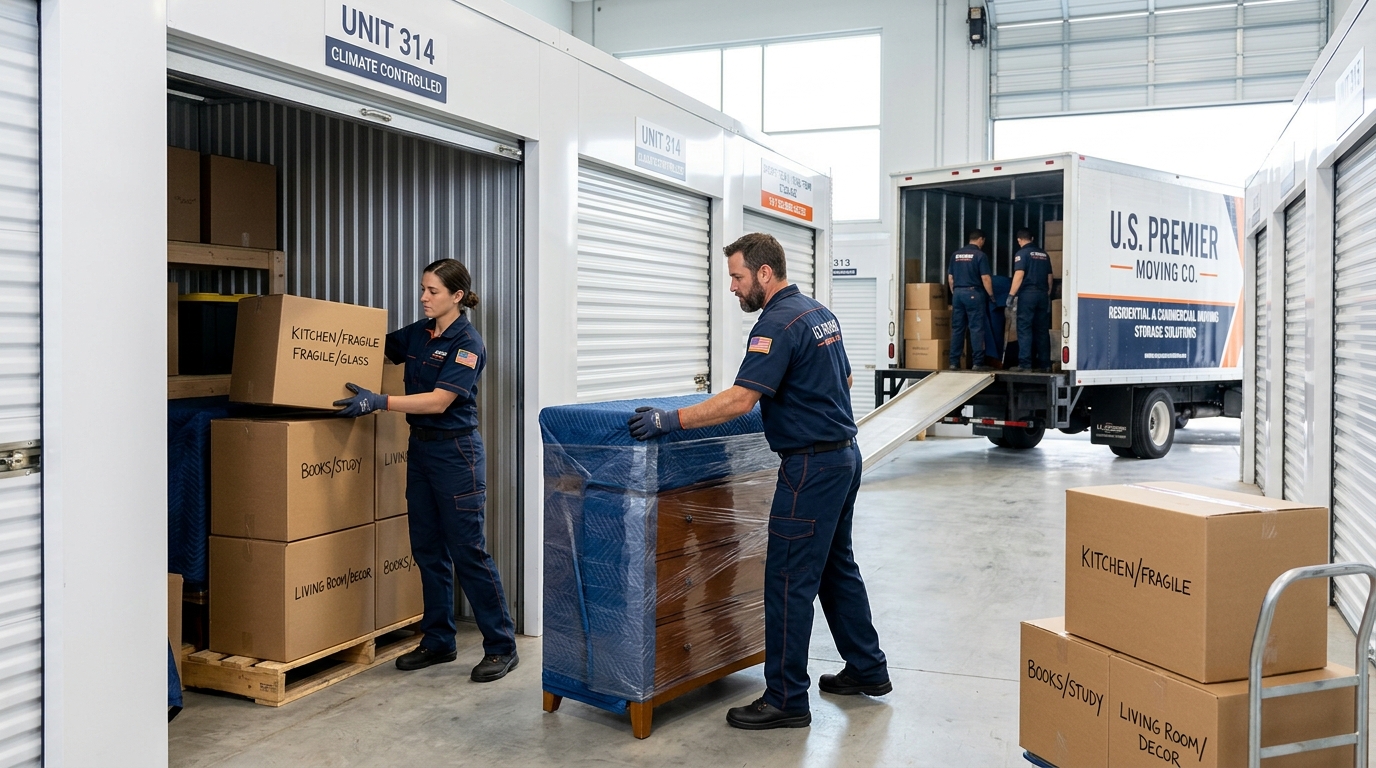
When a move does not line up perfectly, storage quickly becomes part of the plan. Maybe you are closing on your new home two weeks after your lease ends. Maybe your renovation is running behind. Or maybe you simply are not ready to decide what stays and what goes. That is when choosing between short-term and long-term storage really matters.
The challenge is that not all storage is the same. Short-term storage, storage in transit through your mover, and long-term storage each come with different pricing structures, rules, and expectations. Picking the wrong option can lead to higher costs, extra handling of your belongings, or frustration when you need something you cannot easily access.
This guide walks through short term vs long term storage from a mover’s perspective. You will learn when each option makes sense, how storage-in-transit works, what affects pricing, how to protect your belongings, and how to decide what to store and for how long. Throughout, we will also show how Atlas Route Moving can coordinate storage as part of a smooth, door-to-door relocation.
By the end, you will have a clear plan for whether you need short term storage, long term storage, or a combination of both, and how to talk with a moving company about the right solution for your situation.
Key takeaways
- Short-term storage usually means a few days to a few months and often works best as storage-in-transit arranged through your moving company.
- Long-term storage is generally several months or more and requires extra attention to packing, climate concerns, and long-range budgeting.
- Pricing models, access rules, and liability can differ significantly between short-term and long-term storage facilities.
- Clarifying how long you actually need storage helps you avoid paying premium short-term rates for what becomes a long-term situation.
- Good labeling, a clear inventory, and protecting high-value or sensitive items are critical no matter how long you store.
- Coordinating moving and storage with a single company can reduce handling, simplify scheduling, and create more predictable costs.
- Atlas Route Moving offers flexible storage options that can be tailored to short-term gaps, longer stays, or a mix of both.
Short-term vs. long-term storage: the basics
Before you compare specific prices, it helps to define what short-term and long-term storage usually mean in the moving world. There is no single legal definition, but movers and storage providers tend to use these ranges.
What is short-term storage?
Short-term storage typically covers very temporary needs: anything from a few days up to around three months. It is commonly used during a move when your belongings need a “holding place” between homes or while you solve a short-lived timing issue.
Short-term storage is frequently provided as storage-in-transit by the same company that is handling your move. Your items are picked up, loaded, stored in a warehouse or container, then delivered when your new place is ready, often without you needing to re-handle each box.
- Typical duration: a few days to 3 months
- Best for: closing date gaps, short renovations, fast relocations, last-minute schedule changes
- Advantages: integrated with the move, less handling, often simpler to schedule
- Considerations: higher monthly rate than some long-term facilities, limited access while in transit
What is long-term storage?
Long-term storage usually means anything beyond three to six months. Here, you are not just bridging a short gap; you are storing items you do not need access to for an extended period. Long-term storage is common for military or job relocations, downsizing, overseas assignments, and long renovation projects.
Because your belongings will sit for a while, how they are packed and how the storage environment is managed matter much more. Issues like moisture, temperature swings, and pest control become more significant over time.
- Typical duration: 6 months, 1 year, or longer
- Best for: long relocations, downsizing, extended travel, keeping heirlooms or seasonal items off-site
- Advantages: often more cost-effective per month, can be set-and-forget with automatic billing
- Considerations: need for better packing and protection, clear inventory, and decisions about what is really worth storing
Why the distinction matters
Understanding short term vs long term storage helps you choose the right type of facility, price structure, and packing strategy. It also helps you avoid one common problem: putting items into “temporary” storage and then leaving them there for years without planning for the long-term cost or condition of your belongings.
A good rule of thumb: if you are highly likely to need access to items in less than three months, treat the situation as short-term; if you could go six months or more without them, plan for long-term storage from the start.
What is storage-in-transit during a move?
In the moving industry, “storage-in-transit” (often abbreviated as SIT) is a specific type of short-term storage that is used while your shipment is in the custody of your mover. It is designed to be temporary and part of the same door-to-door move, not a separate, long-term arrangement.
How storage-in-transit works
Here is a simplified overview of how storage-in-transit usually fits into a move:
| Step | What happens | Who is responsible |
|---|---|---|
| 1. Pickup | Movers load your belongings at your origin home or office. | Moving company |
| 2. Transport to storage | Your shipment is taken to the mover’s warehouse or storage facility. | Moving company |
| 3. Storage-in-transit | Items are stored securely for a limited, agreed-upon period. | Moving company |
| 4. Final delivery | When your new place is ready, movers deliver and unload your belongings. | Moving company |
Storage-in-transit can be more convenient than renting your own self-storage because the same crew or company handles the entire chain of custody. There is no need for you to rent a truck twice or re-handle heavy items into and out of a self-storage unit.
How long can you use storage-in-transit?
Exact time limits vary by mover and by your specific service agreement. Many companies allow storage-in-transit for a set number of days at a daily or monthly rate, with options to convert to longer-term storage if needed.
If you suspect your «temporary» storage might stretch beyond a couple of months, tell your moving consultant early so they can quote both SIT and long-term options and explain how the transition would work.
When storage-in-transit is a good fit
- You have a firm but slightly delayed closing date on your new home.
- Your lease start date is a few weeks after your current lease ends.
- Construction, cleaning, or painting at the new place will take a short, known amount of time.
- You are relocating for work and waiting on corporate housing or a start date.
Atlas Route Moving can coordinate storage-in-transit as part of a broader moving plan so that pickup, storage, and final delivery are handled by one organized team.
Common scenarios where storage makes sense
To decide between short term vs long term storage, it helps to look at common real-life scenarios and which option tends to work best.
| Scenario | Recommended storage type | Why it fits |
|---|---|---|
| 1-week gap between move-out and move-in | Short-term storage-in-transit with your mover | No need for you to move items twice; integrated with the move. |
| 2-month home renovation after closing | Short-term storage, possibly SIT | Predictable timeline; easier to keep everything together until work is done. |
| 1-year overseas assignment | Long-term storage with climate considerations | You will not need access for a year; cost and protection matter more. |
| Downsizing, still deciding what to keep | Long-term storage for selected items only | Gives you time to decide, without cluttering your smaller home. |
| College student between leases for a summer | Short-term storage (2–3 months) | Limited time; small number of items; ideal for temporary storage moving. |
In each case, the duration and your need for access are the main drivers. The longer and more uncertain the storage period, the more you should lean toward a long-term storage setup with clear cost expectations and a focus on preserving the condition of your belongings.
Cost differences between short-term and long-term storage
Every provider prices storage a bit differently, but some patterns appear across the industry. Understanding these patterns will help you compare estimates and avoid surprises.
Common cost factors
Whether you choose short term storage or long term storage, pricing usually reflects:
- How much space your items occupy (volume, weight, or unit size)
- How long you store them (days or months)
- Type of storage (storage-in-transit vs stand-alone unit vs warehouse vaults)
- Access level (limited access vs frequent access, by appointment or 24/7)
- Location (urban vs suburban, high-demand areas)
- Add-ons (climate control, additional protection, handling fees)
Typical pricing differences
Short-term storage, especially when provided as storage-in-transit, often functions like an extension of the move. You might see daily or monthly SIT charges plus handling fees. Long-term storage, in contrast, is usually billed monthly with a different structure.
| Cost factor | Short-term / SIT | Long-term storage |
|---|---|---|
| Rate structure | Daily or monthly charges tied to the move, sometimes with minimums. | Monthly rate per vault, unit, or cubic foot; often more cost-effective over time. |
| Handling fees | Loading into storage and out again often included or itemized with the move. | May include initial handling and separate delivery fees when you remove items. |
| Access fees | Limited access while shipment is in transit; special access may incur a fee. | Some facilities include access in the rent; others charge for assisted access. |
| Minimum term | Often flexible, but with minimum days billed. | May require a one-month minimum, sometimes with discounts for longer commitments. |
Estimating your total storage cost
To avoid underestimating storage costs, it helps to do a quick back-of-the-envelope calculation.
- Estimate how many months your belongings will be in storage, using a realistic, not optimistic, timeline.
- Multiply the monthly or daily rate by that number of months.
- Add any quoted handling, pickup, and delivery fees.
- Compare this total against the value and replacement cost of what you are storing.
If the total cost to store items for a year approaches or exceeds the cost to replace them, it might be smarter to donate, sell, or recycle those items instead of storing them.
How to choose: short term vs long term storage
Deciding between short-term and long-term storage is not just about the calendar. It is about uncertainty, access, and your long-term plans. This section provides a simple framework.
Five key questions to guide your decision
- 1. How firm is your timeline?
If you have a specific move-in date or project completion date within a few weeks, short-term storage-in-transit is often ideal. If your plans are open-ended, plan for long-term storage. - 2. How often will you need access?
If you need to get into boxes for work files, seasonal clothing, or inventory, ask about access policies. Long-term self-storage can offer more frequent access, while SIT favors minimal access until final delivery. - 3. What is the climate where your items will be stored?
In areas with high humidity or temperature swings, long-term storage may call for climate control, especially for wood furniture, instruments, electronics, and artwork. - 4. What is the value of what you are storing?
High-value or irreplaceable items might justify higher storage and protection costs; items with low replacement value may not be worth storing long term. - 5. How much help do you want?
Coordinated storage through a moving company provides more support with packing, inventory, and handling, while stand-alone self-storage puts more responsibility on you.
Decision framework: where do you fit?
| If this sounds like you… | Lean toward… | Reason |
|---|---|---|
| I know my move-in date and it is within 60 days. | Short-term storage-in-transit | Keeps logistics simple and reduces handling. |
| I have no firm date when I will retrieve items. | Long-term storage solution | Lets you budget and pack properly for the long haul. |
| I need frequent access to stored items. | Long-term storage with flexible access | Access rules are designed for repeat visits. |
| I want as few moving steps as possible. | Mover-managed storage solution | Single provider handles pickup, storage, and delivery. |
When you speak with a moving consultant from Atlas Route Moving, being open about your timeline uncertainty helps us recommend the right mix of short-term and long-term storage options, as well as provide a realistic cost estimate.
Planning your moving and storage timeline
Storage is easiest to manage when it is baked into your moving plan as early as possible. Here is a sample timeline you can adapt, whether you are planning short term or long term storage.
Sample moving and storage planning timeline
| Time before move-out | Key tasks | Storage considerations |
|---|---|---|
| 6–8 weeks | Get moving quotes, decide whether you need storage, create an inventory. | Discuss short-term vs long-term storage, SIT options, and climate needs with your mover. |
| 4–6 weeks | Sort, donate, sell, or discard items you do not want to store; finalize booking. | Reduce volume to save on long-term storage costs; verify storage dates and location. |
| 2–3 weeks | Begin packing non-essentials, label boxes clearly, separate «do not store» items. | Group items by how long they will be stored; set aside what should stay with you. |
| 1 week | Confirm final details with your mover; pack a personal essentials kit. | Double-check what is going to storage vs. immediate delivery. |
| Move day | Meet the crew, walk them through what goes to storage and what does not, review paperwork. | Confirm storage duration, access rules, and anticipated delivery window if using SIT. |
Checklist: storage planning questions
- Do I know my approximate move-in or retrieval date?
- What items do I absolutely need with me during the storage period?
- Which belongings can stay packed and untouched for six months or more?
- Are there any building rules that affect when my goods can be moved in or out of storage?
- Have I budgeted both moving and storage costs for the full expected duration?
How to pack and prepare items for storage
Whether you choose short-term or long-term storage, packing correctly is your best protection against damage, dust, and confusion later. The longer items will be stored, the more carefully you should pack and label them.
Packing differences: short-term vs. long-term
| Aspect | Short-term storage | Long-term storage |
|---|---|---|
| Boxes | Standard moving boxes usually suffice if they are not overpacked. | Sturdy, uniform boxes that stack well; avoid weak or reused boxes for heavy items. |
| Wrapping & cushioning | Standard paper, bubble wrap, and moving blankets. | Extra padding, double-wrapping for fragile or valuable items, plastic covers for furniture and mattresses. |
| Moisture protection | Less critical for a few weeks, but still helpful. | Consider moisture barriers, desiccant packs for sensitive items, avoiding plastic that traps condensation on wood. |
| Labeling | Room names and brief contents. | Room, detailed contents, and priority (e.g., «Open first» vs. «Long-term»). |
Checklist: packing for storage
- Use high-quality boxes and packing tape rather than flimsy or worn-out cartons.
- Do not overfill boxes; keep them under a manageable weight to prevent crushing.
- Cushion fragile items with plenty of packing paper or bubble wrap.
- Wrap upholstered furniture and mattresses in breathable covers.
- Place heavier boxes at the bottom and lighter boxes on top to avoid crushing.
- Clearly label every side of each box with the room and a summary of contents.
- Create a simple written or digital inventory of boxes and major furniture pieces.
Example label: «Master bedroom – winter clothes – long-term storage – box 3 of 5»
If you prefer not to handle this yourself, Atlas Route Moving can provide professional packing services tailored to items headed for short-term or long-term storage, using appropriate materials and labeling methods.
Access, security, and logistics to consider
Storage is more than just a space with a lock. How and when you can access your stored items and how your mover manages logistics have a big impact on your experience.
Access considerations
- Storage-in-transit access
When your belongings are in storage-in-transit, access is usually limited. Because shipments are stacked and organized for efficient warehouse operations, unscheduled access can be difficult or require a fee and advance notice. - Long-term warehouse storage
Some moving-company warehouses allow access by appointment, with staff assisting in retrieving your vault or items. Others treat long-term storage as a closed environment until delivery. - Self-storage style access
If your long-term storage is in a self-storage-style unit provided through your mover, you may have your own lock and more flexible access, but you will likely handle more of the labor yourself.
Security and protection
- Ask how the facility is monitored (cameras, gated access, on-site staff).
- Confirm how your shipment is identified and tracked (inventory numbers, barcodes, vault labels).
- Understand what level of valuation or coverage applies while your goods are in storage.
- Check whether the facility is indoor, outdoor, climate-controlled, or standard.
Logistics: pick-up and delivery
For temporary storage moving, coordination is key. Clarify:
- Who schedules the final delivery from storage to your new home.
- What notice is required to schedule delivery (e.g., 5–10 business days).
- Any fees for delivery from storage beyond a certain distance or time window.
- Building access issues at your new home (elevators, loading docks, parking permits).
Atlas Route Moving coordinates these details with you so that storage is integrated into your overall move plan instead of being a separate, confusing project.
Questions to ask your mover about storage
Before you commit to any storage option, clear answers will help you compare providers and avoid misunderstandings. Here are key questions you can ask a moving company like Atlas Route Moving.
- What storage options do you offer for my type of move?
«Can you explain the difference between storage-in-transit and longer-term storage for my shipment?» - How do you charge for storage?
«Is pricing daily or monthly, and what are the handling or access fees, if any?» - Is there a maximum or minimum storage period?
«What happens if I need to extend storage beyond the original estimate?» - How is my shipment protected while in storage?
«Can you describe your facility, security measures, and how items are wrapped and stacked?» - What level of valuation or coverage applies during storage?
«Does the same coverage apply in storage as during transit, and are there upgrade options?» - How much notice do you need to arrange final delivery?
«If my schedule changes, how flexible can delivery dates be?» - Will the same company handle my entire move and storage?
«Will my shipment stay within your network, or will a partner handle part of the storage?»
Taking notes on these answers makes it easier to compare multiple estimates and choose the combination of short-term and long-term storage that feels right for you.
Common storage mistakes and how to avoid them
Storage problems usually come down to a few repeated mistakes. Being aware of them now can save money and stress later.
Frequent mistakes when using storage
| Mistake | Why it is a problem | How to prevent it |
|---|---|---|
| Underestimating how long storage will last | Short-term solutions become unexpectedly expensive when months stretch into a year or more. | Plan for the realistic worst case; choose pricing suitable for a longer stay if your timeline is uncertain. |
| Storing items not worth the long-term cost | You can end up paying more in storage fees than the items are worth. | Compare total storage cost vs. replacement value; donate, sell, or recycle low-value items instead. |
| Poor labeling and inventory | Hard to find items later; increases time and stress when unpacking or accessing storage. | Label every box and keep a simple list; note which boxes contain essentials vs. deep storage items. |
| Skipping climate or protection for sensitive items | Long-term exposure to humidity, heat, or cold can damage wood, electronics, and artwork. | Ask about climate conditions; use proper packing and avoid storing extremely sensitive items when possible. |
Checklist: avoid these storage pitfalls
- Be honest with yourself about how long you might need storage.
- Do a quick cost vs. value calculation for items you plan to store long term.
- Reserve enough time to label and inventory boxes before move day.
- Discuss climate and protection needs for high-value items with your mover.
- Keep critical documents, medications, and irreplaceable items with you, not in storage.
How Atlas Route Moving can help with storage
Storage works best when it is fully integrated into your move, not added on at the last minute. Atlas Route Moving offers flexible storage options in the United States designed to support local and long-distance moves, apartment relocations, house moves, office moves, and senior moves.
Depending on your needs, we can coordinate:
- Short-term storage-in-transit when there is a gap between move-out and move-in dates.
- Longer-term storage solutions if you are downsizing, traveling, or waiting on a long project or assignment.
- Packing services tailored for items going into storage, including careful wrapping, labeling, and inventory.
- Coordinated delivery from storage to your new home or office when you are ready.
Helpful Atlas Route Moving services
To explore storage options specifically, you can review the storage services from Atlas Route Moving and then speak with a moving consultant about your timing, access needs, and budget.
Frequently asked questions
How long is considered short-term storage?
Short-term storage usually means a few days to around three months. In moving, this is often provided as storage-in-transit when your belongings are held by your mover between pickup and final delivery.
When should I choose long-term storage instead of short-term?
If you expect your belongings to be stored for more than three to six months, or your return date is uncertain, it is usually better to plan for long-term storage with pricing, packing, and protection geared to a longer stay.
Is storage-in-transit cheaper than renting my own unit?
It depends on how long you store and how much handling is involved. Storage-in-transit can be cost-effective for short gaps because it reduces extra trips and re-handling. For longer periods, self-storage style or long-term warehouse storage may offer a lower monthly rate.
Can I access my items while they are in storage-in-transit?
Access to storage-in-transit is typically limited because shipments are stacked for efficient warehouse operations. Some movers allow access by appointment and may charge a fee, so it is best to ask about policies before you book.
What should I avoid putting in long-term storage?
Avoid storing perishable items, open food, hazardous materials, and anything that may attract pests. Very high-value or irreplaceable items, important documents, and medications are usually safer kept with you instead of in long-term storage.
Do I need climate-controlled storage?
Climate control is strongly recommended for long-term storage of wood furniture, musical instruments, electronics, artwork, photographs, and other items sensitive to temperature and humidity. For brief short-term storage, standard conditions may be fine, depending on your location and season.
How can I keep storage costs under control?
Limit what you store to items that are genuinely worth the long-term cost, declutter before packing, choose the right type and size of storage, and be realistic about how long you will actually need it. A clear inventory also helps you avoid paying for space you do not need.
Can Atlas Route Moving handle both my move and storage?
Yes. Atlas Route Moving can coordinate pickup, storage-in-transit or longer-term storage options, and final delivery as part of a single, organized move plan. This can simplify logistics and reduce extra handling of your belongings.
Sources referenced in this guide
To create this guide, we relied on common industry practices and general consumer guidance from:
- Federal Motor Carrier Safety Administration consumer guidance for household moves
- U.S. Department of Transportation moving guidance materials
- State transportation and consumer protection agency recommendations on moving and storage
- Typical moving company tariffs, valuation options, and storage-in-transit provisions
- Written moving estimates, inventories, and bills of lading used in residential and commercial moves
Next steps: plan your storage with confidence
Choosing between short term vs long term storage does not have to be confusing. If you know your approximate timeline, what you will need access to, and what you truly want to keep, you are already most of the way there.
From there, the right partner makes the process smoother. Atlas Route Moving can help you evaluate storage options, estimate costs, and plan the logistics so that your belongings are packed, transported, and stored in a way that matches your needs.
If you are planning a move and expect to need storage, you can review our moving services, check your budget with the moving cost calculator, confirm that your destination is within our service areas, and then request a free moving quote tailored to your storage timeline.
Related moving guides
For more planning tips, you can also explore the Atlas Route Moving blog, which covers packing, timelines, and ways to make your move and storage experience more organized.
This guide is general moving information, not legal, insurance, or regulatory advice. Moving requirements, pricing, access rules, and coverage options may vary by location, move type, building rules, and service agreement.