
How to Pack a Storage Unit So You Fit More and Find Everything
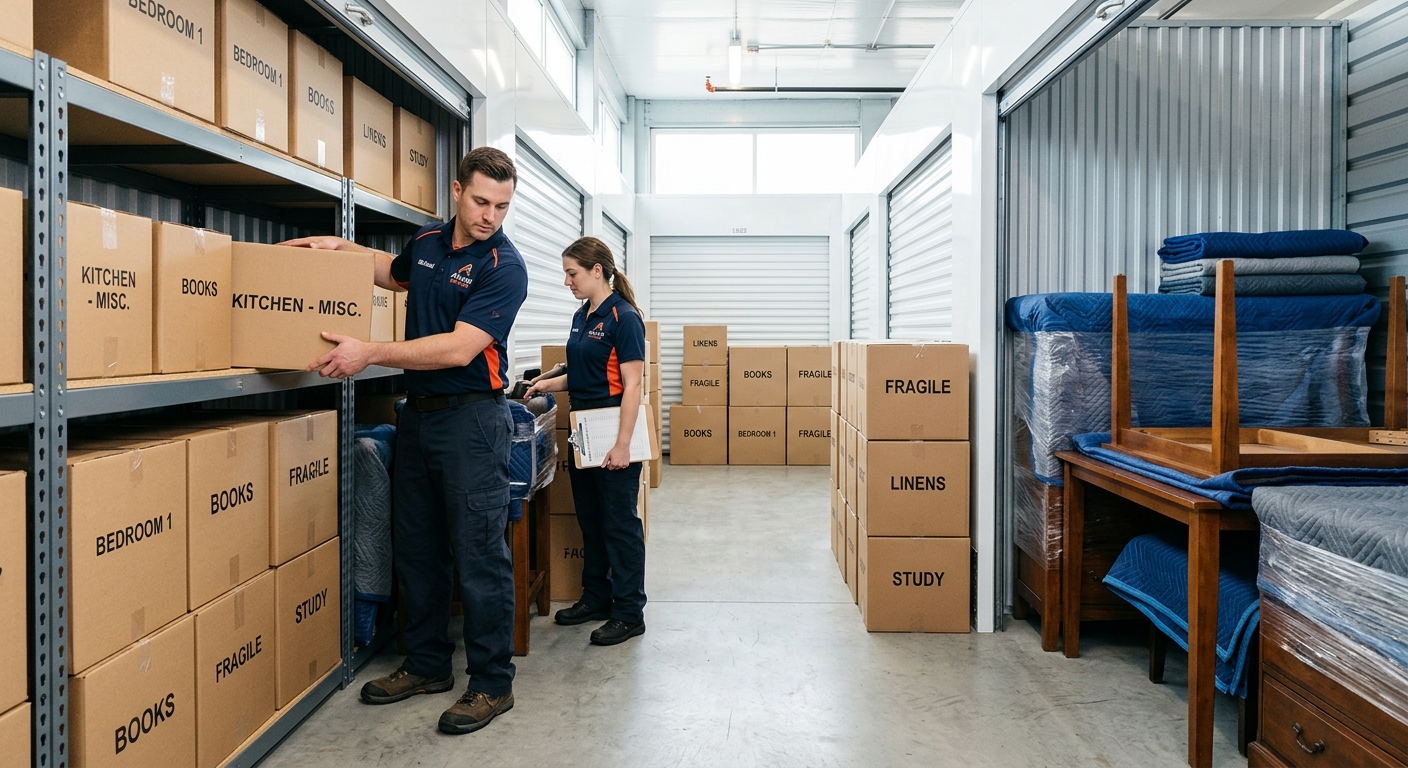
When you rent a storage unit, it is tempting to load everything in as fast as possible and slam the door. Then a month later you need your winter coat, that one tax file, or your kids' sports gear—and you end up digging through a wall of boxes. Knowing how to pack a storage unit properly can be the difference between a clean, accessible space and a frustrating maze.
A smart storage unit layout does not just help you stay organized. It also lets you fit more into the same size unit, protects furniture and fragile items, and makes it easier for movers to load and unload safely. Whether you are between homes, downsizing, or just clearing space, the way you organize a storage unit will directly affect how usable it feels.
This guide walks step-by-step through how to pack a storage unit so you fit more and find everything. We will cover layout planning, what to load first, how high to stack, aisle access, protecting your belongings, and how Atlas Route Moving can help with professional packing and storage services when you want support.
Use this as a field guide as you plan, pack, and load a storage unit for your move or long-term storage.
Key takeaways
- Decide what needs frequent access and what can stay in the back of the unit before you start loading.
- Use a clear layout: heavy items and furniture on the bottom and sides, lighter labeled boxes stacked safely on top.
- Leave a center aisle and small side gaps so you can walk in and reach items without unpacking half the unit.
- Use uniform, sturdy boxes, proper wrapping, and furniture protection to keep items stable and protected long term.
- Create a simple inventory and unit map so you can find specific items quickly months later.
- Avoid overloading stacks, using flimsy bags, or storing items directly on the floor where moisture and dust collect.
- Professional movers and storage services can help with packing, loading, and layout if you want expert support.
Why planning how to pack a storage unit matters
Most people think the main goal of a storage unit is just "get everything inside and close the door." But the two real goals are:
- Maximize how much you can safely fit in the unit.
- Make it easy to find and access what you need later.
When you organize a storage unit with a plan, you:
- Reduce the size of the unit you need, which can lower your monthly cost.
- Lower the risk of things falling, breaking, or being crushed under heavy boxes.
- Cut down on stress—especially during a move—because you know where things are.
- Make it easier for professional movers to load and unload efficiently.
If you are renting storage as part of a move, planning also helps your moving crew at Atlas Route Moving work faster and more safely. A clear plan for where items go, what loads first, and which boxes must stay accessible can shave time off the job and keep your belongings better protected.
Choosing the right size and type of storage unit
Before you think about how to pack a storage unit, you need to confirm you have the right size and type of unit. Too small, and you end up cramming and stacking dangerously. Too large, and you pay for space you do not use.
Estimate your storage needs
A quick way to estimate size is to think in terms of rooms:
- Studio or 1-bedroom apartment: often fits in a 5×10 or 10×10 unit.
- 2–3 bedroom home: common sizes are 10×15 or 10×20.
- Larger homes or mixed household and business storage: 10×20 and up.
The type and size of your furniture matter as much as the number of rooms. Oversized sectionals, king beds, or lots of bulky decor may require more space.
For detailed size comparisons, you can review the storage sizing information in the Atlas Route Moving storage unit sizes guide.
Climate-controlled vs. standard units
Consider the kinds of items you will be storing:
- Climate-controlled units help protect sensitive items like wooden furniture, instruments, electronics, important papers, photos, and certain fabrics from temperature and humidity swings.
- Standard drive-up units can work well for yard tools, plastic bins, metal items, and things less affected by climate changes.
Even with climate control, you still need to pack and protect items properly to avoid scratches, warping, and dust.
Access considerations
Think about how often you need to access the unit and what you will be bringing in:
- Drive-up access is convenient for heavy furniture, frequent visits, or business inventory.
- Upper floor or interior units may be more secure or climate-stable but require using elevators or hallways.
Knowing your unit type and size in advance will help you design a storage unit layout that uses every inch sensibly.
How to plan your storage unit layout before move-in
A simple layout plan will guide you as you load a storage unit and prevent "dead" corners you cannot reach. You do not have to be an artist—just sketch the rectangle of the unit and give each zone a purpose.
Core layout principles
- Heaviest and least-used items go in the back and on the bottom.
- Frequently accessed items stay near the front and mid-level.
- Leave an aisle down the center (or an L-shaped aisle) so you can walk inside.
- Use vertical space with safe, stable stacking to maximize storage space.
Here is a simple way to think about zones in a 10×10 or similar unit:
| Zone | Best for | Notes |
|---|---|---|
| Back wall | Long-term items, heavy furniture, appliances | Stack from floor up, heaviest on bottom, stable rows. |
| Side walls | Boxes by room, shelving units, tall items (upright mattresses) | Maintain center aisle; keep labels facing aisle. |
| Center aisle | Walkway, maybe a narrow rolling cart or step stool at front | Do not block with heavy items you cannot move alone. |
Map your "access priority"
Decide which categories you will likely need first:
- Seasonal clothes
- Holiday decor
- Work files or inventory
- Sports gear
- Children's items
On your sketch, mark a front zone for "high access" items and a mid-zone for "medium access." Everything else can go deeper in the unit.
Sample wording to keep in mind as you pack: "If I need this in the next 90 days, it stays toward the front or middle and at an easy height."
Use shelves and furniture creatively
If allowed by the facility, free-standing shelves make it much easier to organize a storage unit. You can also:
- Use sturdy bookcases as shelving (anchor them well with heavy items on the bottom shelves).
- Store smaller items inside dresser drawers and cabinets, leaving doors slightly open for airflow.
- Turn lightweight furniture, like small tables, upside down to stack boxes on top (if it is stable).
Packing supplies and tools that make storage easier
The right materials will keep your items safe and make it easier to stack and navigate your storage unit layout.
Recommended packing supplies
| Supply | Why it helps | Tips for use |
|---|---|---|
| Sturdy moving boxes (small, medium, large) | Stack evenly and protect contents better than bags. | Aim for similar sizes so stacks are stable. |
| Plastic bins with lids (optional) | Moisture-resistant, good for items you access often. | Do not overload; label sides clearly. |
| Packing tape and dispenser | Keeps boxes sealed during long-term storage. | Use H-taping (across seams) for extra strength. |
| Bubble wrap, packing paper, or foam sheets | Protect fragile items from shocks and scratches. | Avoid using only newspaper, which can stain. |
| Furniture blankets and stretch wrap | Cushion and protect furniture surfaces and corners. | Cover fully and secure with tape or stretch wrap (not onto finished wood). |
| Mattress bags or covers | Keep mattresses clean and protected from dust. | Store mattresses upright along a wall. |
Helpful tools for move-in day
- Furniture dollies and hand trucks for heavy items.
- Ratchet straps or rope to secure tall stacks if needed.
- A step stool for safely accessing top boxes.
- Thick cardboard sheets or pallets to lift items slightly off the floor.
If you prefer not to handle all the packing and protection yourself, Atlas Route Moving can provide professional packing materials and careful wrapping as part of our moving and storage services.
How to pack room-by-room for storage
Packing with storage in mind is slightly different from packing just to move across town. You want to think in terms of categories, access needs, and durability.
General packing rules for storage
- Use small boxes for heavy items (books, tools, canned goods).
- Use larger boxes for lightweight items (pillows, bedding, decor).
- Do not leave empty space inside boxes; fill gaps with paper or soft items.
- Label every box on at least two sides with room + key contents.
- Avoid thin garbage bags; they tear easily and do not stack.
Living room and decor
- Wrap TVs and electronics in original boxes if available or use foam, bubble wrap, and sturdy boxes.
- Bundle cables and label them so you know what goes with what.
- Wrap framed art, mirrors, and glass in bubble wrap and mark them as "Fragile" and "Do not lay flat."
Bedroom and clothing
- Use wardrobe boxes for hanging clothes to avoid wrinkles and dust.
- Pack off-season clothing in medium boxes or bins by person and season.
- Remove linens from mattresses and store them in labeled boxes or bags.
Kitchen and fragile items
- Individually wrap dishes and stack plates vertically like records.
- Use cell kits or dividers for glasses and stemware.
- Group similar kitchen tools and label clearly for easier unpacking later.
Garage, tools, and outdoor items
- Clean and dry outdoor furniture and grills before storage.
- Drain fuel from lawn equipment according to manufacturer guidelines.
- Bundle long items (rakes, shovels, brooms) and store them upright in a corner or a barrel.
When you organize a storage unit, keeping items grouped by room and category will make it much easier to retrieve what you need and eventually move out of storage.
How to load a storage unit: bottom-to-top strategy
Now that you are packed, it is time to load the unit. The way you load a storage unit has a huge impact on safety, access, and how much you can fit.
Step-by-step loading sequence
- Lay a base layer. Put down pallets or flattened sturdy boxes if you want an extra buffer between items and the floor.
- Start with large furniture and appliances. Place them against the back wall and sides, upright whenever possible.
- Build stable "walls" of boxes. Put heaviest, least-used boxes on the bottom rows; stack lighter boxes on top.
- Create and preserve a center aisle. Do not let stacks creep across your walkway.
- Fill in smaller gaps. Slide in lightweight, durable items where they will not get crushed.
- Place frequently accessed items last and near the front. Keep them at about waist-to-shoulder height if you can.
Safe stacking guidelines
| Stacking rule | Reason | Practical tip |
|---|---|---|
| Heavier boxes on the bottom | Prevents crushing and tipping. | Reserve bottom layer for books, tools, dense items. |
| Lighter, bulky boxes on top | Keeps stacks stable without overloading. | Use for bedding, pillows, clothing. |
| Align box edges | Creates solid "cubes" that resist leaning. | Avoid pyramids; keep sides flush. |
| Don't over-stack | Reduces tip risks and makes top boxes reachable. | Waist-to-head height is ideal; use step stools safely if needed. |
Using furniture as structure
- Place dressers and sturdy tables against walls and stack a limited number of boxes on top.
- Store sofas on end if possible to save floor space, with padding on corners.
- Slide flat boxes or lightweight items under beds and low tables.
If you ever feel like a stack might wobble or lean, stop and rebuild it lower and wider. Safety and access matter more than squeezing in one extra box.
Protecting furniture and fragile items in storage
One key part of learning how to pack a storage unit is understanding how different materials behave over time. Dust, shifting stacks, and small bumps can wear on items more than you might expect.
Furniture protection basics
- Wrap wood and upholstered furniture in padded moving blankets.
- Avoid taping directly to finished wood or leather; tape onto the blanket or use stretch wrap.
- Remove glass shelves and table tops, wrap them separately, and store vertically.
- Disassemble bed frames, tables, and large items when possible, and keep hardware in labeled bags taped to the main piece.
Mattresses and sofas
- Use mattress bags to protect against dust and surface marks.
- Stand mattresses upright along a wall, but avoid bending them sharply.
- Do not stack heavy items on top of sofas or mattresses—they can sag or deform over time.
Fragile and high-value items
- Use plenty of cushioning around fragile items, and avoid leaving empty space inside boxes.
- Mark several sides of fragile boxes with "Fragile" and "This side up."
- Consider grouping particularly valuable or irreplaceable items in a smaller, clearly marked front section of the unit.
For deeper guidance on protecting furniture specifically, you can review the detailed tips in the Atlas Route Moving article on how to store furniture long term.
Labeling, inventory, and how to find everything later
Even if you are an expert in how to pack a storage unit physically, the job is not complete until you can actually find items again. That is where labeling and inventory come in.
Effective labeling system
- Label at least two sides of every box, not just the top.
- Include room, category, and 2–3 key items (for example, "Kitchen – Baking – mixer, pans, cookie sheets").
- Use a contrasting marker color and large, clear print.
- Consider color-coding by room (stickers or tape).
Create a simple inventory list
You can keep inventory on paper, a spreadsheet, or a basic notes app. The goal is to make it easy to identify which box a particular item is in and roughly where it sits in your storage unit layout.
| Box ID | Label on box | Location in unit |
|---|---|---|
| K-03 | Kitchen – Baking – mixer, pans, sheets | Left wall, middle stack, second row from front |
| BR-08 | Bedroom – Winter clothes – Alex | Right wall, top of second stack from door |
| OFF-02 | Office – 2022 tax files | Front right, eye level |
Sample wording to add at the top of your inventory: "If I need an item and cannot remember where it is, I will check this list before opening random boxes."
Take photos before closing the door
- Stand at the doorway and take photos from several angles showing labels and general layout.
- Take close-ups of high-priority zones (documents, seasonal clothes, tools).
- Save photos alongside your inventory list so you can refer to them months later.
Common storage unit mistakes and how to avoid them
Even people who know how to pack a storage unit conceptually can run into problems on moving day. Here are frequent mistakes and better alternatives.
| Mistake | Why it is a problem | Better approach |
|---|---|---|
| Packing in random order | You lose track of where things are and what loads first. | Pack by room and priority; stage items before loading. |
| No aisle or walkway | You must unload half the unit to reach the back. | Plan a center or L-shaped aisle and protect it. |
| Storing directly on the floor | Increases exposure to dust and potential moisture. | Use pallets, risers, or cardboard sheets as a buffer. |
| Overusing trash bags | They tear easily and do not stack; items can be mistaken for garbage. | Use sturdy boxes or bins and label clearly. |
| Ignoring labels | Finding a single item becomes a time-consuming search. | Label multiple sides and keep an inventory list. |
Checklist: mistakes to avoid on loading day
- Do not stack heavy boxes on top of fragile items.
- Do not block electrical panels, facility access points, or unit doors.
- Do not leave sharp edges or protruding objects where they can snag or injure.
- Do not forget to lock and secure the unit with a quality lock.
What to do before movers load your storage unit
If you are using professional movers like Atlas Route Moving to take items into storage, doing a bit of prep work ahead of time will help the day go smoothly and keep your layout plan on track.
Pre-move preparation checklist
- Confirm unit details – Size, location in the facility, access hours, elevator or drive-up instructions.
- Clear floor plan sketch – Bring a simple drawing of your storage unit layout with zones labeled (back, left, right, front).
- Group items by zone – In your home or staging area, group "back of unit" items separately from "front" or "frequent access" items.
- Finish labeling – Make sure all boxes are labeled and fragile items are clearly marked before movers arrive.
- Separate "go with me" items – Keep important documents, medications, and daily essentials away from the storage pile so they are not loaded by mistake.
When your moving crew arrives, walk them through your plan:
- Explain which items should go to the back vs. front of the unit.
- Point out particularly fragile or high-value items.
- Clarify what you expect to access frequently.
Professional movers are used to organizing and loading storage units; sharing your priorities helps them apply that experience to your specific situation.
Cost considerations and how to maximize storage value
How you organize a storage unit can actually affect what you pay over time. A well-planned layout might let you choose a slightly smaller unit or consolidate sooner.
Key factors that affect storage cost
| Cost factor | How it impacts you | What you can control |
|---|---|---|
| Unit size and type | Bigger and climate-controlled units typically cost more per month. | Use an efficient layout to avoid over-sizing your unit. |
| Length of stay | Longer storage periods add up over time. | Keep an inventory so you can downsize or clear out sooner. |
| Access needs | Premium or extended-access options may cost more. | Store truly long-term items deeper, short-term near the front. |
Strategies to maximize value
- Declutter before renting a unit so you only store what you truly need.
- Pack and load efficiently so you do not pay for unused floor space.
- Review your inventory every few months and remove items you no longer need.
- Consider combining storage with a well-planned move so you handle items fewer times.
How Atlas Route Moving can help with storage
Organizing and loading a storage unit takes time, planning, and physical work. If you would like help at any step—from packing and labeling to loading the unit with a professional layout—Atlas Route Moving can step in.
Our team is experienced with:
- Local and long-distance moves that include storage stops or multiple destinations.
- Packing services to protect fragile items, furniture, and long-term storage goods.
- Coordinating storage logistics so your items are loaded safely and strategically.
We can handle just the heavy lifting and loading, or provide full-service support from packing to storage and final delivery. To see how storage fits into our broader moving options, you can review our moving services overview.
Helpful Atlas Route Moving services
If you are planning a move that includes storage, Atlas Route Moving can help you decide what to store, how to pack for the storage phase, and how to stage your items so move-in and move-out from storage are efficient.
Related moving guides
Frequently asked questions
How do I decide what goes in the back of the storage unit?
Place heavy, rarely used items in the back—such as long-term keepsakes, archived files, or off-season furniture. Anything you will not need for several months can safely go in deeper zones, while items you may need sooner should stay closer to the front.
How can I maximize space in a small storage unit?
Use vertical space with sturdy, similar-sized boxes stacked in stable columns. Store furniture upright when possible, use shelves, and fill hollow furniture (dressers, cabinets) with lighter items. Leave a narrow aisle so you can reach the back without unpacking everything.
Is it okay to store items in plastic bags?
Thin plastic garbage bags tear easily and do not stack well, so they are not ideal for storage units. Use sturdy boxes or bins instead. If you must use bags for soft items, double-bag, label them clearly, and avoid stacking heavy things on top.
Should I put everything on pallets in my storage unit?
Raising items slightly off the floor with pallets or cardboard can help protect against dust and minor moisture, especially for long-term storage. You do not have to put everything on pallets, but it is a good idea for boxes with fabric, paper, or other sensitive materials.
How should I store a mattress in a storage unit?
Use a mattress bag or cover, then stand the mattress upright along a wall. Avoid bending it sharply or placing heavy items on top. If possible, keep it near the side or back where it will not block access to frequently used boxes.
Do I really need an aisle in my storage unit?
A center or L-shaped aisle is one of the best ways to organize a storage unit. Without an aisle, you may need to unload many boxes to reach a single item in the back, which can be time-consuming and risky for fragile items.
How detailed should my box labels be?
At minimum, include the room, category, and a few key items on each label. For example, "Office – files – 2022 taxes, contracts," or "Bedroom – winter clothes – Alex." More detail is helpful, but even a simple system makes a big difference.
Can movers help design my storage unit layout?
Yes. Professional movers like Atlas Route Moving organize and load storage units regularly. If you share your priorities—what you need access to and what is long-term—they can help plan and execute a safe, efficient layout.
What should I keep with me instead of putting in storage?
Keep important documents, medications, daily-use electronics, sentimental items you cannot replace easily, and anything you know you will need in the next few weeks. Separate these from your storage items before movers arrive to avoid mix-ups.
How can I make sure I remember where everything is months later?
Combine clear box labels, a simple inventory list, and a few photos of your packed unit. Note where key categories sit (for example, "holiday decor – back left top") so you can go directly to the right section when you visit the unit.
Sources referenced in this guide
The recommendations in this guide are based on Atlas Route Moving's field experience helping customers pack, move, and store household and office items across a wide range of move types. When planning interstate or commercial moves that include storage, customers may also review general guidance from:
- Federal Motor Carrier Safety Administration consumer guidance
- U.S. Department of Transportation moving guidance
- State transportation or consumer protection agencies
- Building management move-in and move-out requirements
- Written moving estimates and storage or moving service agreements
This guide is general moving information, not legal, insurance, or regulatory advice. Moving requirements, pricing, access rules, and coverage options may vary by location, move type, building rules, and service agreement.
When you are ready to put your plan into action, Atlas Route Moving can help with moving, packing, and storage support. You can review our secure storage services, explore our broader moving services, check our service areas, browse the Atlas Route Moving blog for more guides, or request a free moving quote to talk through your specific storage and moving plans.