
How to Save Money on Packing Supplies
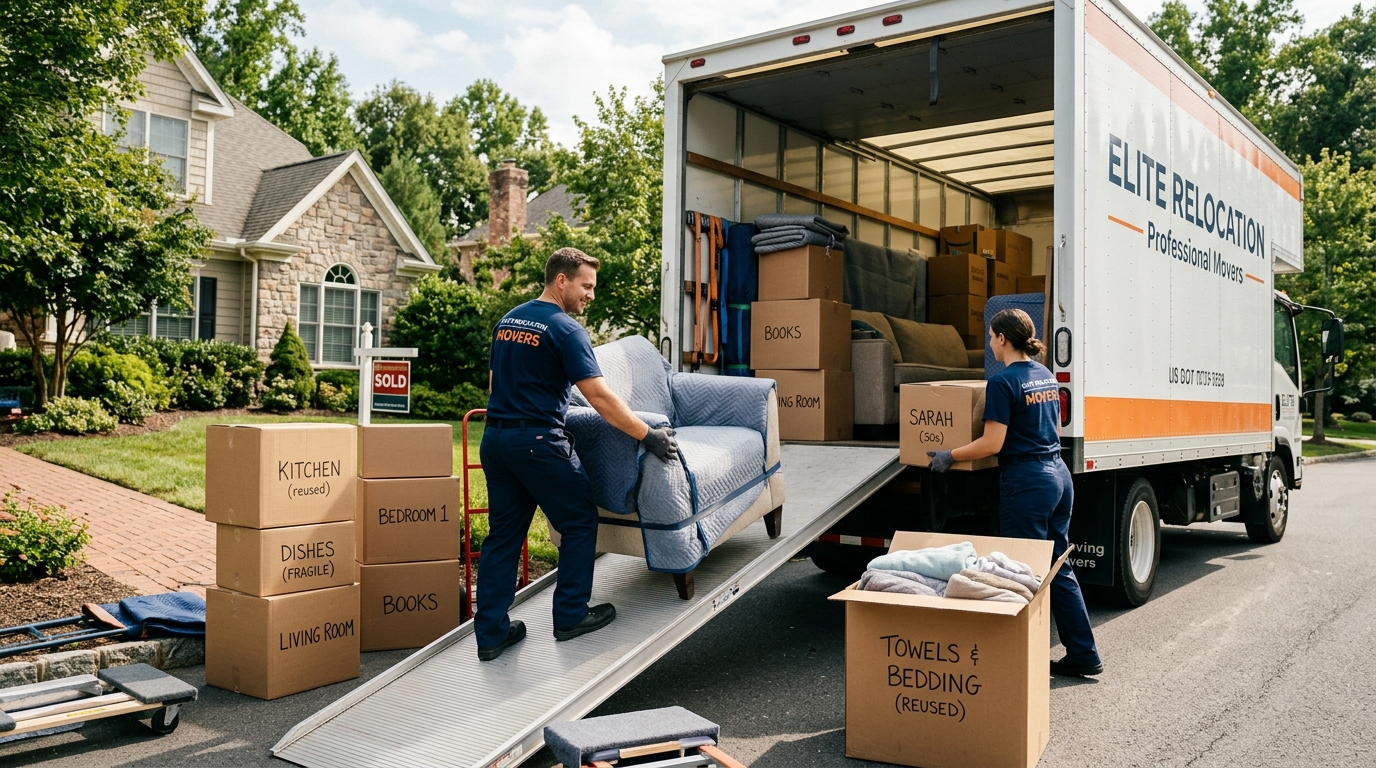
When you start collecting boxes, bubble wrap, and tape, it quickly becomes clear: packing supplies can add up fast. For many households, it is one of the most underestimated moving costs. The good news is that with a little planning, you can dramatically reduce what you spend on boxes and packing materials without putting your belongings at risk.
This guide from Atlas Route Moving walks you through proven ways to save on packing supplies, from finding free moving boxes and using household items as padding, to buying the right materials in bulk and avoiding waste. You will also see where it is smart to spend a little more for better protection and peace of mind.
Whether you are planning a DIY move or hiring professional movers, understanding how to cut packing costs can keep your budget on track. Use this article as a practical planning tool to estimate what you really need, avoid common mistakes, and make confident choices about where to save and where to invest.
Throughout the guide, you will find checklists, comparison tables, and realistic examples you can apply to your own move. If you decide you would rather have professionals handle some or all of the packing, Atlas Route Moving also offers flexible packing support that can work alongside your budget-saving strategies.
Key takeaways
- You can often cut packing supply costs by 30–50% by combining free boxes, household padding, and selective bulk purchases.
- Focus your spending on strong boxes for heavy items, quality tape, and proper protection for fragile or valuable belongings.
- Use towels, bedding, and clothing to replace much of the bubble wrap and packing paper you would otherwise buy.
- Plan your packing room by room and label clearly to avoid overbuying materials and wasting boxes.
- Track what you spend on supplies and compare it with the cost of partial or full professional packing to see which option truly saves money.
- A small amount of the right materials can prevent damage that would cost far more than the packing supplies you were trying to save on.
Why packing supplies add up so quickly
Before you look for ways to save on packing supplies, it helps to understand why they get expensive in the first place. Most people underestimate not just the number of boxes they will need, but also how much paper, tape, cushioning, and specialty materials it takes to safely move an entire household.
Here are the main cost drivers:
- Volume of belongings: Every drawer, shelf, and closet eventually becomes a box. Even a one-bedroom apartment can require 25–40 boxes.
- Fragile items: Kitchens, decor, electronics, and glass items require extra protection, which means more padding and sometimes specialty boxes.
- Multiple box sizes: If you only buy large boxes, they are easy to overpack, which leads to breakage and extra tape and cushioning.
- Last-minute purchases: Buying supplies in small batches at the last minute is usually more expensive than planning ahead.
- Overbuying \»just in case\»: Without a clear estimate, it is tempting to purchase more than you need and end up with leftover supplies you paid for but never used.
To reduce packing costs without compromising safety, you want a balanced approach: use free and low-cost options where they make sense and invest selectively in key materials that protect your most important belongings.
How to estimate what you really need
The first step to save on packing supplies is to estimate what you actually need, rather than guessing. A simple inventory lets you buy smarter, look for free moving boxes more efficiently, and avoid paying for excess materials.
Step 1: Take a quick inventory by room
Walk through your home with a notebook or notes app and count main groups of items instead of every single piece. For example:
- Kitchen cabinets (x8)
- Hanging clothes (about 4 feet of closet rod)
- Bookshelves (2 tall, fully filled)
- Decor and framed photos (about 15 pieces)
- Bathroom cabinets (x3)
This level of detail is enough to estimate boxes and padding without getting bogged down.
Step 2: Match your home size to a box estimate
Every home is different, but the table below offers a starting point for box counts based on typical U.S. moves. Adjust up if you have lots of decor, books, or kitchen gadgets; adjust down if you live very minimally.
| Home size | Approx. total boxes | Notes |
|---|---|---|
| Studio / efficiency | 15–25 boxes | Light furniture, compact kitchen, minimal storage. |
| 1-bedroom apartment | 25–40 boxes | Full kitchen, 1–2 closets, some decor and books. |
| 2-bedroom home/apartment | 40–60 boxes | More clothing, kids\’ items, additional storage. |
| 3-bedroom home | 60–80+ boxes | Garage/basement items add significantly. |
Step 3: Estimate padding and tape
Once you have a box count, you can estimate other supplies. Use the following as a planning guide, then adjust based on how much you plan to use household materials for padding.
| Item | Typical amount per 25 boxes | Budget tip |
|---|---|---|
| Packing paper / newsprint | 10–15 pounds | Replace half with towels, linens, and clothing. |
| Bubble wrap (small roll) | 1–2 rolls | Reserve for fragile, high-value items only. |
| Packing tape | 3–4 rolls | Buy in a multi-pack for lower cost. |
These estimates give you a baseline. From here, you can decide where to use free and budget packing supplies and where professional-grade materials are worth it.
Where to find free moving boxes safely
Finding free moving boxes is one of the most effective ways to save on packing supplies. However, not all free boxes are equal. The wrong box can collapse under weight, expose your belongings to pests or moisture, or be too weak to stack safely in a truck or storage unit.
Safest types of free boxes
Look for boxes that are:
- Clean and dry: No signs of moisture, grease, or strong odors.
- Sturdy and intact: No crushed corners, soft spots, or torn flaps.
- Consistently sized: Several boxes in the same size make stacking and loading more efficient.
- Labeled for lighter items: Boxes that originally held paper products or clothing are often strong but not damaged by heavy goods.
Good places to ask (politely and at a convenient time for staff) often include local retailers, office buildings, and community groups. When you pick up boxes, quickly inspect them before loading your car.
Boxes you should think twice about
To really save on packing supplies, stick with boxes that will actually protect your items. Be cautious about boxes from:
- Restaurants and grocery stores with food residue: These can attract pests and may be damp.
- Liquor or bottle boxes with torn dividers: They can be useful for glasses if clean and intact, but avoid flimsy or heavily used ones.
- Very large, flimsy boxes: Oversized lightweight boxes are easy to overpack, which can lead to breakage and injuries when lifting.
Practical process for collecting free moving boxes
To keep your move organized, give yourself a simple system for gathering free moving boxes:
- Set a weekly box goal (for example, 10–15 boxes per week for a month).
- Keep break-down tools (a small knife and tape) in your car.
- Sort boxes by size as soon as you get home.
- Flatten and store them standing up against a wall to save space until you are ready to pack.
Sample question to ask when calling a business:
\»Hi, I am moving soon and wondered if you have any clean, sturdy cardboard boxes you are planning to recycle. If so, is there a good day or time for me to pick them up so I am not in the way?\»
By being courteous and specific, you increase the chances of getting better quality free boxes.
Using what you already own as packing material
One of the best ways to save on packing supplies is to treat your household items as free padding. Every towel, blanket, and sweatshirt is a piece of cushioning you do not have to buy.
Household items that double as packing materials
As you pack, think about how you can use these items strategically:
- Towels and hand towels: Wrap dishes, small appliances, and decor.
- Blankets and comforters: Cushion TVs (if boxed), lamps, large decor, and furniture corners.
- Sheets and pillowcases: Layer between frames, mirrors, and wall art.
- Clothing: Use soft shirts, sweatshirts, and socks to pad fragile items and fill empty box spaces.
- Laundry baskets and bins: Treat these as containers for soft items or miscellaneous supplies.
- Suitcases and duffel bags: Pack heavy items like books in wheeled suitcases and clothing in duffels.
Example: Replacing purchased padding with household items
This comparison shows how using what you already own can reduce packing costs without sacrificing protection.
| Scenario | Without household padding | With household padding |
|---|---|---|
| Packing a 2-bedroom apartment | Buy 30–40 lbs of packing paper, 4 rolls bubble wrap, extra boxes to avoid crushing items. | Use towels, blankets, and clothing to replace about half the paper and most bubble wrap; fit items more efficiently in existing boxes. |
Tips to keep household padding organized
Using household items as budget packing supplies works best when you stay organized:
- Pack towels and sheets by room so unpacking is easier.
- Label boxes so you know which ones contain both fragile items and linens.
- Place a layer of paper or a clean trash bag between shoes and clothing used as padding.
- Avoid wrapping anything directly with items that may transfer color or lint to delicate surfaces.
Sample labeling idea: \»Kitchen – glasses (wrapped in dish towels) – FRAGILE\»
What to buy new (and not skimp on)
Saving money on packing supplies does not mean using the cheapest option for everything. In some areas, cutting corners can cost you more if items are damaged or boxes fail during the move. The key is to spend wisely on a few essentials and then save aggressively elsewhere.
Supplies worth buying new
- Quality packing tape: Cheap tape can peel, split, or stop sticking, which risks box failures.
- Sturdy small and medium boxes: Especially for heavy items like books, dishes, and pantry goods.
- Dish and glass protection: Whether that is packing paper, foam sleeves, or bubble wrap, fragile kitchen items need real cushioning.
- Mattress covers or bags: Protecting mattresses from dirt and moisture is usually worth the small cost.
- TV or mirror boxes (for large, fragile surfaces): If you no longer have the original packaging and the item is expensive, a proper box is a smart investment.
Where you can safely cut back
On the other hand, you can often use low-cost or free options for:
- Large lightweight items: Clean, reused boxes are often fine for pillows, stuffed animals, and bulky clothing.
- Non-breakable kitchen items: Plastic containers and utensils can go in mixed boxes without special padding.
- Garage items (non-chemicals): Tools with no sharp edges can be packed in reused or older boxes, as long as they are sturdy.
Value comparison: paying a little more vs. risking damage
To put the trade-offs into perspective, compare the cost of upgraded supplies to the potential cost of damage.
| Item | Modest added supply cost | Potential cost if damaged |
|---|---|---|
| Flat-screen TV | TV box and padding | Replacement cost or repair. |
| Set of dishes and glassware | Dish barrel box + packing paper | Replacing multiple kitchen items. |
| Mattress | Mattress cover/bag | Cleaning costs or replacement. |
In many cases, spending a bit on the right packing materials for high-value items still allows you to save overall by using free or low-cost options for everything else.
Bulk buying strategies for cheap packing materials
Once you have a good estimate of what you need, buying key supplies in bulk is an effective way to reduce packing costs. The goal is to buy enough – but not way more than you will actually use.
When bulk buying makes sense
Buying in bulk is usually a smart move when:
- You have a medium to large home and expect to use a lot of packing paper or tape.
- You are confident about your move date and will not be delaying for months.
- You might reuse supplies for another upcoming move or storage reorganization.
When to avoid overbuying
Be cautious about large bulk purchases if:
- You have a small studio or one-bedroom with minimal belongings.
- You plan to lean heavily on free moving boxes and household padding.
- You have limited storage space and open bundles are likely to get damaged or lost over time.
Simple planning table: one-bedroom apartment example
This example shows how a one-bedroom apartment might plan a budget for packing supplies with a mix of free boxes, household padding, and key bulk purchases.
| Supply category | Budget approach | Result |
|---|---|---|
| Boxes (about 30 total) | Collect 15–20 free moving boxes; buy 10–15 sturdy new boxes for heavy/fragile items. | Cut box spending while protecting key items. |
| Padding/cushioning | Use linens and clothing for at least half of the padding; buy one bulk pack of packing paper. | Reduce packing paper needs by 40–50%. |
| Tape and labels | Buy a multi-pack of tape and a single pack of markers. | Lower cost per roll; enough for the entire move. |
Planning this way keeps you focused on saving where it makes sense while still having enough supplies to pack efficiently.
Organizing your packing to reduce waste
Good organization is a quiet but powerful way to save on packing supplies. When you pack in a rush or without a plan, you are more likely to waste boxes, use too much tape or padding, and repack boxes that were not packed efficiently the first time.
Create a packing timeline
Start by laying out a simple timeline so you are not buying supplies at the last minute. Here is a sample timeline you can adapt.
| Time before move | Packing tasks | Supply strategy |
|---|---|---|
| 4–6 weeks | Declutter, donate, and sell items you do not need. | The fewer items you move, the fewer supplies you need. |
| 3–4 weeks | Start collecting free boxes and organizing by size. | Identify gaps so you buy only what is missing. |
| 2–3 weeks | Pack off-season items, decor, and books first. | Use household padding heavily for non-essential items. |
| 1 week | Pack kitchen, linens, and daily-use items last. | Use any remaining purchased materials for fragile pieces. |
Room-by-room packing strategy
To reduce waste and stay organized, pack one room at a time. For each room:
- Set aside a \»packing station\» with boxes, tape, markers, and padding.
- Pack the heaviest items in small boxes and lighter items in larger boxes.
- Fill empty spaces with soft items (towels, socks, small linens).
- Close and tape each box as you finish it, instead of leaving multiple half-packed boxes open.
This approach helps you use every inch of each box more efficiently, so you need fewer boxes overall.
Label clearly to avoid repacking
Use a simple labeling system that includes:
- Room name (e.g., \»Bedroom 1\»)
- Short description (e.g., \»Books\», \»Winter clothes\»)
- Handling instructions (e.g., \»FRAGILE\», \»THIS SIDE UP\»)
Clear labels reduce the chance you will have to reopen boxes to check contents, which can lead to reusing tape and padding unnecessarily.
DIY packing vs professional packing support
Doing all your own packing can save money upfront, especially if you are diligent about free moving boxes and budget packing supplies. However, sometimes partial or full professional packing services can be more cost-effective than they first appear, especially when you factor in your time and the cost of potential damage.
DIY packing: how to keep costs low
If you plan to handle packing yourself, focus on:
- Starting early to find free boxes and reuse household items.
- Investing in key supplies for fragile and valuable items.
- Learning basic packing techniques, such as double-taping box bottoms and creating cushioning layers.
DIY packing gives you the most direct control over how much you spend on supplies, but it also requires more planning and labor from you.
When professional packing might make financial sense
Consider professional packing for at least part of your move if:
- You have limited time before your move date.
- You own many fragile, high-value, or antique items that need expert care.
- You are moving long-distance and want extra confidence that items are packed to withstand the trip.
Professional packers bring their own materials, which can sometimes offset what you would have spent buying high-grade supplies yourself. A hybrid approach is common: you pack most items with budget-conscious methods, and a professional crew handles just the kitchen, breakables, or specialty pieces.
If you are weighing DIY vs. professional packing, you can compare estimated packing supply costs plus your time to an estimate for partial or full packing services. Many customers find that mixing both approaches gives them the best balance of savings and convenience.
Common money-wasting packing mistakes
Trying to save on packing supplies can backfire if you are not careful. Below are some common mistakes that end up costing people more in the long run, along with better alternatives.
Money-wasting mistakes and how to avoid them
| Mistake | Why it costs you more | Smarter alternative |
|---|---|---|
| Using worn-out boxes for heavy items | Boxes can collapse, leading to damage or injury. | Reserve sturdy new boxes for books, dishes, and fragile items. |
| Skipping padding for breakables to \»save\» | Replacing broken items is more expensive than the cost of padding. | Use a mix of packing paper, bubble wrap, and towels/linens. |
| Relying on low-quality tape | Tape fails, boxes open, and you use more strips trying to fix them. | Buy a trusted brand in bulk for better hold and lower per-roll cost. |
| Buying supplies in many small trips | You pay higher per-unit prices and often overbuy in a rush. | Estimate needs early and make one or two planned purchases. |
Checklist: habits that actually save money
- Declutter first so you are not packing items you do not want.
- Collect and sort free moving boxes by size over several weeks.
- Use your household linens and clothing for at least half of your padding.
- Buy quality tape and a limited number of sturdy boxes for heavy/fragile items.
- Keep track of what you actually use so you can fine-tune for future moves.
Mindset reminder: \»Saving on packing supplies is less about cutting corners and more about making every box, roll of tape, and piece of padding count.\»
What to keep with you on moving day
Part of smart packing is knowing what not to pack away in the truck. Keeping certain items with you can prevent last-minute runs to buy things you already own and protect important belongings.
Essentials box checklist
Prepare one or two \»essentials\» boxes or bags that stay with you rather than going on the truck. Include:
- Basic tools (screwdriver, box cutter, tape).
- Phone chargers and power strips.
- Important documents and small valuables.
- Medication and a basic first-aid kit.
- Snacks, water, and paper towels.
- A few trash bags for immediate cleanup.
Using an essentials box prevents you from having to open multiple boxes to find what you need the first night, which also protects those boxes from being retaped or repacked.
Items movers typically cannot transport
Ask your moving company in advance about items they cannot take on the truck. While policies can vary, common examples include:
- Certain cleaning chemicals and flammable liquids.
- Open paint cans or solvents.
- Perishable foods and plants on long-distance moves.
Setting these aside early and transporting them yourself prevents you from scrambling on move day and possibly buying replacements at your destination.
How Atlas Route Moving can help you stay on budget
Atlas Route Moving works with customers who want to save on packing supplies while still keeping their belongings protected. Whether you are looking for tips to handle your own packing or prefer professional help with fragile and high-value items, planning ahead with a mover can keep your costs under control.
Support for budget-conscious packers
Here are a few ways a professional moving team can help you reduce packing costs:
- Packing guidance: During an estimate, you can discuss what to pack yourself with budget materials and what might benefit from professional packing.
- Flexible service levels: Many customers choose to pack clothing, books, and non-breakables themselves, while having movers pack the kitchen or specialty items.
- Clear expectations: Understanding how your items will be handled helps you decide where to invest in higher-quality boxes or padding.
Use tools to plan your packing budget
To get a better sense of how packing fits into your total moving budget, you can use the moving cost tools available from Atlas Route Moving. Estimating your total move cost can help you decide exactly how much it makes sense to spend on supplies vs. time and services.
To start planning, you can use the moving cost calculator to explore different move sizes and service levels. As you adjust your options, consider how your strategy to save on packing supplies supports your overall budget.
When to reach out for help
If you begin packing and realize you are running out of time, materials, or energy, it is not too late to ask for support. A professional mover can often step in to finish packing specific rooms or items so you stay on schedule without overspending.
Helpful Atlas Route Moving services
Frequently asked questions
How far in advance should I start collecting free moving boxes?
If possible, start collecting free moving boxes 4–6 weeks before your move. This gives you time to gather a variety of sizes, inspect them for damage, and fill in the gaps with purchased boxes only where needed.
Are free grocery store boxes safe for moving?
Some grocery store boxes can be fine, but avoid any that show signs of moisture, food residue, or pests. Prioritize clean, dry boxes that originally held lightweight items such as paper goods.
What is the cheapest way to protect dishes when moving?
The cheapest safe method is usually a combination of packing paper and household items. Wrap each dish individually in paper, then use dish towels or cloth napkins between stacks of plates and bowls for extra cushioning.
Can I use trash bags instead of boxes to save money?
Trash bags can work for soft items like bedding or some clothing, but they do not stack well and can tear easily. Rely on them only for lightweight, non-fragile items and avoid using them for anything that needs structure or protection.
How can I tell if a used box is strong enough for heavy items?
Check that the box walls feel firm, corners are not crushed, and flaps close evenly. If you gently press on the sides and they bend easily, reserve that box for lighter items like linens instead of books or dishes.
Is it worth buying specialty boxes like wardrobe or dish packs?
Specialty boxes can be worth it if you have many hanging clothes, fragile kitchen items, or valuable glassware. They can save time and reduce the risk of damage, which may be more expensive than the cost of the boxes themselves.
How can I estimate how many packing supplies I need?
Use your home size as a starting point for box counts, then adjust based on how full your rooms and closets are. From there, estimate padding and tape using simple rules of thumb, and plan to replace some purchased materials with towels, bedding, and clothing.
Should I buy or rent plastic bins instead of cardboard boxes?
Plastic bins can be helpful for long-term storage or repeated moves, but they are usually more expensive upfront. If you are focused strictly on how to save on packing supplies for a single move, combining free cardboard boxes with a few sturdy purchased boxes is often more cost-effective.
How do I keep packing on a budget if I am moving long-distance?
For long-distance moves, balance savings with protection. Use free and reused boxes for lightweight items, invest in strong boxes and proper padding for fragile and high-value belongings, and pack tightly so boxes do not crush in transit.
Can Atlas Route Moving help if I only need packing for fragile items?
Yes, many moving customers prefer partial packing services where professionals focus on fragile or high-value items while they pack the rest themselves. This approach allows you to save on packing supplies and labor while still protecting the items that matter most.
Sources referenced in this guide
For general moving guidance, packing recommendations, and consumer tips, this guide is informed by:
- Federal Motor Carrier Safety Administration consumer guidance on moving household goods.
- U.S. Department of Transportation moving guidance and best practices.
- Common requirements from building management for move-in and move-out procedures.
- Written moving estimates, bills of lading, and typical carrier service agreements.
- Practical experience from professional moving crews packing and loading homes of various sizes.
Related moving guides
As you finalize your packing plan, remember that your budget, time, and comfort level all matter. Combining smart supply choices with realistic expectations is the best way to save on packing supplies without creating stress or risking unnecessary damage.
When you are ready to see how your packing strategy fits into your full move, you can visit the Atlas Route Moving website for more moving guides, service details, and tools to help you plan a smooth relocation.
This guide is general moving information, not legal, insurance, or regulatory advice. Moving requirements, pricing, access rules, and coverage options may vary by location, move type, building rules, and service agreement.