
How to Move a Piano and Other Heavy Items
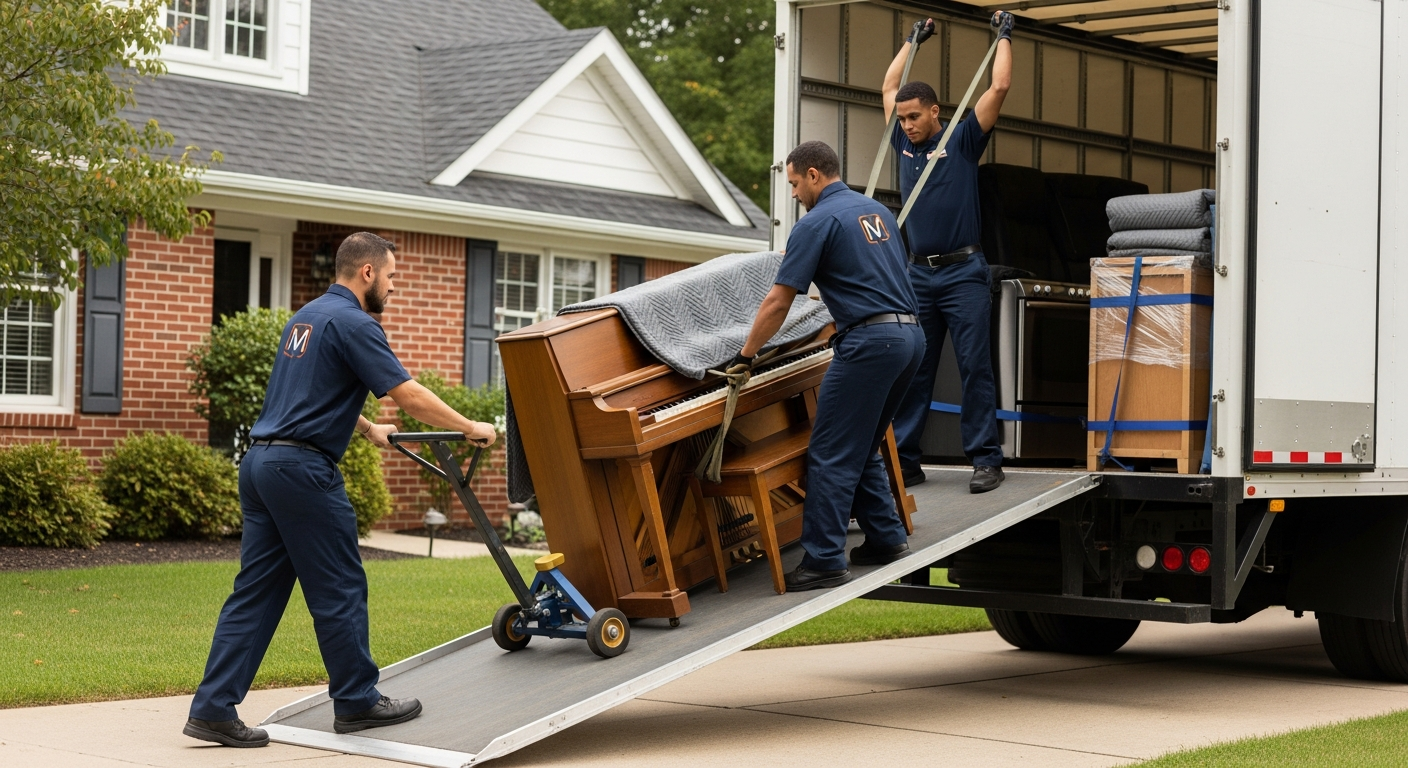
Heavy items like pianos, gun safes, refrigerators, and solid wood furniture are often the most stressful part of any move. They are awkward, expensive, and potentially dangerous if they are not handled correctly. Planning how to move these items is just as important as planning your move date or booking your movers.
This guide walks through how to move a piano and other heavy items step by step, when it is realistic to do some work yourself, and when it is smarter and safer to bring in professional help. You will learn what equipment you need, how to prep your home, how to protect floors and doorways, what affects cost, and how Atlas Route Moving can help with local specialty item moving.
Whether you are planning a DIY move or hiring a company like Atlas Route Moving, using a structured approach will reduce risk to people, property, and the item itself. This article is designed as a practical field guide you can reference as you plan your move.
The focus here is local and short-distance moving, but most of the preparation, safety, and equipment tips also apply to long-distance and interstate relocations when coordinated through professional movers.
Key takeaways
- Heavy and specialty items like pianos, safes, and appliances require specific equipment, extra planning, and often professional help.
- Before deciding how to move a piano or safe yourself, evaluate weight, stairs, tight turns, and building rules; many situations are not safe for DIY.
- Protecting floors, stairs, and doorways with proper coverings and padding prevents common damage during heavy item moves.
- Written information about each item (dimensions, weight, access details) helps movers give accurate quotes and send the right crew and gear.
- Local moving companies like Atlas Route Moving can provide specialty item moving as part of a broader local moving service or as a stand‑alone service.
- Clear communication, labeled items, and a moving-day checklist reduce stress and keep you and the movers working efficiently.
- Price should not be the only factor; experience with heavy items, insurance, and clear expectations matter more for protecting your home and belongings.
What counts as a heavy or specialty item
Not every large item in your home is considered a heavy or specialty item, but many are more complicated than a standard box or lightweight piece of furniture. When movers talk about «heavy» or «specialty» items, they often mean pieces that require extra labor, equipment, or protection.
Common examples of heavy and specialty items
- Upright and grand pianos
- Organs and large keyboards
- Gun safes and document safes
- Fireproof filing cabinets
- Refrigerators and freezers
- Washers, dryers, and stacked laundry units
- Ranges and built-in ovens (when removable)
- Large sectionals, sleeper sofas, and recliners
- Solid wood hutches, buffets, and armoires
- Marble or stone-top tables
- Pool tables and game tables
- Treadmills and heavy exercise equipment
- Commercial-grade office equipment and copiers
Even within this list, moving methods vary. How to move a piano is different from how to move a safe or a refrigerator. Each item has unique balance issues, internal components, and damage risks.
Why classification matters
Movers classify items as heavy or specialty for three main reasons:
- Safety: These items can cause injury if not handled correctly.
- Time and labor: They usually need more crew members and prep work.
- Equipment and protection: Dollies, straps, ramps, piano boards, and extra padding are often required.
When you request a quote for local moving services, be sure to mention every heavy or specialty item up front. This helps the moving coordinator plan the right crew size, truck space, and equipment.
Risks of DIY heavy item moving
DIY moves can save money, but heavy items introduce real risk. Before deciding to move a piano, safe, or appliance yourself, take an honest look at the potential downsides.
Common risks
- Injury: Back strains, crushed fingers, twisted knees, and foot injuries are common when heavy items shift unexpectedly.
- Property damage: Gouged hardwood, torn vinyl, cracked tile, dented drywall, scraped doors, and damaged stair railings.
- Item damage: Misaligned piano actions, damaged strings, bent hinges, broken refrigerator lines, or damaged balancing mechanisms.
- Liability issues: If you recruit friends and someone gets hurt, your homeowners or renters insurance may or may not respond as you expect.
Red flags that DIY is a bad idea
- Item weight is unknown, but clearly over 400–500 pounds.
- There are tight turns, small elevators, or narrow stairwells.
- The item must go up or down more than one flight of stairs.
- There is delicate flooring you cannot easily repair (new hardwood, patterned tile).
- You do not have enough strong, experienced helpers.
- You do not have access to proper dollies, ramps, or straps.
If any of these apply, talk with a professional moving company about specialty item moving before you commit to DIY.
Essential equipment for moving heavy items
Professional movers invest in quality equipment to reduce strain and protect property. If you are moving heavy furniture or appliances yourself, you will need at least some of the same tools.
Basic equipment list
- Furniture dollies (4-wheel) and appliance dollies (2-wheel with straps)
- Lifting straps or shoulder harness systems
- Piano board and skid board (for pianos and similar items)
- Heavy-duty moving blankets and furniture pads
- Stretch wrap and tape (for securing blankets)
- Floor runners and cardboard or Masonite sheets
- Door jamb protectors and corner guards
- Ramp or walk board (for steps and truck loading)
- Basic tools (screwdrivers, hex keys, socket set)
- Work gloves and closed-toe shoes with good grip
Sample equipment by item type
| Item | Core equipment needed | Notes |
|---|---|---|
| Upright piano | Piano board, 4-wheel dollies, straps, thick pads | Minimum 3–4 experienced lifters recommended. |
| Grand piano | Piano board, leg and pedal box, multiple dollies, ramps | Usually a professional-only move. |
| Gun safe | Heavy-duty appliance dolly, straps, stair climber (if stairs) | Weight must be known; serious injury risk. |
| Refrigerator | Appliance dolly, straps, pads, tape, water line caps | Remove contents; secure doors shut. |
When you hire a company like Atlas Route Moving, crews arrive with this type of equipment as standard for heavy and specialty items. If you are renting equipment yourself, plan ahead to ensure everything is reserved for the right day and time.
How to move a piano step by step
Because the focus keyword for this guide is how to move a piano, we will walk through that process in detail. Pianos are heavy, delicate, and often sentimental. Even small mistakes can lead to expensive repairs.
1. Decide if DIY is realistic
Ask these questions honestly before you attempt to move a piano without professionals:
- Is it an upright piano or a grand piano?
- How many steps or staircases are involved?
- Are there tight turns, low ceilings, or narrow doorways?
- Do you have at least three or four strong adults with experience lifting heavy items?
- Do you have access to a piano board, dollies, pads, and straps?
If the piano is a grand, must go up or down a full flight of stairs, or access is very tight, it is almost always wiser to hire professional movers with piano experience.
2. Measure and plan the route
- Measure the piano: height, width, and depth.
- Measure doorways, hallways, elevators, and stairwells along the path.
- Identify tight spots where the piano may need to tilt or rotate.
- Choose a primary route and a backup route (if possible).
Share these details with your moving company when you request a quote so they can plan for the appropriate time and crew size.
3. Protect the piano
- Close and lock or tape the keyboard lid so it cannot swing open.
- Wrap the entire body with thick moving blankets, securing them with tape or stretch wrap (avoid taping directly to the finish).
- On grands, professional crews will remove the legs and pedals and secure them in padded boxes or wrapped bundles before placing the body on a piano board.
4. Prepare the home
- Lay floor protection (runners, cardboard, or Masonite) along the route.
- Pad door frames and tight corners.
- Clear all small furniture, rugs, and decor from the path.
- Ensure exterior steps are dry, well-lit, and free of ice or debris.
5. Lift with a plan
For uprights, movers typically:
- Place the piano on a 4-wheel piano dolly or piano board.
- Use straps to secure the piano to the dolly or board.
- Assign each person a position and clear verbal commands («lift,» «step,» «stop»).
- Move slowly, keeping the piano as upright as possible.
Never try to «catch» a falling piano. If it begins to tip, prioritize human safety over the instrument.
6. Loading and transport
- Use a ramp to roll the piano into the truck whenever possible.
- Secure the piano to the truck wall with straps to prevent movement in transit.
- Keep the piano away from items that could shift and bump it.
7. After the move
- Give the piano 2–3 weeks in the new home to adjust to temperature and humidity before tuning.
- Check legs, casters, and pedals for any looseness and tighten as appropriate.
Professional movers with piano experience complete these steps efficiently, but they do not rush. If your timeline is tight or you are unsure about any step, consider having Atlas Route Moving handle the piano while you focus on lighter items.
How to move a safe safely
Safes present different challenges than pianos. The weight is usually concentrated in a compact footprint, which creates floor load issues and makes stairs particularly risky.
Key considerations for safes
- Weight: Many residential safes exceed 500–700 pounds; some are over 1,000 pounds.
- Center of gravity: Tall, narrow safes are prone to tipping, especially on stairs.
- Floor structure: Not all floors are designed to handle the rolling load of a very heavy safe.
- Contents: Firearms and high-value contents should be removed and transported separately, following all applicable laws.
Steps for moving a safe
- Get the exact weight and dimensions. Check the manufacturer documentation or labels inside the door if possible.
- Empty the safe. Move firearms, documents, and valuables in a secure, separate container you keep with you.
- Secure the door. Lock or tape the door shut so it cannot swing open during movement.
- Use a proper appliance or safe dolly. These have high load ratings, large wheels, and strong straps.
- Protect floors and stairs. Use thick, rigid materials to spread the load.
- Keep the safe as upright as possible. Avoid tilting more than necessary, especially on stairs.
- Control each step. Move one stair at a time with clear communication between helpers.
Because the risks are high, safe moving is one of the first categories many people hand off to professional movers. When you talk with a coordinator about how to move a safe, provide weight and access details so they can confirm whether the job is safe for their crew and equipment.
Moving appliances and large electronics
Moving appliances combines physical weight with plumbing, electrical, and sometimes gas connections. Planning ahead prevents leaks, damage, and reinstallation problems.
Refrigerators and freezers
- Use up food in the weeks before your move.
- Unplug the unit 24 hours before moving to allow defrosting.
- Place towels to catch melting ice and remove all shelves and drawers or tape them securely.
- Disconnect water lines and cap them according to manufacturer guidance.
- Secure doors shut with straps or tape over padded corners.
Once moved, many manufacturers recommend keeping the refrigerator upright and waiting several hours before plugging it back in so oils in the compressor can settle.
Washers and dryers
- Run a cleaning cycle and dry the drum.
- Disconnect water lines and power, following manufacturer instructions.
- Install shipping bolts or transit rods (front-load washers) if available to stabilize the drum.
- Bundle and label cords, hoses, and small parts in a taped bag attached to the unit.
- Use an appliance dolly with straps to move, protecting floors and doorways.
Stoves and ranges
- Confirm who is responsible for disconnecting gas lines; in some areas, a licensed professional must do this.
- Remove loose parts like grates, knobs, and racks; pack them separately.
- Secure the door with tape (over padding).
Large televisions
- Whenever possible, pack in the original box with foam inserts.
- If you do not have the box, use a TV-specific box kit and plenty of padding.
- Keep TVs vertical; avoid laying them flat in the truck.
When you request moving services, let the coordinator know if you need help disconnecting, moving, and reconnecting appliances. Some movers provide this; others will move only once everything is properly disconnected.
Tips for moving heavy furniture
Moving heavy furniture safely often comes down to disassembly, padding, and smart routing, not brute strength.
Disassemble whenever practical
- Remove table legs, bed rails, and headboards.
- Take glass shelves and doors out of hutches and cabinets.
- Separate sectional components and label them clearly.
- Bag hardware and label it; tape the bag to the appropriate piece.
Smaller, lighter pieces are easier to maneuver around corners and reduce the chance of damage.
Protect finishes and upholstery
- Wrap wood furniture in pads before moving it toward the door.
- Use stretch wrap over pads to keep them in place.
- Cover fabric pieces like sofas and mattresses to protect from dirt and snags.
Use sliding techniques whenever possible
- Place sliders or cardboard under furniture legs on hard floors.
- On carpet, use hard plastic sliders or smooth cardboard pieces.
- Slide rather than carry when there is a safe, clear path.
Examples of heavy furniture strategies
| Furniture type | Best approach | Common mistake |
|---|---|---|
| Sleeper sofa | Secure bed frame closed, remove cushions, carry with 2–3 people. | Leaving mattress loose, causing it to swing out unexpectedly. |
| China cabinet | Remove glass doors/shelves; move base and top separately. | Moving it as one heavy, top-heavy piece. |
| King bed | Disassemble frame; carry mattress with 2+ people. | Trying to turn an assembled frame through tight doorways. |
How to prepare your home and pathways
Good preparation protects your property and helps movers work more efficiently. This matters whether you are moving heavy furniture yourself or hiring professionals.
Home preparation checklist
- Reserve elevators and loading zones with building management if needed.
- Confirm move-in and move-out rules (hours, protection requirements, certificates of insurance).
- Measure key doorways and stairwells for your largest items.
- Clear hallways, stairwells, and entryways of clutter, rugs, and decor.
- Lay floor protection along primary routes.
- Protect door frames and wall corners with padding or cardboard.
- Ensure good lighting along all paths, including exterior steps.
Sample wording for building management:
«We have a local move scheduled on [date]. We will be moving a piano and other heavy furniture. Are there any specific requirements for elevator reservations, floor protection, or certificates of insurance that our movers should know about?»
Planning the sequence
For many homes, it is easier to move heavy items first while everyone has full energy and the paths are clear. Then, movers can load standard boxes and smaller furniture around the heavy pieces in the truck.
What affects the cost of moving heavy items
When you request quotes, you may notice separate charges or line items for pianos, safes, and specialty appliances. That is because these items require additional time, expertise, and sometimes equipment rentals.
Key cost factors
| Factor | How it affects cost | What you can do |
|---|---|---|
| Weight and size | Heavier and larger items need more crew and time. | Provide accurate item details when requesting quotes. |
| Stairs and access | Multiple stairs, tight turns, and long carries add labor. | Share photos or descriptions of tricky access areas. |
| Distance | Longer local drives or multiple stops can increase time. | Group heavy items into one trip when possible. |
| Special equipment | Ramps, piano boards, or stair climbers may add fees. | Ask what is included in the quote versus extra. |
| Scheduling | Peak days or tight windows can affect pricing. | Be flexible with dates and times if you can. |
For whole-home moves that include heavy items, the cost will usually be rolled into a combined estimate. When you are only moving a piano, safe, or appliance locally, some movers treat it as a minimum-hour job or a flat specialty service.
Using a moving calculator
Tools like the moving cost calculator from Atlas Route Moving can help you get a ballpark estimate by entering your home size and special items. For the most accurate pricing, follow up with a conversation or virtual survey so you can show access points and specialty pieces.
When and how to hire professional movers
Knowing how to move a piano or safe in theory is different from actually doing it safely. There is nothing wrong with deciding that the risks are not worth the savings and bringing in a professional crew.
Signs you should hire pros for heavy items
- You have a grand piano, baby grand, or very large upright.
- The safe is over 400–500 pounds or must go on stairs.
- Access involves more than one flight of stairs or tight, twisting staircases.
- You are in an apartment or condo with strict building rules and limited time windows.
- You or your helpers have existing back, knee, or joint issues.
- You do not have experience balancing heavy items or using equipment.
Comparing moving estimates for heavy items
When gathering quotes, do not focus only on price. Compare:
- Whether heavy item moving is clearly listed and described.
- The number of movers and type of truck or equipment included.
- How damage is handled if something goes wrong.
- Whether the company is licensed and insured for the types of moves they offer.
- How clearly they answer questions about heavy item handling.
If you are mainly moving within the same city or metro area, talk with Atlas Route Moving about including specialty item moving inside a broader local moving services package. Bundling everything with one coordinated crew is usually easier than arranging multiple providers.
Questions to ask before booking a mover
Asking the right questions up front will help you choose a mover who is comfortable and experienced with heavy items, not just standard boxes.
Key questions to ask
- «Do you have experience moving pianos/safes/appliances like mine?»
- «Is there an extra charge for these items, and what does that include?»
- «How many movers will be on the crew for moving these heavy pieces?»
- «What equipment will you bring for the piano/safe/appliances?»
- «How do you protect floors, stairs, and doorways in both homes?»
- «Are there any items you do not move, or situations where you would decline to move a safe or piano?»
- «What information do you need from me to give the most accurate estimate?»
Sample email when requesting a quote:
«We are planning a local move on [date] from [zip code] to [zip code]. We have an upright piano on the main level and a 600-lb gun safe in the basement with one flight of stairs. Can you include these items in a quote for full local moving, and let us know what equipment and crew size you would use?»
Moving day checklist for heavy items
On moving day, a simple checklist keeps everyone on the same page and reduces last-minute surprises, especially when moving heavy furniture and specialty pieces.
Pre-arrival checklist
- Heavy items are empty (piano bench, safe, drawers, fridge, etc.).
- Paths are clear and floor protection is down.
- Pets are secured in a separate room or off-site.
- Parking and loading zone are reserved or available.
- Elevator is reserved, if applicable.
- Item locations are clearly identified for the movers.
During loading
- Walk the lead mover through all heavy items and access points.
- Confirm any special instructions (e.g., «piano stays on main level at new home»).
- Stay available to answer questions and open doors.
- Double-check that each heavy piece is fully padded and strapped before it moves.
At the new home
- Confirm placement of each heavy item before movers set it down.
- Check floors and walls around challenging areas for any new marks.
- Verify that appliances are placed close enough to utility connections.
- Have movers reassemble any disassembled furniture as agreed in your estimate.
Example heavy-item sequence plan
| Step | Action | Notes |
|---|---|---|
| 1 | Walkthrough with movers | Point out piano, safe, appliances, and access. |
| 2 | Move piano first | Clear main path while home is open. |
| 3 | Move safe second | Maximize energy and focus for stairs. |
| 4 | Move appliances | Ensure cords and hoses travel with units. |
| 5 | Load remaining furniture and boxes | Fill in around heavy items in truck. |
What to keep with you on moving day
Even when you are moving heavy appliances and specialty items, there are certain things you should keep with you in your own vehicle rather than loading on the moving truck.
Personal essentials
- Wallets, IDs, passports, and important documents
- Medication and medical devices
- Valuables (jewelry, collectibles, small electronics)
- Firearm components (as allowed by law) that you prefer not to ship in a general load
- Basic tools, phone chargers, and a change of clothes
Information and small parts for heavy items
- Keys and combinations for safes and locking cabinets
- Owner’s manuals for appliances and equipment
- Plastic bags of hardware (clearly labeled)
- A printed or digital inventory of all heavy and specialty items
Keeping these items with you makes it easier to settle in at the new home and reduces the chances of losing critical parts for reassembly and setup.
How Atlas Route Moving can help
Atlas Route Moving provides professional assistance for local moves within its service areas, including moves that involve heavy and specialty items. While every move is unique, the team focuses on careful planning, clear communication, and practical protection for your home and belongings.
When you contact Atlas Route Moving about how to move a piano, safe, or appliance, a moving coordinator will typically:
- Ask questions about each heavy item (make/model, approximate weight, location, and destination room).
- Review access conditions (stairs, elevators, tight corners, long carries).
- Recommend an appropriate crew size and equipment list.
- Provide a clear quote, outlining any specialty item charges.
- Explain what you should do to prepare (emptying items, disconnecting appliances, securing building approvals).
Helpful Atlas Route Moving services
If your move involves both heavy specialty items and standard household goods, combining everything into one coordinated move with Atlas Route Moving can simplify planning and reduce stress compared with managing separate services.
Frequently asked questions
Is it ever safe to move a piano by myself?
Moving a piano entirely by yourself is not recommended. Even small uprights are heavy, awkward, and can shift suddenly. At minimum, you should have several capable helpers and proper equipment. For grand pianos or moves involving stairs, professional movers are strongly advised.
How much does it cost to move a piano locally?
Local piano moving costs vary based on the piano type, number of stairs, and access complexity. Many moves are priced as a minimum-hour job or a specialty item fee. Providing photos and details when you request a quote helps movers give a more accurate range before they see the piano in person.
Can movers take my piano up or down stairs?
Yes, but only when it is safe to do so with the right crew, equipment, and stair structure. Movers will consider the number of steps, width and turning radius of the stairwell, and total weight before agreeing. In some cases, they may recommend an alternative route or decline if safety is a concern.
How do I prepare my safe for moving?
Empty the safe completely, including firearms and valuables, and transport sensitive contents separately. Lock or tape the door closed, note the weight and dimensions, and clear the path to an exterior door. Share all of this information with your movers in advance so they can bring appropriate equipment.
Will movers disconnect and reconnect my appliances?
Policies vary. Some movers will disconnect and reconnect standard appliances if access and hookups are straightforward, while others require you to have them disconnected before moving day. Always ask in advance so you can schedule a plumber, electrician, or appliance technician if needed.
How far in advance should I book movers for heavy items?
For local moves involving heavy items, it is wise to book at least 2–4 weeks in advance, and longer during peak moving season. This helps ensure that a crew with the right experience and equipment is available on your preferred date.
Can I leave drawers full in heavy dressers?
It is usually better to empty heavy dressers, especially those made of solid wood. Full drawers increase weight, strain joints and legs, and make pieces harder to maneuver. Light clothing can sometimes remain in very sturdy dressers, but plan to remove heavy or fragile items.
How can I reduce the cost of moving heavy items?
You can help by preparing in advance: emptying items, disconnecting appliances where allowed, clearing access paths, and handling small disassembly yourself if you are comfortable doing so. Sharing accurate details early also helps movers plan efficiently, which can keep time and cost under control.
Do movers insure my piano or safe during the move?
Licensed movers generally provide some level of valuation coverage, often based on weight. Higher-value items like pianos may warrant additional coverage options. Ask your mover what is included, what deductibles apply, and whether you can purchase increased valuation for specific items.
Can Atlas Route Moving move just my piano or safe without a full household move?
In many cases, yes. Atlas Route Moving can often schedule local specialty item moves such as single pianos, safes, or appliances, depending on availability and access. When you reach out through the request a free moving quote form, indicate that you are looking for a specialty item move and include the details.
Sources referenced in this guide
This guide draws on practical experience from professional household movers, along with general consumer guidance from:
- Federal Motor Carrier Safety Administration consumer guidance on household moves
- U.S. Department of Transportation moving guidance
- State transportation and consumer protection agency recommendations about hiring movers
- Typical building management move-in and move-out requirements
- Standard moving company tariffs, bills of lading, and valuation options used in U.S. residential moves
Related moving guides
For more planning checklists, packing ideas, and local moving advice, visit the Atlas Route Moving blog.
This guide is general moving information, not legal, insurance, or regulatory advice. Moving requirements, pricing, access rules, and coverage options may vary by location, move type, building rules, and service agreement.
If you are planning a local move that includes a piano, safe, or other heavy items, Atlas Route Moving can help you build a realistic plan and provide the hands-on support you need. Explore our moving services, check your budget with the moving cost calculator, confirm we serve your area through our service areas page, or request a free moving quote to discuss your heavy items with a moving coordinator.