
Moving Boxes 101: Types, Sizes and How Many You Need
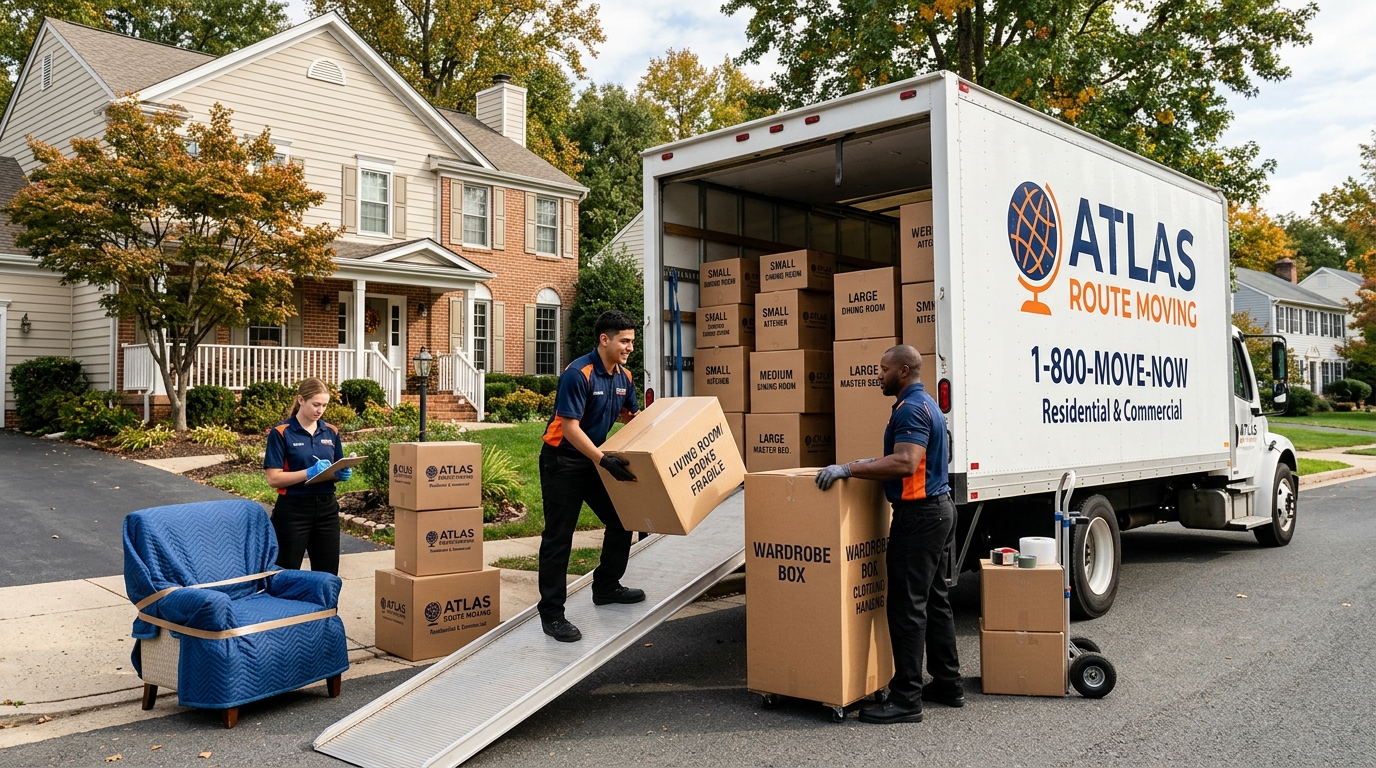
Choosing the right moving boxes sounds simple until you are trying to pack your entire home and suddenly realize you are out of small boxes, your books are in boxes that are too big to lift, and your hanging clothes are crumpled in trash bags. The right types, sizes, and quantity of moving boxes can make the difference between a smooth, organized move and a stressful one.
Planning your moving boxes in advance helps you control costs, protect your belongings, keep your move on schedule, and make things much easier for your movers. It also means less risk of damage, fewer last-minute store runs, and faster unpacking in your new home.
This guide walks you through moving boxes 101: common types of moving boxes, standard moving box sizes, how many boxes you are likely to need based on your home size, and where to get moving boxes. You will also find packing tips from Atlas Route Moving and how our professional packing services can help when you do not want to deal with boxes at all.
Use this as a working playbook to estimate, compare, and plan your moving boxes so you can focus on settling into your new place instead of scrambling for supplies.
Key takeaways
- Plan your moving boxes early: most homes need 40–120+ boxes depending on size and how much you own.
- Use small boxes for heavy items, medium for everyday household goods, and large for bulky but lightweight items.
- Specialty boxes like wardrobe, dish, and TV boxes protect higher-value or fragile items and reduce damage risk.
- Label every box by room and contents to save hours of searching and speed up unpacking.
- Avoid overfilling or underfilling boxes; aim for firm, level tops that can be stacked safely in the truck.
- Box count and box quality can affect your overall moving cost, crew time, and risk of damage.
- If you are short on time, professional packing services can handle box selection, packing, and labeling for you.
Why planning your moving boxes matters
Many people leave moving boxes to the last minute, grabbing whatever they can find. That usually leads to two problems: not enough boxes and the wrong types of boxes. Both can slow down your move and add stress.
When you plan your moving boxes ahead of time, you:
- Reduce last-minute trips to buy more supplies.
- Keep your move on schedule because boxes are ready when movers arrive.
- Protect your belongings with the right box types and good packing.
- Use the moving truck space efficiently with stackable, uniform boxes.
- Help your movers estimate time and cost accurately.
- Make it easy to find what you need quickly in your new home.
For local and long-distance moves, professional movers like Atlas Route Moving work much faster and safer when boxes are sturdy, properly packed, and clearly labeled. If you prefer, our crews can also bring supplies and handle the packing for you so you do not have to worry about box sizes or types at all.
Standard moving box sizes and what they are for
Professional movers and packing suppliers usually rely on a small set of standard moving box sizes. Using these consistent sizes helps with stacking, loading, and protecting your items.
Common moving box sizes
Exact dimensions can vary by manufacturer, but these are typical ranges and best uses.
| Box type | Typical dimensions (L x W x H) | Best for |
|---|---|---|
| Small moving box | Approx. 16″ x 12″ x 12″ (about 1.5 cu ft) | Books, canned goods, tools, small electronics, heavy items |
| Medium moving box | Approx. 18″ x 18″ x 16″ (about 3.0 cu ft) | Kitchenware, toys, linens, decor, pantry items |
| Large moving box | Approx. 18″ x 18″ x 24″ (about 4.5 cu ft) | Bedding, pillows, light clothing, bulkier lightweight items |
| Extra-large moving box | Approx. 24″ x 18″ x 24″ (about 6.0 cu ft) | Comforters, large but light items, seasonal decor |
When in doubt, err on the side of smaller boxes for anything heavy. A fully packed large box of books is extremely difficult to lift and can be unsafe for both you and the movers.
What each size of moving box is best for
- Small boxes (1.5 cu ft): Ideal for dense, heavy items that would be too heavy in larger boxes. Think books, canned food, small tools, bathroom toiletries, and files.
- Medium boxes (3.0 cu ft): The workhorse size for most moves. Use for kitchen items, office supplies, toys, small decor, and mixed household goods.
- Large boxes (4.5 cu ft): Better for large but relatively lightweight items, such as comforters, towels, lampshades (well cushioned), and some clothing.
- Extra-large boxes (6.0 cu ft): Use sparingly. These are for very light, bulky items like large stuffed animals, pillows, or bulky bedding, and should not be overloaded.
A good rule of thumb: if you hesitate to lift a box, it is too heavy. Re-pack into smaller boxes for safety.
Specialty moving boxes you should know
In addition to standard sizes, there are specialty moving boxes designed specifically for certain items. Using these correctly reduces breakage and speeds up packing.
Wardrobe boxes
Wardrobe boxes are tall boxes with a metal hanging bar across the top. They allow you to move clothes on hangers directly from your closet without folding or bagging them.
- Best for: Suits, dresses, coats, blouses, slacks, and any clothing you prefer not to fold.
- Tip: You can pack shoes or handbags at the bottom of the wardrobe box to use space efficiently, as long as you do not overload it.
Dish and glassware boxes (dish packs)
Dish packs are double-walled, extra-strong medium-sized boxes designed to protect fragile plates, glasses, and other breakables. They often come with cell dividers for individual pieces.
- Best for: Plates, bowls, glasses, mugs, stemware, and fragile kitchen items.
- Tip: When you use dish packs and plenty of packing paper, your fragile items ride much more safely in the truck.
TV and mirror/picture boxes
Flat, adjustable boxes protect TVs, mirrors, and framed artwork from pressure and scratches during the move.
- Best for: Flat-screen televisions, large framed art, mirrors, and glass table tops (within size limits).
- Tip: Keep original TV boxes when possible; if not, use a purpose-built TV box with foam or padding.
File boxes
File boxes are smaller boxes sized to hold hanging file folders upright with handles for easy carrying.
- Best for: Documents, tax records, important files, and home office paperwork.
- Tip: Label clearly by year or category to make post-move filing simple.
Mattress boxes
Mattress boxes (or heavy-duty mattress bags) protect mattresses from dirt, tears, and moisture.
- Best for: Mattresses and box springs when you want extra protection, especially for long-distance or storage moves.
- Tip: For storage, choose a quality mattress bag or box to avoid dust and moisture.
How many moving boxes you need by home size
Every household is different, but you can use typical ranges to estimate how many moving boxes you will need based on the size of your home and how much you own. People who are minimalist may fall on the low end; if you have a lot of decor, books, or clothing, plan toward the high end.
| Home size | Estimated total boxes | Typical breakdown (small / medium / large+) |
|---|---|---|
| Studio apartment | 20–35 boxes | 6–8 / 10–16 / 4–8 |
| 1-bedroom apartment | 30–50 boxes | 8–12 / 16–24 / 6–12 |
| 2-bedroom apartment or small house | 45–75 boxes | 12–18 / 22–34 / 10–18 |
| 3-bedroom house | 70–110 boxes | 18–26 / 32–50 / 18–34 |
| 4-bedroom+ house | 100–150+ boxes | 24–36 / 46–70 / 30–50 |
These estimates include standard moving boxes but not all specialty boxes. For wardrobe boxes, dish packs, and TV boxes, add extra based on your specific needs.
Adjusting counts for your lifestyle
- Book lovers: Add extra small boxes so you are not tempted to overload larger ones.
- Families with kids: Expect more boxes for toys, clothing, and sports gear.
- Minimalists: You may need fewer boxes, but still plan for a buffer of 10–20% extra.
- Long-distance moves: Consider more specialty boxes and protective packing to reduce damage risk over longer transit.
If you are using the Atlas Route Moving moving cost calculator or speaking with our team for an estimate, having a rough idea of how many boxes you will need can help us provide a more accurate quote.
How to estimate your own box count
If you prefer a more customized estimate instead of general ranges, walk through your rooms and build your own count. This also doubles as an early decluttering checklist.
Step-by-step box planning walkthrough
- List every room (including closets, basement, attic, garage, and outdoor storage).
- Estimate box counts per room using this simple scale: light (3–5), average (6–10), heavy (10–15+).
- Add specialty boxes for wardrobes, dishes, TV, mirrors, and artwork.
- Include a 10–20% buffer for last-minute items and undercounted areas.
| Room | Typical box range | Notes |
|---|---|---|
| Kitchen | 8–15 boxes + 1–3 dish packs | One of the heaviest packing rooms; many fragile items. |
| Living room | 6–12 boxes + 1–3 picture/TV boxes | Books, decor, electronics, artwork. |
| Each bedroom | 6–15 boxes + 1–3 wardrobe boxes | Depends on clothing volume, shoes, and personal items. |
| Bathroom | 2–4 boxes | Toiletries, towels, small items. |
| Office | 4–10 boxes + 1–3 file boxes | Books, files, electronics, supplies. |
Sample wording you can use in your notes when planning: «Master bedroom: 10 mixed boxes + 2 wardrobe boxes, heavy on shoes and hanging clothes.»
Once you have a room-by-room estimate, total the boxes, then add a buffer. It is better to have a few extra boxes than to be short during the final days of packing.
Where to get moving boxes
When you are deciding where to get moving boxes, you have several options. Each comes with tradeoffs in terms of cost, quality, and convenience.
Common sources for moving boxes
| Source | Pros | Considerations |
|---|---|---|
| Professional moving company | High-quality boxes, correct sizes, advice from movers, delivery often available. | May cost more than reused boxes; availability varies. |
| Local stores and supply shops | Easy to find, various sizes, can buy as you go. | Quality and sizing can vary; multiple trips if you run short. |
| Reused boxes from friends or work | Low cost or free, environmentally friendly. | Weaker boxes, mismatched sizes, previous spills or odors possible. |
| Specialty packing suppliers | Offer dish packs, wardrobe boxes, TV boxes, and accessories in one place. | May have higher prices than general stores. |
Atlas Route Moving can provide boxes as part of a full or partial packing service, or we can advise you on quantities and sizes if you are buying your own. When you request a quote, mention that you would like help planning your moving box sizes and counts, and our team can walk through it with you.
Smart packing strategies by box size
Knowing how many boxes you need is only half the battle. How you use each size and type of box matters for safety, efficiency, and protecting your items.
How to use small moving boxes
- Pack heavy items first, such as books or canned goods.
- Fill gaps with lighter, soft items like towels or packing paper.
- Keep the weight to a comfortable lifting level, typically under 40–45 pounds.
- Use plenty of tape on the bottom seams, especially for heavier loads.
How to use medium moving boxes
- Use as your default box for most household items.
- Group similar items by room (kitchen gadgets, office supplies, toys).
- Wrap fragile items individually and cushion with paper or bubble wrap.
- Do not mix heavy items at the bottom with fragile ones at the top unless very well protected.
How to use large and extra-large boxes
- Reserve for lightweight, bulky items: bedding, pillows, plush toys, and clothing.
- Avoid loading heavy items in these boxes to keep lifting safe.
- Fill out the box so that the top is firm but not bulging; this makes stacking safer.
- Use large boxes sparingly if your move involves many stairs or long carries.
Example labeling text: «Kitchen – Medium Box – Pots and Pans» or «Bedroom 2 – Large Box – Bedding & Pillows».
Labeling and organizing boxes
Labeling is one of the most important parts of using moving boxes effectively. A well-labeled move saves time for everyone and makes unpacking much easier.
- Write the room name on at least two sides and the top of each box.
- Add a short description of contents («glasses and mugs» or «office supplies»).
- Mark boxes with FRAGILE and an arrow for «This Side Up» when needed.
- Consider using a simple numbering system and tracking major boxes on a list.
For more detailed labeling strategies, you can review the guide on how to label moving boxes on the Atlas Route Moving blog.
Common moving box mistakes and how to avoid them
Even with good intentions, it is easy to make packing mistakes that cause damage, slow your movers, or add stress on moving day. Here are some of the most common issues Atlas Route Moving crews see and how to avoid them.
| Common mistake | Why it is a problem | Better approach |
|---|---|---|
| Using oversized boxes for heavy items | Boxes become too heavy to safely carry; higher risk of box failure. | Use small boxes for books, tools, and canned goods; keep large boxes light. |
| Mixing fragile and heavy items in one box | Heavy items can crush breakables even with some padding. | Pack fragile items separately in dish packs or well-cushioned medium boxes. |
| Underfilling boxes so they cave in | Boxes collapse when stacked in the truck, putting pressure on contents. | Fill gaps with paper, towels, or bubble wrap so tops are firm. |
| Leaving boxes unsealed or poorly taped | Contents can spill; movers cannot stack open boxes safely. | Use quality packing tape on the bottom and top; avoid only one strip. |
| Not labeling boxes by room | Slows down unloading and unpacking; items end up in the wrong room. | Mark each box with room name and key contents during packing. |
Taking a few extra seconds per box to tape, fill, and label properly can easily save you hours on moving day and reduce the risk of damage.
How moving boxes affect your overall moving cost
Moving boxes themselves are only one part of your moving budget, but they influence several cost factors: materials, time, and how efficiently everything loads into the truck.
Key cost factors related to moving boxes
- Box quality: Strong, uniform-sized boxes stack better and are faster for movers to load.
- Box count: More boxes generally mean more time to load and unload, affecting labor cost.
- Weight distribution: Overloaded boxes can slow crews down and create safety issues.
- Packing labor: If movers pack for you, the number and type of boxes directly affects packing time.
- Specialty packing: Extra time and materials for fragile or high-value items are a worthwhile investment.
If you are deciding how many boxes to move and how much to pack yourself, remember that a well-prepared, well-packed home often leads to smoother, more predictable moving day costs.
Example: boxes and move timeline
| Preparation level | Box situation | Impact on move |
|---|---|---|
| Fully prepared | Boxes packed, sealed, labeled by room, reasonable weights. | Fastest loading and unloading; easier to estimate time. |
| Partially prepared | Some boxes open or unlabeled; loose items around. | Crew must spend extra time consolidating and organizing. |
| Unprepared | Few boxes ready; much packing still left on move day. | Longer move time; potential rescheduling or extra labor. |
If you would like help balancing time and cost, Atlas Route Moving can handle just the most time-consuming rooms (such as the kitchen and fragile items) or provide full-service packing and unpacking.
How to prep your boxes before the movers arrive
Whether you are moving locally or long distance, having your boxes ready when the crew arrives sets the tone for the entire day. Here is a practical checklist to prepare.
Box preparation checklist
- Finish packing and sealing all boxes at least the night before moving day.
- Group boxes by room near the entrance of each room if possible.
- Ensure fragile items are clearly marked and well padded inside.
- Double-check that heavy boxes are liftable and not overloaded.
- Remove any loose items from the tops of dressers and tables and place them in boxes.
- Keep a separate «Open First» box for essentials in each major room (kitchen, bathroom, bedroom).
Sample «Open First» label: «Kitchen – Open First – Coffee maker, mugs, basic utensils».
Having your boxes organized helps your movers plan loading order, protect fragile items, and get you on the road quickly. It also helps ensure you can find what you need on your first night in the new home.
Helpful Atlas Route Moving services
How Atlas Route Moving can help with boxes and packing
Planning, buying, and packing all your moving boxes is a big job, especially if you have a larger home, busy schedule, or a long-distance move. Atlas Route Moving can step in at any level you prefer.
Ways we can support your moving boxes and packing
- Box planning help: Our coordinators can walk through your home size and needs to suggest appropriate moving box sizes and quantities.
- Partial packing: We can focus on fragile or time-consuming areas such as the kitchen, artwork, and electronics, while you pack simpler rooms.
- Full-service packing: Our crews bring boxes and supplies, pack and label everything, and prepare your home for loading.
- Storage-friendly packing: If some items are going into storage, we can pack and label boxes clearly for long-term access.
If you are short on time, would rather not experiment with different types of moving boxes, or just want professionals to handle it, consider booking our professional packing services. We combine the right box types, careful padding, and organized labeling to help keep your move on track.
To discuss your move, moving boxes, and packing options, you can review our moving services, check your area in our service areas, use the moving cost calculator, or request a free moving quote.
Related moving guides
Frequently asked questions
How many moving boxes do I need for a 2-bedroom apartment?
Most 2-bedroom apartments or small houses use about 45–75 moving boxes, depending on how much you own. Expect roughly 12–18 small boxes, 22–34 medium boxes, and 10–18 large or extra-large boxes, plus a few specialty boxes for wardrobe items, dishes, and any TVs or artwork.
What size boxes are best for heavy items?
Small moving boxes, typically around 1.5 cubic feet, are best for heavy items like books, canned goods, tools, and small electronics. Smaller boxes keep the weight manageable and reduce the risk of the bottom splitting or the box becoming too heavy to lift safely.
Should I use large boxes for everything to reduce box count?
No. Large and extra-large boxes should be reserved for lightweight, bulky items such as bedding, pillows, and stuffed animals. Putting heavy items in large boxes can make them unsafe to lift and more likely to fail during the move.
Are wardrobe boxes worth it?
Wardrobe boxes are very helpful if you have a lot of hanging clothes, delicate garments, or want to minimize ironing and re-hanging. They allow you to transfer clothes directly from closet to box and back again, which is especially useful for long-distance or time-sensitive moves.
Can I reuse old boxes for moving?
You can reuse sturdy boxes if they are in good condition, dry, and free of odors or spills. However, avoid boxes with weak corners, torn flaps, or water damage. Mix reused boxes with new, high-quality boxes for heavy or fragile items to reduce the risk of damage.
How many wardrobe boxes do I need?
A typical wardrobe box holds roughly 2 feet of closet rod space. Count the linear feet of hanging clothes in each closet and divide by two for a rough estimate. Add one extra wardrobe box if you have bulky items like coats or formal wear.
When should I start packing moving boxes?
For a typical home, begin packing non-essential items 3–4 weeks before your move. Start with decor, out-of-season clothing, and books, then work toward daily-use items as you get closer to moving day. The kitchen and bathrooms are usually packed last.
What should I keep out of moving boxes and with me instead?
Keep important documents, jewelry, medications, basic toiletries, a few days of clothing, and any irreplaceable sentimental items with you. Also set aside chargers, basic tools, and essential kids or pet items in clearly marked «Open First» or personal bags rather than in the moving truck.
Can Atlas Route Moving supply boxes if I book packing services?
Yes. When you book packing or full-service moving with Atlas Route Moving, our crews can bring appropriate moving boxes and packing materials. We match box sizes and types to your belongings and can handle the entire packing process if you prefer.
What if I misjudge how many boxes I need?
It is common to underestimate boxes. Try to build in a 10–20% buffer when buying supplies. If you are working with Atlas Route Moving, let your coordinator know as soon as you think you might be short on boxes so we can help you adjust your plan or supply additional materials as part of your service.
Sources referenced in this guide
Professional movers rely on several types of information when advising customers about moving boxes and packing. Guidance for this article reflects practical experience from moving crews along with general recommendations from:
- Federal Motor Carrier Safety Administration consumer guidance on household goods moves
- U.S. Department of Transportation moving guidance for interstate relocations
- State transportation and consumer protection agencies regarding moving best practices
- Building management move-in and move-out requirements, especially for apartments and condos
- Written moving estimates, bills of lading, and service agreements that define packing responsibilities
- Carrier tariffs and valuation options that outline how items should be packed for coverage
When planning your move, review your specific building rules and your moving estimate so you understand which packing and box responsibilities are yours and which are handled by your movers.
This guide is general moving information, not legal, insurance, or regulatory advice. Moving requirements, pricing, access rules, and coverage options may vary by location, move type, building rules, and service agreement.