
Updating Your License and Car Registration After a Move
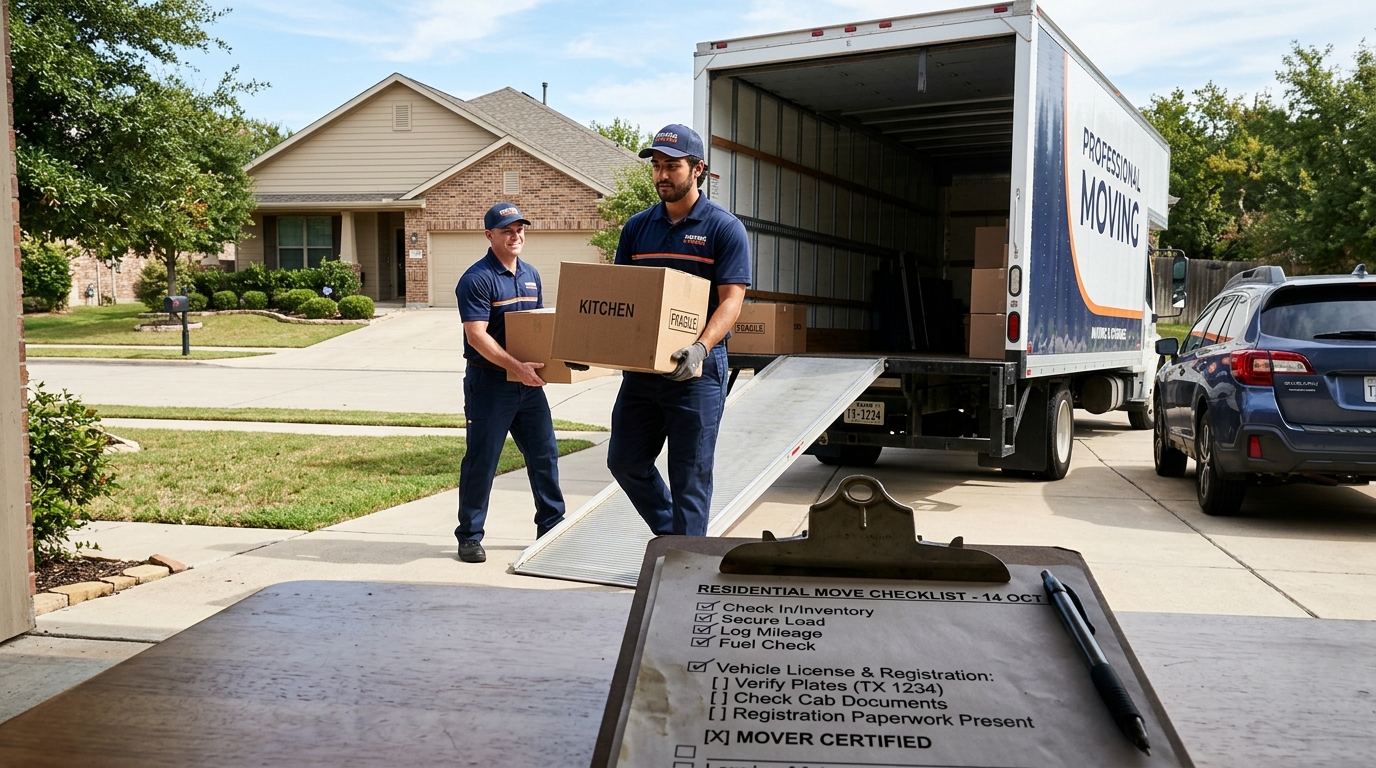
When you are planning a move, it is easy to focus on boxes, movers, and floor plans and forget an important part of relocating: updating your driver’s license and vehicle registration. Yet missing these deadlines can lead to tickets, fines, or even issues with your auto insurance claim if something happens on the road.
This guide walks through how to update your license after moving, how to change your car registration, what order to tackle each task in, and how to plan everything around your moving date. Because every state has its own rules, timelines, and fees, this guide focuses on what most states require and how to stay organized so you can adapt to your new state’s specific DMV rules.
You will find practical checklists, example timelines, and sample wording you can use when contacting your insurance company or scheduling DMV appointments. We will also show you where in your moving timeline to schedule these tasks, so they fit naturally alongside booking movers, packing, and travel arrangements.
Atlas Route Moving cannot change your license for you, but we can help you structure your move so you have the time, documents, and headspace to handle DMV tasks without last-minute stress.
Key takeaways
- Most states give new residents about 10–60 days to update a driver’s license and vehicle registration after establishing residency.
- Plan documents early: proof of identity, Social Security number, new address, insurance, and your current title or registration are commonly required.
- Update your auto insurance to your new address and state before or at the same time as registering your vehicle.
- Handle your driver’s license, vehicle registration, and address changes in a clear order to avoid repeat DMV visits.
- State rules, fees, and testing requirements vary, so always verify the exact requirements for your destination state.
- Building a DMV timeline into your moving checklist prevents missed deadlines and penalties.
- A well-planned move with a professional mover like Atlas Route Moving gives you the time to take care of DMV tasks calmly and on schedule.
Why updating your license and registration matters after a move
Updating your license and registration after a move is not just a formality. It affects your legal ability to drive, how law enforcement views your documents, and how your insurance company evaluates risk and coverage.
Legal requirements and potential penalties
Every state expects new residents to update their driver’s license and vehicle registration within a certain period. If you keep driving with an out-of-state license or plates past that deadline, you may face:
- Traffic tickets or fines if you are stopped by law enforcement
- Additional penalties or late fees when you finally visit the DMV after moving
- Problems if you are involved in a crash and your information does not match your residence
Because rules and deadlines vary, it is important to check your new state’s laws early in your moving process and build those deadlines into your plan.
Insurance and financial protection
Your auto insurance rate is based in part on where your car is garaged, local traffic patterns, and state insurance rules. If you move but do not update your policy:
- Your insurer may consider you out of compliance with the policy terms.
- A claim might be delayed or complicated if your address and state of residence are inaccurate.
- You might be paying too much or too little for the actual risk at your new address.
When you update car registration, insurers in many states will want to see that you meet minimum coverage limits for that state. Updating your policy, license, and registration in a coordinated way keeps your coverage clear and your documents aligned.
Everyday convenience
Beyond legal and insurance issues, an outdated license and registration create everyday hassles. You may run into problems when:
- Opening a bank account or updating existing financial records
- Signing a new lease or getting utilities in your name
- Registering to vote in your new state
- Applying for resident discounts, parking permits, or school enrollment
Handling DMV tasks promptly makes other aspects of settling into your new home smoother.
Typical state deadlines for licenses and vehicle registration
While the exact rules differ by state, most follow a similar pattern. Here is a general overview of typical deadlines you might encounter when you update license after moving.
| Task | Typical deadline range | Notes |
|---|---|---|
| Change driver’s license to new state | 10–60 days after establishing residency | Some states require a vision test or written test; others only require an ID check. |
| Update car registration to new state | 10–60 days after residency or vehicle entry into state | May require emissions test, safety inspection, or proof of tax payment. |
| Update address on driver’s license within same state | 10–30 days after moving | Often can be done online if you are not changing states. |
| Update vehicle registration address in same state | 10–30 days after moving | Usually needed for accurate property taxes and renewal notices. |
States define “establishing residency” differently. It might be tied to:
- Signing a lease or closing on a home
- Accepting a job in the state
- Registering children in school
- Spending a certain amount of time there
Because rules differ, plan to research your new state’s deadlines while you are still in the planning phase of your move, not after you arrive.
Best order of steps: license, registration, insurance, and address changes
Handling DMV and insurance tasks in a logical order saves you from repeat visits and conflicting information. Here is a practical sequence many people find helpful when they change driver’s license to a new state and update car registration and insurance.
Step 1: Confirm your new state’s requirements
Before you move or as soon as you know where you are relocating, review your new state’s requirements for:
- Driver’s license transfer from another state
- Vehicle registration for new residents
- Emissions and safety inspections
- Title transfer rules if you have a lienholder
Make notes about deadlines, required documents, and whether appointments are recommended or required.
Step 2: Update auto insurance
In most cases, it is smart to update your insurance before or at least at the same time as you update license after moving. Insurance proof is usually required when you register your car, and some states require specific minimum coverages.
Sample wording when calling your insurer:
“I am moving from my current state to [new state] on [move date]. I need to update my policy with my new garaging address and make sure the coverage meets [new state] requirements. What effective date do you recommend?”
Step 3: Get your new driver’s license
Many states require you to have a driver’s license from that state before you can register a vehicle there. That is why it often makes sense to change your driver’s license to your new state first. Be prepared for:
- A vision test
- Possibly a written knowledge test
- In some cases, a road test (less common for licensed drivers moving from another state)
Confirm whether your state allows appointments and what forms of payment are accepted for fees.
Step 4: Register your vehicle and update car title if needed
Once your license and insurance are updated, register your vehicle in your new state. This usually involves:
- Providing proof of ownership (title or current registration)
- Submitting proof of insurance
- Showing your new state driver’s license
- Passing any required inspections
- Paying registration and tax fees
If your vehicle has a lienholder (you have an auto loan), there are often extra steps to obtain or transfer the title. Plan ahead so your lender has time to send any necessary documents.
Step 5: Update address on existing accounts
After the DMV tasks are underway, update your address on:
- Bank and credit card accounts
- Insurance policies (auto, renters, homeowners, health)
- Employer records and payroll
- Schools and medical providers
Doing this soon after your move helps ensure renewal notices, registration reminders, and bills go to the right place.
Documents you usually need at the DMV after moving
Showing up to the DMV without the right documents is a common reason for repeat visits. While exact requirements differ by state, here is a helpful overview of what to gather when you plan to update license after moving and register your vehicle in a new state.
| Document type | Common examples | Used for |
|---|---|---|
| Proof of identity | Current out-of-state license, U.S. passport, birth certificate | Driver’s license transfer, REAL ID compliance |
| Social Security number | Social Security card, W-2, 1099, paystub with full SSN | Identity verification for license issuance |
| Proof of residency | Lease, mortgage statement, utility bill, bank statement | Establishing your new address in the state |
| Vehicle ownership | Vehicle title, out-of-state registration, lienholder letter | Registering or titling your car in new state |
| Insurance proof | Insurance card, policy declarations page | Vehicle registration and proof of financial responsibility |
| Name change records (if applicable) | Marriage certificate, divorce decree, court order | Matching your legal name across all documents |
Some states have strict REAL ID requirements, which can mean you need multiple documents for identity and residency. When in doubt, bring more than you think you need. Consider making copies for your records before your DMV visit.
Practical checklist: pack a DMV folder
To avoid digging through boxes, create a dedicated DMV folder that stays with you (not on the moving truck). Include:
- Current driver’s licenses for all drivers in the household
- Passports or birth certificates
- Social Security cards or acceptable substitutes
- Lease, deed, or closing documents for your new home
- Recent utility bills or bank statements showing your new address (if available)
- Current registration and title for each vehicle
- Insurance ID cards and policy paperwork
- Any DMV appointment confirmations
This small step can save you hours once you arrive and are ready to visit the DMV after moving.
Updating your auto insurance after moving
Because your address, state, and driving environment all influence insurance rates and coverage, updating your policy is a critical step in the process of updating your license and your registration.
When to contact your insurer
Call your insurance company as soon as you have:
- A confirmed move date
- The full address of your new home
- An idea of when your vehicle will arrive (if it is being transported)
Ask when your policy should switch to the new address and state to avoid gaps. If you are driving your car to your new home yourself, you may need coverage in your old state until you cross state lines and then a new policy effective in your destination state.
Information your insurer may request
- New address and where the vehicle will be garaged overnight
- Estimated annual mileage in your new location
- Whether your commute will change significantly
- Names and license numbers of all drivers in the household
- Details of any additional vehicles you are adding or removing
Sample email wording to your insurer:
“I am moving on [date] from [old address, state] to [new address, state]. Please let me know what changes are needed for my auto policy, what the new premium will be, and what documentation you need from me to ensure continuous coverage.”
Coordinating insurance with registration
Because many states require you to show local insurance proof when you update car registration, confirm that:
- Your new policy or updated policy is active before your DMV appointment.
- Your insurance ID card lists your new address and state correctly.
- Your policy meets or exceeds the minimum required liability limits in your new state.
Having proof of insurance ready keeps your DMV visit efficient and helps avoid rescheduling.
Sample moving and DMV timeline
Every move is unique, but it helps to see how DMV tasks can fit into a typical moving schedule. Below is an example timeline for someone moving to a new state and needing to change driver’s license, update car registration, and adjust insurance.
| Timeframe | Key tasks | Notes for smoother planning |
|---|---|---|
| 4–6 weeks before move | Research new state DMV rules, review insurance needs, book movers | Use your moving quote and dates to schedule DMV appointments soon after arrival. |
| 2–3 weeks before move | Set up insurance changes, gather DMV documents, create DMV folder | Confirm what you must bring for license and registration. |
| Move week | Move to new home, keep DMV folder with you, confirm vehicle arrival date | Do not pack important documents on the truck. |
| 1–2 weeks after arrival | Visit DMV for new driver’s license, complete inspections if needed | Try to meet the earlier end of your state’s deadline range. |
| Within state deadline (10–60 days) | Register your vehicle and update car title, finalize insurance updates | Keep all receipts and registration documents in your glove compartment. |
This is just one example. If you move during a busy season or into a large city where DMV appointments book out quickly, consider scheduling earlier when possible.
Costs and fees when you change driver’s license and registration
Budgeting for DMV fees is a small but important part of your overall moving budget. Costs vary widely by state, vehicle type, and local taxes, but you can plan for the categories below.
| Fee category | What it covers | Planning tips |
|---|---|---|
| Driver’s license fee | Issuance of a new state license, often valid for several years | Ask if there is a different fee for REAL ID-compliant licenses. |
| Vehicle registration fee | Annual or multi-year registration for your vehicle | Some states base this on vehicle weight, value, or fuel type. |
| Title transfer fee | Transferring ownership documents to the new state’s system | May apply even if you already own the car outright. |
| Inspection fees | Safety or emissions inspections required by some states or counties | Budget time and money if your state requires testing before registration. |
| County or city add-on fees | Local transportation or road fees added to state charges | These can vary within the same state depending on your address. |
To avoid surprises, build a small DMV budget line into your moving costs. When you request moving quotes and plan your relocation with a company like Atlas Route Moving, include DMV and insurance changes in your overall financial planning.
How rules differ by state
While there are common patterns, there is no single national rulebook for updating your license and vehicle registration when you move. Each state sets its own:
- Deadlines for new residents to obtain a local license
- Testing requirements (vision, written, road tests)
- Documentation lists for REAL ID-compliant licenses
- Vehicle inspection and emissions testing requirements
- Title transfer steps, especially if there is a lienholder
- Fees, taxes, and registration cycles (annual or multi-year)
Because of these variations, this guide focuses on structure and planning rather than exact numbers. For detailed rules, new residents can review general consumer guidance from the Federal Motor Carrier Safety Administration, the U.S. Department of Transportation, and their new state’s transportation or motor vehicle agency.
Regardless of your destination, the same best practices apply: gather documents early, build DMV tasks into your moving schedule, and leave yourself time for scheduling and processing.
Common mistakes when updating license and car registration
When people handle DMV tasks during a busy move, certain mistakes show up again and again. Being aware of them can help you avoid inconvenience and extra cost.
| Common mistake | Why it is a problem | How to avoid it |
|---|---|---|
| Waiting until the deadline has nearly passed | Appointments may be full, leading to expired documents and potential tickets. | Schedule DMV visits for the first half of your allowed timeframe. |
| Packing important documents on the moving truck | You cannot complete DMV tasks if vital paperwork is in transit or lost. | Keep a clearly labeled folder with you at all times. |
| Not updating insurance before registration | Some states will not register your car without in-state insurance. | Call your insurer at least two weeks before moving. |
| Assuming the process is the same as your old state | Requirements can differ significantly, leading to surprises and repeat visits. | Review your new state’s specific DMV guidance before you move. |
| Ignoring address updates after an in-state move | Renewal notices, toll bills, or tickets might go to the wrong address. | Add license and registration address updates to your moving checklist. |
By planning ahead and setting calendar reminders, you can avoid most of these pitfalls even during a busy relocation.
Coordinating DMV tasks with your moving plan
Updating your license and vehicle registration works best when it is integrated into your overall moving plan. Treat it as a core part of your move, not an afterthought.
Where DMV tasks fit into your moving checklist
When you build your moving checklist, consider grouping tasks into these categories:
- Pre-move planning: Research state rules, gather documents, choose your moving date.
- Move logistics: Hiring movers, reserving elevators or parking, coordinating travel.
- Post-move settling: Unpacking essentials, setting up utilities, visiting the DMV, updating insurance.
A professional mover like Atlas Route Moving can help you lock in your moving date, so you can confidently schedule DMV appointments soon after you arrive.
How professional movers make DMV tasks easier
When you book reliable movers, you gain more mental bandwidth and control over your schedule. That makes it easier to:
- Keep your DMV folder and important documents with you rather than worrying about driving a rental truck yourself.
- Arrive rested in your new city and ready to handle appointments.
- Estimate exactly when your household goods and vehicle (if transported separately) will arrive.
Atlas Route Moving offers local and long-distance moving services across the United States, including packing and storage options. With the logistics handled, you can focus on administrative steps like updating your license and registration.
What to keep with you on moving day and DMV day
Keeping the right items with you instead of on the truck makes updating your license and car registration much easier once you arrive.
Essentials to keep with you on moving day
- Driver’s licenses for household drivers
- Vehicle registration and proof of insurance
- DMV document folder (identity, residency, Social Security, title, etc.)
- Car keys, spare keys, and any key fobs
- Lease or closing documents for your new home
- A small notebook or digital notes with state-specific DMV information
Essentials to bring to your DMV appointment
- DMV folder with all original documents and any required copies
- Proof of your new address (utility bill, lease, mortgage statement)
- Payment method accepted by your DMV (cash, card, or check)
- Insurance ID cards with your new address and state
- Any DMV forms you completed in advance
- A list of questions you want to ask, such as renewal cycles or inspection rules
These small preparation steps can turn a stressful DMV visit into a straightforward errand.
How Atlas Route Moving helps your move go smoother
Handling DMV requirements is easier when your physical move is organized and predictable. Atlas Route Moving focuses on making your local or long-distance move efficient so you can stay on top of everything else, including your license and registration updates.
Reliable scheduling so you can book DMV appointments confidently
With a confirmed moving date and delivery window, you can plan your DMV visits at the right time instead of guessing. That is especially helpful if your new state’s deadlines are short or appointment slots are limited.
Services that free up your time and energy
Atlas Route Moving provides:
- Local moving services for in-state relocations where you also need to update address information on your license and registration.
- Long-distance and interstate moves where you must change driver’s license to your new state and update car registration within specific deadlines.
- Packing and optional storage support so your important documents stay safe and accessible.
By outsourcing heavy lifting and logistics, you can stay focused on paperwork, insurance calls, and state requirements.
Helpful Atlas Route Moving services
To explore these options, you can visit the full overview of moving services Atlas Route Moving offers or browse our service areas across the United States.
Frequently asked questions
How soon do I need to update my driver’s license after moving to a new state?
Most states require you to change driver’s license to your new state within about 10–60 days of establishing residency. The exact deadline depends on state law, so check your new state’s rules early and schedule an appointment as soon as practical after your move.
Do I need to update my license if I move within the same state?
Yes. Even if you stay in the same state, most DMVs require you to update your address on your license and vehicle registration within a set period, such as 10–30 days. Many states let you do this online if you are not changing states.
Can I update car registration before changing my driver’s license?
In some states, you must obtain a state driver’s license before registering your vehicle there. Others allow you to start registration first. It is usually safer to plan to update license after moving, then complete registration, unless your state’s DMV guidance clearly allows the reverse order.
What happens if I miss the deadline to update my license or registration?
If you miss your state’s deadline, you may face fines, late fees, or tickets if you are stopped by law enforcement. It can also complicate insurance claims if your documents do not match your residence. Handle your DMV tasks as early as you reasonably can after moving.
Do I need new auto insurance when I move to another state?
Usually, yes. Insurance requirements differ by state, and your policy must comply with your new state’s minimum coverage rules. Contact your insurer before moving so they can adjust or rewrite your policy effective on your move date or shortly after.
What documents should I bring to the DMV to update my license and registration?
Common documents include proof of identity (license, passport, or birth certificate), proof of Social Security number, proof of your new address, current title or registration, and proof of insurance. Requirements vary by state, so confirm your state’s specific list before your visit.
Can I update my driver’s license address online?
Many states allow online address changes if you are moving within the state and do not need a new physical card immediately. However, if you are moving to a new state or upgrading to a REAL ID-compliant license, you typically must visit a DMV office in person.
Do I have to retake a driving test when I move to a new state?
Most licensed drivers moving from another state only need a vision test and possibly a written knowledge test. A full road test is less common but can be required in some cases or for certain license types. Check your new state’s DMV rules for details.
How does moving affect my vehicle’s inspection or emissions testing?
Some states and local areas require periodic safety or emissions inspections, often tied to your registration renewal. If you move into such an area, you may need an inspection before or shortly after registering your car. Check whether your new address is in an inspection zone.
Can Atlas Route Moving help me with DMV paperwork?
Atlas Route Moving does not handle DMV paperwork directly, but by providing reliable moving dates, packing support, and transportation, we help free up your time so you can focus on updating your license, registration, and insurance without rushing.
Sources referenced in this guide
To create this guide, we relied on commonly published guidance and best practices from several types of sources, including:
- Federal Motor Carrier Safety Administration consumer guidance on moving and interstate relocations
- U.S. Department of Transportation moving and safety guidance
- State transportation and motor vehicle agency information regarding licensing and registration for new residents
- Written moving estimates, carrier tariffs, and service agreements related to interstate household goods moves
- Typical building management move-in and move-out requirements for residential properties
- Standard auto insurance policy language on garaging address, coverage territory, and state-specific requirements
Next steps with Atlas Route Moving
Updating your license and car registration after a move is easier when your relocation is well organized from the start. As you plan your timeline, factor in both the physical move and your DMV and insurance tasks so you stay ahead of every deadline.
If you are still arranging your move, Atlas Route Moving can help with local and long-distance moving, packing support, and storage options so you have more time and energy for DMV visits and address updates. You can request a free moving quote to start planning dates, or visit our homepage and the Atlas Route Moving blog for more practical guides.
Knowing your moving schedule also makes it easier to coordinate DMV visits around work, school, and other responsibilities. As you compare options, consider how a professional, licensed mover can reduce the number of tasks on your plate during an already busy time.
Related moving guides
This guide is general moving information, not legal, insurance, or regulatory advice. Moving requirements, pricing, access rules, and coverage options may vary by location, move type, building rules, and service agreement.