
How to Prepare Furniture for Moving (Disassembly Guide)
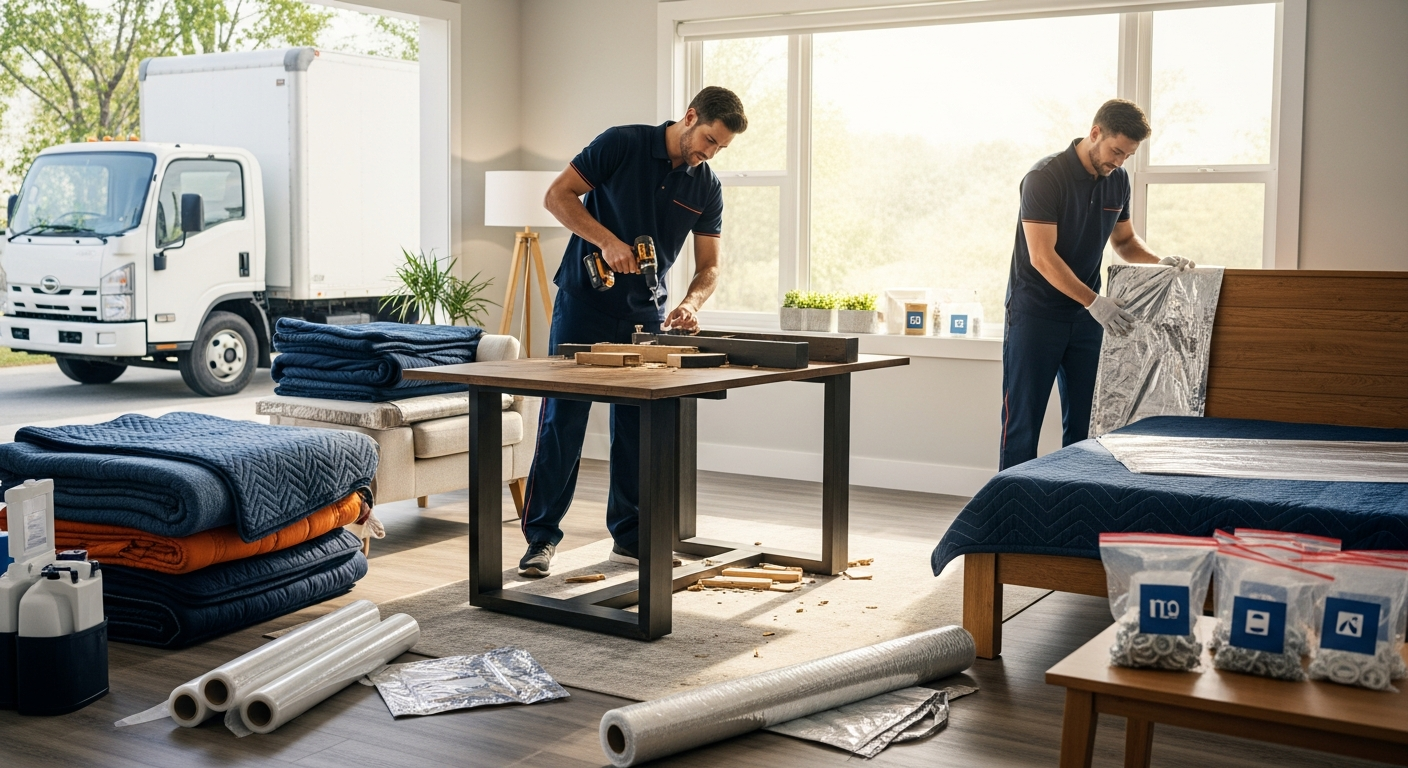
Preparing furniture correctly is one of the most important parts of a smooth move. Large items like beds, dressers, sofas, and dining tables are heavy, awkward to carry, and easy to damage if they are not disassembled, wrapped, and loaded the right way.
When people search for how to prepare furniture for moving, they are usually looking for clear, step-by-step instructions: what to take apart, how to bag and label hardware, how to wrap furniture, and how to protect delicate pieces so they arrive safely at their new home.
This guide from Atlas Route Moving walks you through exactly how to get your furniture ready for moving day. You will learn what to disassemble, how to protect furniture when moving, how to plan bed frame disassembly, and when it makes sense to let professional packers handle the work for you.
Our goal is to help you save time, reduce stress, and avoid the most common furniture damage issues we see on moves across the United States.
Key takeaways
- Start planning how to prepare furniture for moving at least 1–2 weeks before your move so you can disassemble, label, and wrap without rushing.
- Disassemble large items like bed frames, dining tables, sectionals, and desks to make them easier and safer to carry, especially through tight stairs or hallways.
- Use small, sealable bags for hardware and label each bag clearly with the matching furniture piece to avoid headaches when reassembling.
- Wrap furniture with moving blankets and stretch wrap, and use extra padding for corners, glass, mirrors, and delicate finishes to prevent scratches and chips.
- Keep an inventory list and take quick photos of complicated pieces before you take them apart so you have a visual guide for reassembly.
- Ask your moving company what furniture they recommend disassembling in advance and what they can safely handle on moving day.
- If the process feels overwhelming, consider using professional packing services so trained movers can handle disassembly and wrapping for you.
Why proper furniture prep matters
Furniture is usually some of the largest, most valuable property in a household. Taking the time to prepare it correctly pays off in several ways:
- Safety: Smaller, lighter pieces are easier and safer to carry down stairs and through tight turns.
- Protection: Proper wrapping and padding reduce the chance of dents, scratches, and broken legs or arms.
- Efficiency: When items are disassembled and ready to go, your movers can load the truck faster and more efficiently.
- Cost control: Many moving companies charge by the hour. If crews spend less time disassembling and troubleshooting, your final bill can be lower.
- Less stress on arrival: Organized hardware and labeled pieces make reassembly much easier at your new home.
If you are moving locally, it may be tempting to skip disassembly and just try to squeeze furniture through doorways. For long-distance and interstate moves, careful prep is even more important, because furniture spends more time in transit and may be handled multiple times between origin and destination.
Tools and materials you'll need
Before you start to disassemble furniture for moving, gather the basic tools and supplies you will need. Having everything in one place speeds up the process and keeps hardware from getting lost.
Essential tools
- Phillips and flathead screwdrivers (multiple sizes)
- Allen wrenches / hex keys (often included with bed frames and IKEA-style furniture)
- Small adjustable wrench or socket set (for bed bolts and table legs)
- Rubber mallet (for gentle taps on tight joints)
- Utility knife or scissors (for cutting tape and plastic wrap)
- Measuring tape (to confirm clearance in hallways and doors)
Packing and protection materials
- Moving blankets (also called furniture pads)
- Stretch wrap / plastic wrap (30" rolls work well for large pieces)
- Cardboard sheets or corner protectors
- Packing tape and painter's tape (painter's tape is gentler on finishes)
- Zip-top bags or small hardware bags
- Permanent marker or labeling stickers
- Bubble wrap for glass, mirrors, and delicate surfaces
Atlas Route Moving can provide these materials as part of our services, or you can choose professional packing services if you prefer to have our crews handle furniture preparation from start to finish.
Quick reference: tools and uses
| Tool or material | Primary use | Tips |
|---|---|---|
| Screwdrivers & hex keys | Removing screws, bed rails, and panels | Keep a full set nearby; many pieces use multiple sizes. |
| Moving blankets | Padding wood, leather, and fabric surfaces | Use multiple blankets on heavy or delicate furniture. |
| Stretch wrap | Securing blankets and protecting from dust and scuffs | Do not apply directly to unfinished wood in hot climates. |
| Zip-top bags | Storing screws, bolts, and small hardware | Label clearly and tape to the furniture or place in a "hardware box." |
How to plan your furniture inventory
Before you begin taking anything apart, create a basic furniture inventory. This helps you decide what to move as-is, what to disassemble, what to donate, and how to organize your work.
Step 1: Walk-through and list
- Walk room by room and write down each major furniture piece: beds, dressers, sofas, tables, desks, bookcases, etc.
- Note the size, weight, and any special features (glass doors, marble tops, built-in lighting).
- Mark items you may not need in the new home for possible sale or donation.
Step 2: Evaluate access
Next, think about how each item will move through your current home and into the new one.
- Measure tight doorways, stairwells, and elevators.
- Compare furniture dimensions to these openings.
- Identify pieces that are unlikely to fit unless partially or fully disassembled.
Furniture planning table
| Item | Recommended action | Notes |
|---|---|---|
| King bed with headboard | Full disassembly (frame, slats, headboard) | Bag hardware; tape rails together. |
| Large sectional sofa | Separate sections and legs | Wrap each section individually. |
| Tall bookcase | Remove shelves; move shell intact if possible | Secure adjustable shelf pins in a bag. |
Use this planning step to schedule your work. For example, you might decide to handle home office furniture one evening, bedroom furniture on the weekend, and living room pieces closer to moving day.
What furniture should be disassembled
Not everything needs to be taken apart. In fact, over-disassembling can make reassembly more complicated than necessary. Focus on items where disassembly improves safety, protection, or access.
Furniture that usually should be disassembled
- Bed frames (especially queen and king size)
- Bunk beds and loft beds
- Large dining tables and tables with removable leaves
- Sectional sofas and recliner sofas (separate sections and backs when designed to detach)
- Desks with return pieces or hutches
- Modular shelving systems and wall units
- Large entertainment centers (into manageable sections)
Furniture that is often moved intact
- Standard dressers (remove drawers, but move the frame in one piece when possible)
- Nightstands and small chests
- Most armchairs and standard sofas (if doorways and hallways allow)
- Small desks and console tables
- Sturdy coffee tables without fragile glass
When in doubt, ask your mover
Experienced movers can quickly look at a piece and tell you whether it is safer to move intact or disassembled. When you schedule your move with Atlas Route Moving, our team can review your furniture list and advise you on specific items such as platform beds, adjustable bases, or fragile antiques.
Step-by-step furniture disassembly guide
This section walks through how to prepare furniture for moving using a consistent, simple process you can repeat for each item. The principles are the same whether you are handling a bed frame disassembly, a dining table, or a modular desk.
1. Clear and empty each piece
- Remove bedding, pillows, mattress toppers, and under-bed storage before working on beds.
- Take everything out of dressers, nightstands, desks, and buffets.
- Remove books, decor, and fragile items from bookcases and shelving units.
Moving furniture with full drawers or shelves makes it heavier, puts stress on joints, and increases the risk of damage.
2. Take reference photos
Before you disassemble furniture for moving, snap a few quick photos with your phone:
- Overall piece from multiple angles.
- Close-ups of connection points, brackets, and hardware placement.
- Underside of beds, tables, and sofas where brackets and legs are attached.
These photos make reassembly faster at your new home, especially for complicated bed frames and desks.
3. Prepare a "hardware station"
Set up a small area with zip-top bags, a marker, and tape. For each furniture piece:
- Use one bag (or more if needed) for all screws, bolts, nuts, and specialty hardware.
- Label the bag clearly with the furniture name and room.
- Decide whether to tape the bag to a main piece (like a bed rail) or store all bags together in a clearly labeled "hardware" box.
Example label wording: "Primary bed – master bedroom – frame hardware."
4. Disassemble bed frames
Bed frame disassembly is one of the most important furniture tasks before moving.
- Remove the mattress and box spring or foundation and set them aside for wrapping.
- Take off the headboard and footboard by removing bolts, screws, or hooks.
- Disconnect side rails from the headboard and footboard.
- Remove center support rails and legs.
- Bundle rails together with tape or stretch wrap to keep them from separating.
- Place all bed hardware in a labeled bag.
If you are unsure how to reassemble later, write a quick note on the hardware bag such as "long bolts = headboard joints; short bolts = side rails."
5. Disassemble tables and desks
- Remove leaves and store them flat with protective padding.
- Turn smaller tables upside down (on a blanket) to reach leg bolts easily.
- Remove table or desk legs, label them if necessary (front left, back right, etc.).
- Disconnect hutches or upper shelving units from desks and credenzas.
- Wrap glass tops separately with bubble wrap and cardboard.
6. Separate sectionals and recliners
Most sectional sofas and many recliners are designed to come apart for moving:
- Find release levers or clips that connect sections together, usually at the base.
- Lift each section separately; keep backs attached unless your mover recommends removing them.
- Bag and label any hardware, clips, or feet that you remove.
7. Disassemble shelving and wall units
- Remove all adjustable shelves and shelf pins, storing pins in a labeled bag.
- If the unit consists of multiple stackable sections, separate each tier.
- For units attached to the wall, remove any anchoring brackets carefully and fill holes later if required by your lease.
Disassembly timeline example
| Days before move | Tasks | Notes |
|---|---|---|
| 10–7 days | Inventory all furniture, gather tools and packing materials. | Decide what to donate or sell. |
| 6–4 days | Disassemble non-essential pieces (guest beds, office furniture, spare tables). | Keep parts organized by room. |
| 3–1 days | Handle main beds, main dining table, remaining large items. | Leave at least one bed assembled until the last night if possible. |
How to wrap and protect furniture when moving
Once pieces are disassembled, the next step is to wrap furniture and add padding. Good wrapping is the key to protecting finishes, upholstery, and glass during loading, transit, and unloading.
General wrapping steps
- Cover with a moving blanket: Drape the blanket over the surface, making sure edges and corners are padded.
- Secure with stretch wrap: Wrap around the item to hold the blanket in place. Avoid overtightening around delicate pieces.
- Tape as needed: Use tape on the blanket, not directly on wood or finished surfaces, to avoid residue.
Protecting wood furniture when moving
- Dust and clean surfaces lightly before wrapping to avoid rubbing dirt into the finish.
- Use cardboard or foam corner protectors on table edges and bookcase corners.
- Double-pad antique, veneered, or high-gloss finishes.
- Avoid trapping moisture against unfinished wood; if items will go into storage, make sure they are dry before wrapping.
Protecting upholstered furniture
- Vacuum cushions and fabric to remove loose debris.
- Use plastic covers for sofas and chairs if you are worried about dust or moisture, then add moving blankets on top to prevent tears.
- Keep cushions in large plastic bags or boxes and label them with the corresponding sofa or chair.
Protecting glass and mirrors
- Apply painter's tape in an "X" pattern across mirrors and glass to help hold shards if they break.
- Wrap with several layers of bubble wrap.
- Add cardboard on both sides, tape securely, and then wrap in a moving blanket.
- Mark these pieces as "FRAGILE" and "GLASS" on multiple sides.
Wrapping do's and don'ts table
| Do | Don't | Reason |
|---|---|---|
| Wrap wood with blankets first, then stretch wrap. | Apply stretch wrap directly to antique or unfinished wood. | Direct plastic can stick or trap moisture and damage finishes. |
| Label wrapped items with room and contents. | Rely on memory for what is inside wrapped bundles. | Clear labels make unloading and setup easier. |
| Use extra padding on corners and legs. | Leave thin or delicate legs exposed. | Legs are high-risk points for chips and breaks. |
Room-by-room furniture preparation checklist
To make the process easier, here is a room-based checklist you can use when planning how to prepare furniture for moving.
Bedroom furniture
- Disassemble main bed frames (headboard, footboard, rails, slats).
- Remove drawers from dressers and nightstands; pack contents separately.
- Secure dresser mirrors by removing and wrapping separately.
- Wrap mattresses and box springs with mattress covers or plastic.
- Label all hardware bags by bed name and room.
Living room furniture
- Separate sectional sofa pieces and remove legs if needed.
- Wrap sofas and chairs with blankets and optional plastic covers.
- Disassemble large entertainment centers and remove TV mounting brackets.
- Remove glass from coffee tables or media units and wrap separately.
- Roll or fold rugs; secure with tape and label room.
Dining room and kitchen
- Remove leaves and legs from dining tables when needed.
- Secure or remove glass from buffets and china cabinets.
- Wrap chairs in pairs where possible, padding seat and back surfaces.
- Remove and bag shelf pins from cabinets and hutches.
Home office and misc. areas
- Disassemble L-shaped or U-shaped desks into sections.
- Remove keyboard trays and delicate hardware.
- Wrap file cabinets; lock or tape drawers shut after emptying or securing contents.
- Take apart modular shelving in garages or storage areas.
How furniture prep affects moving cost
Good preparation does more than protect your belongings; it can also impact the cost of your move.
How movers charge
Many local movers charge by the hour, while long-distance moves may use weight and distance as primary pricing factors. In both cases, time spent on disassembly and problem-solving around tight spaces can affect total cost.
Key cost factors related to furniture
| Factor | Effect on cost | How prep helps |
|---|---|---|
| Time spent on disassembly | Increases hourly labor charges for local moves. | Handling some disassembly yourself can shorten move time. |
| Complex or bulky furniture | May require extra crew members or specialty equipment. | Breaking items into smaller sections can reduce difficulty. |
| Long carries and tight access | Can add time to loading and unloading. | Planning disassembly around access points keeps things moving. |
You can use the Atlas Route Moving moving cost calculator as a starting point and then discuss with our team how furniture preparation and packing choices may influence your final estimate.
What to do before the movers arrive
A well-prepared home allows your moving crew to get started immediately and reduces delays on move day.
Day-before checklist
- Finish disassembling planned furniture (main beds can be last).
- Bag and label any remaining hardware and store in a "parts" box.
- Group furniture parts by room or by set (for example, keep all dining table pieces together).
- Clear pathways from each room to the door, removing loose rugs or clutter.
- Reserve elevators or loading dock access if required by your building.
Morning-of checklist
- Verify that beds and major pieces are ready to move as discussed with your mover.
- Walk through with the crew leader to point out fragile or high-value furniture.
- Keep a simple printed list of any items that are not to be moved (for example, items you are leaving or moving yourself).
- Secure pets and children away from high-traffic areas for everyone's safety.
Sample wording you can use with the crew leader: "These two pieces are antiques and I'd like extra padding around the legs and corners if possible."
Common furniture moving mistakes to avoid
Many furniture issues are preventable with a little planning. Here are mistakes we see often, along with better approaches.
Top furniture prep mistakes and fixes
| Mistake | Risk | Better approach |
|---|---|---|
| Leaving drawers full during the move. | Excess weight can damage drawer tracks and joints. | Empty drawers into boxes; move dresser shell separately. |
| Not labeling hardware bags. | Time-consuming reassembly and potential missing parts. | Label each bag with furniture name and room; store in one box. |
| Rushing bed frame disassembly the night before. | Stripped screws, lost bolts, and poor sleep before moving day. | Plan and start bed disassembly earlier, leaving just one bed for last. |
| Skipping blankets on "durable" furniture. | Unexpected nicks and scratches on arrival. | Wrap every major piece, especially wood and glass. |
Other pitfalls to watch for
- Using the wrong tools and stripping specialty fasteners.
- Forgetting to photograph complicated assemblies.
- Not checking with building management about furniture move-in rules.
- Underestimating how long disassembly and wrapping actually take.
If you realize your schedule is tighter than expected, consider having our crews handle more of the prep with professional packing services.
Questions to ask your mover about furniture handling
When you are comparing moving companies, it is smart to ask how they handle furniture, disassembly, and wrapping. This helps you understand what is included and what you may want help with.
Key furniture-related questions
- What furniture disassembly is included in your standard service?
- Can your crew handle bed frame disassembly and reassembly?
- Do you provide moving blankets and stretch wrap, or should I supply my own?
- How do you protect wood furniture and upholstered pieces on the truck?
- Are there any items you will not disassemble (for example, cribs, certain exercise equipment, or waterbeds)?
- Will you move items with existing damage, and how do you note their condition?
Sample wording when asking for clarification: "For our king bed and large sectional, do you prefer that we disassemble these before move day, or can your crew handle that? If so, is there an additional charge?"
Clear communication up front helps avoid surprises and ensures everyone understands the plan for handling your furniture.
How Atlas Route Moving can help with furniture prep
Preparing every piece of furniture for a move can be time-consuming and physically demanding, especially if you are handling an entire home or long-distance relocation. Atlas Route Moving offers flexible options to match your comfort level and schedule.
Full and partial furniture prep options
- Full-service packing and furniture prep: Our crews handle disassembly, hardware bagging and labeling, wrapping, padding, and reassembly of standard items at destination.
- Partial assistance: You disassemble simple pieces, and we focus on complex beds, large sectionals, or heavy, delicate items.
- Labor-only loading/unloading: If you have already done most prep and just need strong, experienced movers to load and unload safely.
When you schedule a move with Atlas Route Moving, we can walk through your furniture list, discuss which items should be disassembled in advance, and recommend the safest, most efficient approach. Our crews arrive with professional-grade padding and wrapping supplies to help protect your belongings.
Helpful Atlas Route Moving services
If you prefer to focus on work, family, or other move details, you can choose professional packing services and let Atlas Route Moving handle most of the furniture preparation for you.
CTA: plan your move with Atlas Route Moving
To discuss your furniture, access details, and timing, you can browse our moving services, review our service areas, use the online moving cost calculator, or request a free moving quote. Our team will help you build a realistic plan for disassembly, wrapping, and moving day logistics.
Related moving guides
Frequently asked questions
Do I have to disassemble all my furniture before moving?
No. Many items, such as standard dressers and small tables, can be moved intact. Focus disassembly on large items like beds, big desks, and sectionals, or any piece that will not fit safely through doors and stairwells. Your mover can advise you on specific pieces.
How far in advance should I start disassembling furniture?
Start planning how to prepare furniture for moving 7–10 days before your move. You can disassemble non-essential items several days in advance and leave main beds and everyday furniture until 1–2 days before moving day.
What is the best way to keep track of screws and small hardware?
Use small zip-top bags, label each one with the furniture piece and room, and either tape the bag to a main part of the item or place all bags in a clearly labeled "hardware" box. Taking a quick photo of hardware before removal also helps.
Should I remove dresser drawers before moving?
It is safest to remove drawers and move them separately, especially for long-distance moves or when stairs are involved. This reduces weight, protects the frame from stress, and prevents contents from shifting or jamming.
Do movers handle bed frame disassembly and reassembly?
Many movers, including Atlas Route Moving, can assist with bed frame disassembly and reassembly for standard beds. Ask during booking what is included, whether there are any limitations, and if certain specialty pieces require advance notice.
How do I protect wood furniture from scratches when moving?
Wrap wood furniture in thick moving blankets and secure them with stretch wrap or tape applied only to the blankets. Use extra padding on corners, legs, and edges, and avoid placing heavy items directly on top of finished surfaces in the truck.
Can I wrap furniture in plastic without using blankets?
Stretch wrap alone protects against dust and light scuffs, but it does not provide impact padding. For most pieces, especially wood and fragile items, combine moving blankets for cushioning with stretch wrap to hold everything in place.
What furniture should I avoid disassembling myself?
Complex items such as large wall units, some adjustable beds, certain cribs, and built-in units may be better handled by professionals or the original installers. If you are unsure, ask your mover for guidance or check manufacturer instructions.
What should I keep with me on moving day instead of on the truck?
Keep important hardware bags, assembly tools, small but essential furniture parts (like bed support legs), and any critical home-office components in a personal box or bag that travels with you so they are easy to access on arrival.
Will my furniture be reassembled at my new home?
Many full-service movers offer basic reassembly for items they disassembled, such as standard beds and tables. Confirm details with your moving company before booking so you know what is included and what may require additional service.
Sources referenced in this guide
Guidance in this article reflects practical experience from professional moving crews and general recommendations commonly shared in:
- Federal Motor Carrier Safety Administration consumer guidance
- U.S. Department of Transportation moving guidance
- State transportation and consumer protection agencies
- Building management move-in and move-out requirements
- Written moving estimates, inventories, and bills of lading
- Carrier tariffs, valuation options, and service agreements
This guide is general moving information, not legal, insurance, or regulatory advice. Moving requirements, pricing, access rules, and coverage options may vary by location, move type, building rules, and service agreement.