
How to Pack a Bathroom for Moving
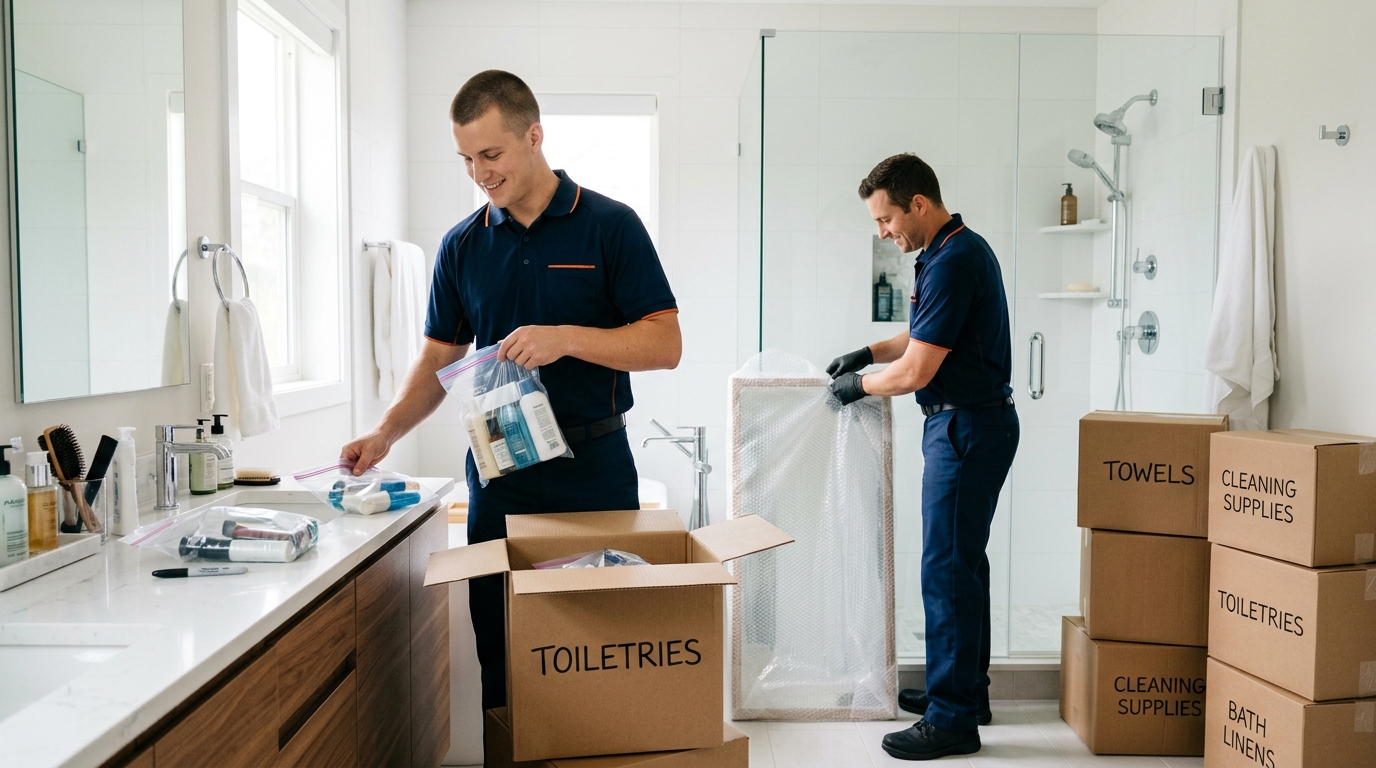
Bathrooms are one of the smallest rooms in a home, but they can be the most complicated to pack. Liquids that can leak, fragile glass bottles, sharp razors, and personal medications all have to be handled correctly. When you are figuring out how to pack a bathroom for moving, a clear plan can prevent spills, damage, and last-minute stress on move day.
Unlike packing books or clothing, packing a bathroom is about sorting what you truly need, deciding what is safe to move, and preparing a first-night kit so you are not digging through boxes just to find a toothbrush. Good organization also helps your movers know which boxes need extra care and which should stay upright.
This guide from Atlas Route Moving walks you step by step through packing a bathroom for moving, from decluttering and supplies to packing the medicine cabinet, toiletries, and linens. You will also see checklists, timing tips, and where professional packing services may be worth it, especially for large or long-distance moves.
Whether you are moving from a small apartment or a multi-bathroom house, you can adapt these bathroom moving tips to your own space and schedule.
Key takeaways
- Start packing a bathroom 7–10 days before moving to give yourself time to sort, use up open items, and safely pack liquids.
- Declutter aggressively: toss expired products, nearly empty bottles, and anything you would not buy again before you start boxing.
- Use plastic zip bags, plastic wrap under caps, and sturdy small boxes to prevent leaks and protect toiletries and medications.
- Pack your medicine cabinet separately, keep daily medications with you, and follow pharmacist guidance before moving prescriptions.
- Create a clearly labeled first-night bathroom kit with 2–3 days of essentials for every family member, plus basic cleaning supplies.
- Label bathroom boxes with “This Side Up,” “Fragile,” and “Bathroom – Towels/Toiletries/Medications” so movers can handle them correctly.
- For large homes, long-distance moves, or tight timelines, consider professional packing for bathrooms and other busy areas.
Why bathroom packing matters more than you think
Many people leave the bathroom for last because it is small and used daily. That is exactly why packing a bathroom needs extra attention.
Liquids, glass, and personal care items can cause problems if they are not packed correctly:
- Shampoo or cleaner leaking in a box can damage other belongings.
- Broken glass perfume bottles or mirrors can create a safety hazard.
- Poorly packed razors or nail tools can injure whoever opens the box.
- Misplaced medications can delay treatment or be unsafe for children and pets.
Planning how to pack a bathroom in advance helps you:
- Reduce the volume you are moving by discarding what you no longer need.
- Use up open items so you are not paying to transport half-empty bottles.
- Pack medications, first-aid items, and daily toiletries where you can reach them immediately.
- Keep movers informed about which boxes are fragile or need to stay upright.
For interstate and long-distance moves, many carriers also have rules about what liquids or hazardous items can be loaded, which is another reason to plan bathroom packing ahead of time and discuss it with your moving coordinator.
Timeline: When to start packing a bathroom
Packing a bathroom is easier when you break it into stages instead of trying to do everything the night before the move.
| Time before move | Bathroom tasks | Notes |
|---|---|---|
| 3–4 weeks | Start using up open products, review medications, and note items to replace after the move. | Ask your mover about restrictions on liquids, aerosols, and chemicals. |
| 10–14 days | Declutter cabinets and drawers, toss expired items, set aside rarely used backups to pack first. | Order any refill prescriptions you will need through moving week. |
| 7–10 days | Pack extra toiletries, bulk supplies, spare linens, and decor. Leave only daily essentials out. | Label boxes clearly by bathroom (Primary, Guest, Kids). |
| 2–3 days | Pack the medicine cabinet (except daily meds), most cleaning supplies, and remaining backups. | Prepare first-night bathroom kit for the new home. |
| Move day | Box remaining toiletries after morning routine, do final wipe-down, and pack daily meds/travel kit to go with you. | Walk the bathroom with movers and point out “this side up” boxes. |
This timeline can be adjusted for how many bathrooms you have and whether you are doing your own packing or using professional packing services from Atlas Route Moving.
Step 1: Sort and declutter your bathroom
The most important part of learning how to pack a bathroom is deciding what does not need to go in a box at all. Packing fewer items saves time and money and makes unpacking easier.
How to declutter efficiently
Work one bathroom at a time so you do not spread items all over the house.
- Clear a counter or table near the bathroom for sorting.
- Have trash bags and a donate box ready.
- Group items by category: haircare, skincare, makeup, shaving, dental, first aid, medications, cleaning supplies, linens, and decor.
Then, go category by category and decide:
- Keep and pack: Items you use regularly and are in good condition.
- Use up before move: Nearly empty bottles that you will finish in the next couple of weeks.
- Dispose: Expired products, old makeup, products you do not like, damaged items.
- Do not move: Hazardous chemicals, almost empty cleaners, or aerosols your mover may not accept.
What to toss vs. move
| Item type | Usually safe to pack | Better to toss / replace |
|---|---|---|
| Shampoo, conditioner, body wash | New or mostly full bottles, tightly sealed and bagged. | Nearly empty bottles, old travel-size samples you never use. |
| Makeup and skincare | Products you use weekly and are not expired. | Expired, dried-out, or products you tried once and did not like. |
| Medications | Current prescriptions and necessary over-the-counter items. | Expired medications (follow local disposal guidelines). |
| Cleaning supplies | Small, sealed bottles your mover allows, well packed. | Large jugs, harsh chemicals, or prohibited items. |
Call or email your moving coordinator or check your move paperwork to confirm which cleaning supplies and chemicals can go on the truck.
Step 2: Gather the right bathroom packing supplies
Having the right packing materials on hand makes packing a bathroom faster and safer.
- Small and medium moving boxes
- Sturdy plastic bins (optional for heavy liquids)
- Plastic zip-top bags (quart and gallon size)
- Plastic wrap or cling film
- Packing paper and bubble wrap
- Painter’s tape or masking tape for labels
- Permanent markers
- Trash bags for decluttering
- Separate pouch or small box for medications
Because many bathroom items are heavy for their size (bottles of shampoo, glass jars, candles), smaller boxes are usually better to avoid overloading. Use towels and washcloths as extra padding around delicate items when it makes sense.
Example label for a bathroom box: «Primary Bath – Toiletries & Haircare – This Side Up – Fragile»
Step 3: How to pack toiletries and liquids to prevent leaks
Preventing leaks is the top priority when you are packing a bathroom. Liquids can easily soak cardboard, damage other items, and create slippery surfaces during the move.
General rules for moving toiletries and liquids
- Only pack bottles that close tightly and are not cracked or damaged.
- Whenever possible, use travel-size containers for the days around your move and pack full bottles that stay sealed.
- Do not ship aerosols, flammable products, or any item your mover has listed as non-allowable.
- Keep liquids in small, clearly labeled boxes so movers can stack them appropriately.
Leak-prevention method (step by step)
- Open the bottle and place a piece of plastic wrap over the opening.
- Close the cap tightly over the plastic wrap.
- Wipe any residue off the outside of the bottle.
- Place each container in a plastic zip-top bag and seal completely.
- Stand bottles upright in a small box lined with a plastic bag or trash liner.
- Fill gaps with crumpled packing paper or washcloths so bottles cannot tip.
Sample labeling: «Guest Bath – Liquids – Keep Upright»
Packing specific bathroom liquids
| Category | How to pack | Special tips |
|---|---|---|
| Shampoo, conditioner, body wash | Seal with plastic wrap under caps, bag individually, and stand upright in a small box. | Group brands or family members together for easy unpacking. |
| Lotions and creams | Tighten lids, place jars in small bags, pad with paper or towels. | Avoid stacking heavy items on top of glass jars. |
| Perfume, cologne, facial serums | Wrap each glass bottle in bubble wrap, bag, and pack in a padded, clearly marked box. | Consider taking high-value items with you instead of on the truck. |
| Nail polish and remover | Follow mover rules; many do not accept flammable products on the truck. | If allowed, double-bag and keep in an upright, sturdy container. |
These same techniques apply to most liquid bathroom items, including mouthwash, facial toner, and liquid soap.
Step 4: How to pack a medicine cabinet safely
Knowing how to pack a medicine cabinet is crucial for both safety and convenience. When you plan bathroom moving tips around medications and first-aid items, you avoid scrambling for essentials when you arrive.
Sort medications and first-aid supplies
- Check expiration dates and follow local guidance for disposing of expired medications.
- Separate daily prescriptions and critical medications from occasional or backup items.
- Group items into categories: prescriptions, over-the-counter pain relievers, allergy medications, digestive aids, first aid (bandages, ointments), and specialty items.
What to keep with you vs. send with movers
| Pack with you (carry-on) | Can go in moving boxes | Handle with extra care |
|---|---|---|
| Current prescription medications, daily vitamins, inhalers, EpiPens, and critical health supplies. | Extra over-the-counter medications, spare bandages, non-essential duplicates. | Temperature-sensitive items or anything requiring special handling (follow pharmacist guidance). |
| A mini first-aid kit for moving day (bandages, pain reliever, antiseptic wipes). | Bulk items like large bottles of pain relievers or extra vitamins. | Items needed during travel or at the new home within 24 hours. |
For safety, keep medications in original labeled containers. A small pouch or toiletries bag in your personal luggage works well for critical items.
Sample reminder note: «Daily meds packed in carry-on bag – do NOT load on truck.»
Packing the rest of the medicine cabinet
- Place medications that can go on the truck in a small, sturdy box.
- Add a layer of bubble wrap or folded towel at the bottom of the box.
- Bag each group of medications by type in small zip-top bags.
- Label the box clearly: «Bathroom – Medications/First Aid – Fragile – Do Not Overheat.»
Always follow advice from your pharmacist or healthcare provider for transporting specific medications, especially those needing refrigeration or special temperatures.
Step 5: Packing towels, linens, and small accessories
Compared to liquids, packing towels and linens is simple. Still, a little strategy helps protect fragile items and maximize box space.
How to pack towels and bath linens
- Wash and dry all towels and bathmats before packing so you start fresh in your new home.
- Use older towels as padding around fragile items like glass jars, candles, or decorative pieces.
- Fold towels tightly and stack them in medium boxes, heaviest at the bottom.
- Label boxes by bathroom: «Kids Bath – Towels & Linens» or «Guest Bath – Spare Towels.»
Packing shower curtains, rods, and rugs
- Shower curtains: Wash, dry thoroughly, then fold and pack in a clear plastic bag to keep moisture away from other items.
- Shower liners: If worn or stained, replace instead of packing. If in good condition, dry completely and pack with the curtain.
- Shower rods: Disassemble if possible; bundle hardware in a labeled bag taped to the rod.
- Bath rugs: Shake out, vacuum if needed, roll instead of folding to reduce creases.
Packing small bathroom accessories
Use small boxes or compartments for:
- Toothbrush holders and soap dishes
- Counter organizers and trays
- Razor holders and shower caddies
- Decorative items and small artwork
Wrap each item in packing paper or bubble wrap and cushion it with towels, washcloths, or tissue paper to prevent chipping and scratches.
Create a first-night bathroom essentials kit
One of the most important bathroom moving tips is packing a first-night kit that stays with you, not on the moving truck. This solves the problem of digging through multiple boxes to find basics after a long day.
What to include in your bathroom essentials box
- Toothbrushes and toothpaste for each person
- Travel-size shampoo, conditioner, and body wash
- Deodorant and basic skincare products
- Hairbrush/comb and simple hair ties or clips
- Razor and shaving cream (if needed)
- Hand soap and a small hand towel
- Toilet paper (at least 2–3 rolls)
- Basic first-aid supplies
- Daily medications and a few common over-the-counter medications
- 2–3 bath towels and washcloths
- Trash bags and a small pack of cleaning wipes
Pack this box last and keep it in your personal vehicle, or clearly instruct your movers that it should be loaded last and unloaded first. Mark it boldly on multiple sides:
«Open First – Bathroom Essentials»
You can also coordinate this with your overall essentials box strategy. The guide on How to Pack an Essentials Box offers ideas for combining bathroom, kitchen, and bedroom necessities.
Common bathroom packing mistakes and how to avoid them
When people are not sure how to pack a bathroom, a few predictable mistakes almost always show up. Being aware of them ahead of time helps you avoid mess, damage, and frustration at your new home.
| Common mistake | What can happen | How to prevent it |
|---|---|---|
| Packing liquids loose without bags or plastic wrap | Leaks that ruin other items and soften box bottoms. | Double seal every bottle and bag liquids individually. |
| Overloading large boxes with heavy bottles and towels | Boxes become too heavy to lift safely and can break open. | Use small boxes for liquids and medium boxes for towels. |
| Leaving medications in random boxes | Difficulty finding important prescriptions when needed. | Pack daily medications separately and keep with you. |
| Packing prohibited or hazardous cleaning supplies | Items may be refused on move day, causing delays and repacking. | Ask your mover about restrictions before packing. |
Other common issues include forgetting a first-night kit, failing to label boxes by bathroom, and waiting until the last minute to pack everything at once.
How bathroom items affect moving cost
Bathroom items are only one part of your home, but understanding how they influence cost can help you prioritize what to move.
Key cost factors related to packing a bathroom
- Weight: Liquids, glass bottles, and bulk supplies add weight to your shipment, which can affect long-distance pricing.
- Volume: Large stockpiles of paper products, cleaning supplies, and backup toiletries can take up space in boxes.
- Fragility: Perfume bottles, mirrors, and decorative items take more time and materials to pack safely.
- Labor: If movers are packing your bathroom, time spent organizing and wrapping each item influences labor cost.
You can estimate how decluttering and packing choices affect your overall budget using the Atlas Route Moving moving cost calculator and a conversation with your moving coordinator.
When to consider professional packing for your bathroom
Even if you plan to pack most of your home yourself, there are situations where bathroom packing is worth handing off to professionals.
Signs professional packing may help
- You have multiple full bathrooms with a lot of products and decor.
- You are on a tight timeline and cannot spend hours sorting and wrapping bottles.
- You are moving long-distance or interstate and want extra protection for liquids and fragile items.
- You prefer not to handle glass, sharps, or complex medicine cabinet organization.
Atlas Route Moving offers packing services that can cover just your bathroom, a few selected rooms, or your entire home. Our crews bring the appropriate packing materials, organize items by category, and label boxes clearly so unpacking is more straightforward.
Helpful Atlas Route Moving services
If you prefer to do some of the packing yourself but want help in certain rooms like kitchens and bathrooms, Atlas Route Moving can often customize a partial packing plan.
Key questions to ask your movers about bathroom items
Before you finish packing a bathroom, clarify expectations with your moving company so there are no surprises on move day.
- Which bathroom items are not allowed on the truck (cleaners, aerosols, nail polish remover, etc.)?
- Do you recommend packing liquids a certain way for long-distance moves?
- Can your crew pack the bathroom if I run short on time? How is that priced?
- How should I label boxes with medications or first-aid supplies?
- Will the crew place bathroom boxes in specific rooms at the new home?
Example email to your mover: «We have several bathroom cleaners and aerosols. Can you confirm which items your crew cannot load so we can plan to use or dispose of them before move day?»
Moving-day bathroom checklist
On move day, you will likely still use the bathroom up until the last minute. A short checklist keeps you on track.
- Set aside your first-night bathroom kit and daily medications so they are not loaded on the truck.
- After your morning routine, pack remaining toiletries in a small box.
- Empty trash cans and pack or discard them as planned.
- Remove shower curtain and liner (if you have not already), dry quickly if damp, and pack.
- Do a final sweep of drawers, cabinets, and under-sink storage.
- Wipe down sink, counters, tub, and toilet with basic cleaning supplies.
- Walk your bathroom with the moving crew and point out any fragile or «this side up» boxes.
Before leaving, take one last walk-through to ensure nothing is left behind, including small items in medicine cabinets or on shelves.
How Atlas Route Moving can help with bathroom packing
Atlas Route Moving supports customers through every stage of a move, from planning and packing a bathroom to setting up your new space. While many people pack some rooms on their own, bathrooms are an area where professional help can make a noticeable difference.
Here are ways our team can assist:
- Provide packing guidance and timelines tailored to your home size and move type.
- Supply professional-grade boxes, packing paper, and materials suitable for liquids and fragile toiletries.
- Offer partial or full packing services that include bathrooms, kitchens, and other high-detail rooms.
- Coordinate secure handling of clearly labeled bathroom boxes during loading and unloading.
- Arrange storage services if you need to keep some items in short- or long-term storage before moving into your new home.
Every move is different. A short local move with one bathroom may only require a few boxes and careful labeling, while a large home with several bathrooms may benefit from a more structured packing plan. Atlas Route Moving can walk you through your options, including DIY packing, professional packing, or a mix of both.
Frequently asked questions
How early should I start packing a bathroom for moving?
Begin 7–10 days before your move. Start by decluttering and packing rarely used items, then pack daily toiletries and cleaners in the last two days while keeping a first-night kit separate.
What is the best way to pack liquid toiletries so they do not leak?
Tighten caps, place plastic wrap under each cap, and seal bottles in zip-top bags. Keep them upright in small boxes, fill gaps with paper or towels, and clearly label the box as liquids to keep upright.
Can movers take bathroom cleaning supplies and aerosols?
Many movers limit or prohibit certain chemicals, aerosols, and flammable products. Review your paperwork and ask your moving coordinator which items they cannot load so you can use, give away, or dispose of them before move day.
How do I pack my medicine cabinet for a move?
Check expiration dates, dispose of old medications according to local guidance, and keep current prescriptions with you in your personal bag. Pack non-essential medications and first-aid supplies in a small, padded, clearly labeled box.
Should I move partially used toiletries or buy new ones after the move?
Keep products you use regularly and that are mostly full. Toss or use up nearly empty bottles, old samples, and items you would not buy again. This reduces weight and clutter while still giving you what you need at your new home.
How do I pack bathroom mirrors and glass shelves safely?
Wrap mirrors and glass shelves in multiple layers of packing paper and bubble wrap, tape securely, and label them as fragile. Stand them on edge in a box or crate padded with towels, and mark the box so movers know to handle it carefully.
What should go in a bathroom first-night box?
Include toothbrushes, toothpaste, basic toiletries, a few towels, daily medications, toilet paper, hand soap, and simple cleaning wipes. Keep this box with you or have movers load it last and unload it first.
Can Atlas Route Moving pack my bathroom for me?
Yes. Atlas Route Moving offers flexible packing options, including bathroom-only or full-home packing. Crews bring the right materials, organize items, and label boxes clearly to reduce stress and save you time.
How should I label bathroom boxes so they end up in the right room?
Write the destination bathroom (Primary, Guest, Kids) and main contents on multiple sides of each box, such as «Primary Bath – Towels» or «Guest Bath – Toiletries – This Side Up.» This helps movers place boxes correctly and helps you unpack faster.
What if I run out of time to pack my bathroom before move day?
Let your moving coordinator know as early as possible. Depending on your booking, Atlas Route Moving may be able to add packing help for your bathroom or other rooms on moving day, and you can prioritize the most important items first.
Sources referenced in this guide
These bathroom moving tips are based on practical experience from professional movers and commonly recommended consumer guidance, including:
- Federal Motor Carrier Safety Administration consumer guidance on moving household goods
- U.S. Department of Transportation moving guidance for interstate moves
- State transportation and consumer protection agency recommendations about hazardous household items
- Typical building management move-in and move-out requirements regarding cleaning and trash removal
- Standard written moving estimates, inventories, and service agreements used in the moving industry
For move-specific rules and restrictions, always review your actual moving contract and written estimate.
Related moving guides
When you are ready to plan your move, you can explore Atlas Route Moving moving services, check your budget with the moving cost calculator, review our service areas, and request a free moving quote to talk through the best combination of packing and moving support for your home.
For more room-by-room strategies beyond how to pack a bathroom, the Atlas Route Moving blog includes detailed guides like kitchen packing, essentials boxes, and full-home packing checklists.
This guide is general moving information, not legal, insurance, or regulatory advice. Moving requirements, pricing, access rules, and coverage options may vary by location, move type, building rules, and service agreement.