
How to Pack and Move Houseplants
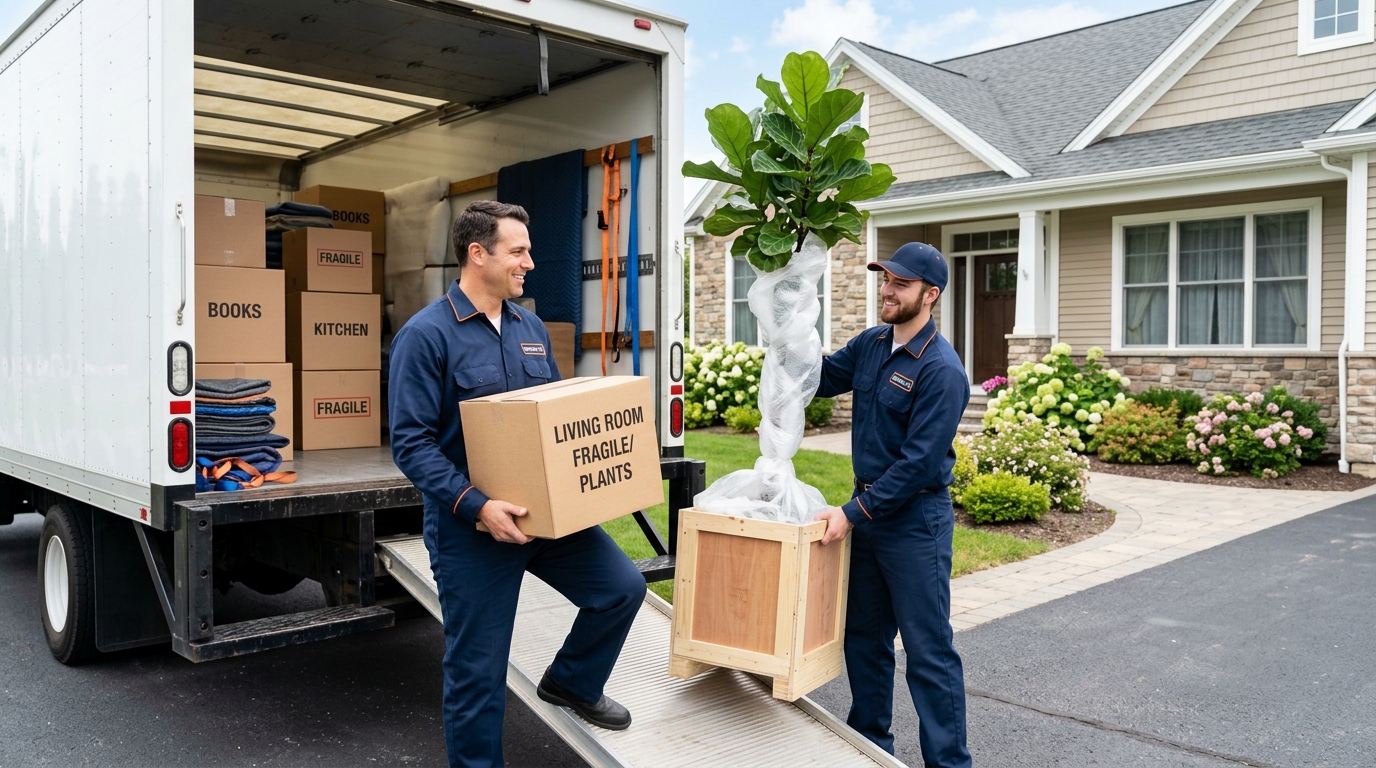
For many people, houseplants are more than decor. They are part of the home you have built, and leaving them behind is not an option. But plants are also living, fragile cargo. If you pack them the same way you pack books or dishes, they can arrive wilted, broken, or worse.
Knowing how to move plants the right way takes some planning: pruning at the right time, watering correctly, choosing the right boxes, protecting leaves and soil, and deciding whether to transport plants yourself or with professional help. Temperature swings, darkness, and jostling during the move all matter.
This guide walks you through how to pack plants for moving step by step, from a month before moving day to settling them into your new home. You will learn how to prepare each plant, what materials to use, how to transport plants in a car or moving truck, and how to help them recover after the move. We will also point out where a professional moving company like Atlas Route Moving can support your overall move while you focus on your greenery.
Whether you are moving across town or to another state, use this as a practical field guide so your plants have the best chance of arriving healthy and ready to thrive.
Key takeaways
- Start preparing houseplants 3–4 weeks before moving day with pruning, pest checks, and, if needed, repotting into plastic pots.
- Most long-distance movers cannot take live plants across state lines, so plan to transport plants in your own vehicle whenever possible.
- Water lightly 1–2 days before moving so soil is slightly moist but not soggy, which helps prevent mess and root damage.
- Use sturdy boxes, paper, and padding to stabilize pots, protect foliage, and avoid tipping and breakage during transit.
- Keep plants in climate-controlled conditions in a car, away from direct sun or heater vents, and avoid leaving them in parked vehicles.
- Unpack plants quickly at your new place, give them a stable spot with indirect light, and resist overwatering while they adjust.
- Work with a professional mover like Atlas Route Moving for the rest of your home so you can focus on transporting your plants safely.
Can movers take plants?
Before you learn how to move plants, it is important to understand who is actually allowed to move them. Many customers are surprised to find out that moving companies either cannot or will not move live plants, especially on interstate or long-distance moves.
Why many movers cannot move plants
There are three main reasons professional movers often exclude houseplants from standard cargo:
- Regulations and restrictions: Many states have rules about transporting live plants to prevent pests and diseases from spreading. Long-distance carriers must follow those rules.
- Liability and condition: Plants are fragile, and their condition can be affected by light, temperature, and water. It is difficult to document their pre-move condition, so movers typically limit liability.
- Truck environment: A moving trailer can get very hot or cold, especially during summer and winter moves. Those conditions are hard on live plants.
For local moves within the same city or short distances, some companies may agree to move plants in limited situations. Always ask during the estimate so expectations are clear.
Typical policies for local vs. long-distance moves
| Move type | Common approach to plants | What you should plan |
|---|---|---|
| Local move (same city/area) | Some movers may move plants if packed and disclosed; often still limited. | Ask about policies; consider transporting most plants in your own car. |
| Intrastate (same state, longer distance) | Policies vary. Heat/cold in truck is still a concern. | Plan for car transport for favorite or fragile plants. |
| Interstate / long-distance | Many carriers decline live plants due to regulations and conditions. | Assume you will be responsible for transporting plants yourself. |
When you discuss your move with a company like Atlas Route Moving, you can talk through which items they will handle and which you plan to move yourself, including plants. Professional movers can pack and move everything around your plants so you can keep them with you in your vehicle.
Moving timeline for houseplants
Planning how to move plants begins several weeks before moving day. A simple timeline helps you avoid last-minute stress and gives plants time to adjust to changes.
Suggested houseplant moving timeline
| Time before move | Plant tasks | Why it matters |
|---|---|---|
| 4 weeks out | Decide which plants to keep, rehome, or propagate; check building/state rules. | Reduces volume and ensures you only move healthy, wanted plants. |
| 3 weeks out | Treat for pests, remove dead leaves, and do any major pruning. | Plants have time to recover from pruning or treatments. |
| 2 weeks out | Repot from heavy ceramic pots into lighter plastic, if desired. | Reduces breakage risk and total weight for moving. |
| 1 week out | Gradually adjust plants toward slightly lower light and reduce feeding. | Prepares plants for lower light in boxes and vehicles. |
| 1–2 days out | Water lightly, stake tall stems, and pre-pack non-essential plants. | Soil is stable, not soggy, and plants are ready to travel. |
| Moving day | Load plants last into your car and keep them climate-controlled. | Minimizes time in boxes and exposure to extreme temperatures. |
Working with a mover such as Atlas Route Moving services can help you keep this schedule realistic. While crews handle furniture and boxes, you can focus on plant-specific tasks without feeling rushed.
Supplies you need to pack plants for moving
Gathering the right supplies before you start packing makes it easier to protect both plants and your vehicle. Here is a practical list.
Basic packing supplies
- Sturdy cardboard boxes in various sizes (short, wide boxes are often best for plants)
- Plastic nursery pots (if you are repotting from heavy or breakable planters)
- Packing paper or unprinted newsprint (avoid ink transfer)
- Paper towels and small plastic bags for securing soil
- Stretch wrap or plastic wrap to hold soil in place (optional)
- Soft ties or garden tape to secure tall stems to stakes
- Bubble wrap or towels to cushion pots
- Scissors and packing tape
- Permanent markers for labeling boxes
Climate and transport supplies
- Blankets or towels to protect car seats and floors
- Seatbelt extenders or crates to secure large pots
- Sunshades for car windows, especially during summer moves
- Lightweight sheet or breathable fabric to shield foliage from drafts or sun in the car
Label every plant box clearly with wording like: \