
How to Pack Clothes for Moving: Closets, Drawers and Shoes
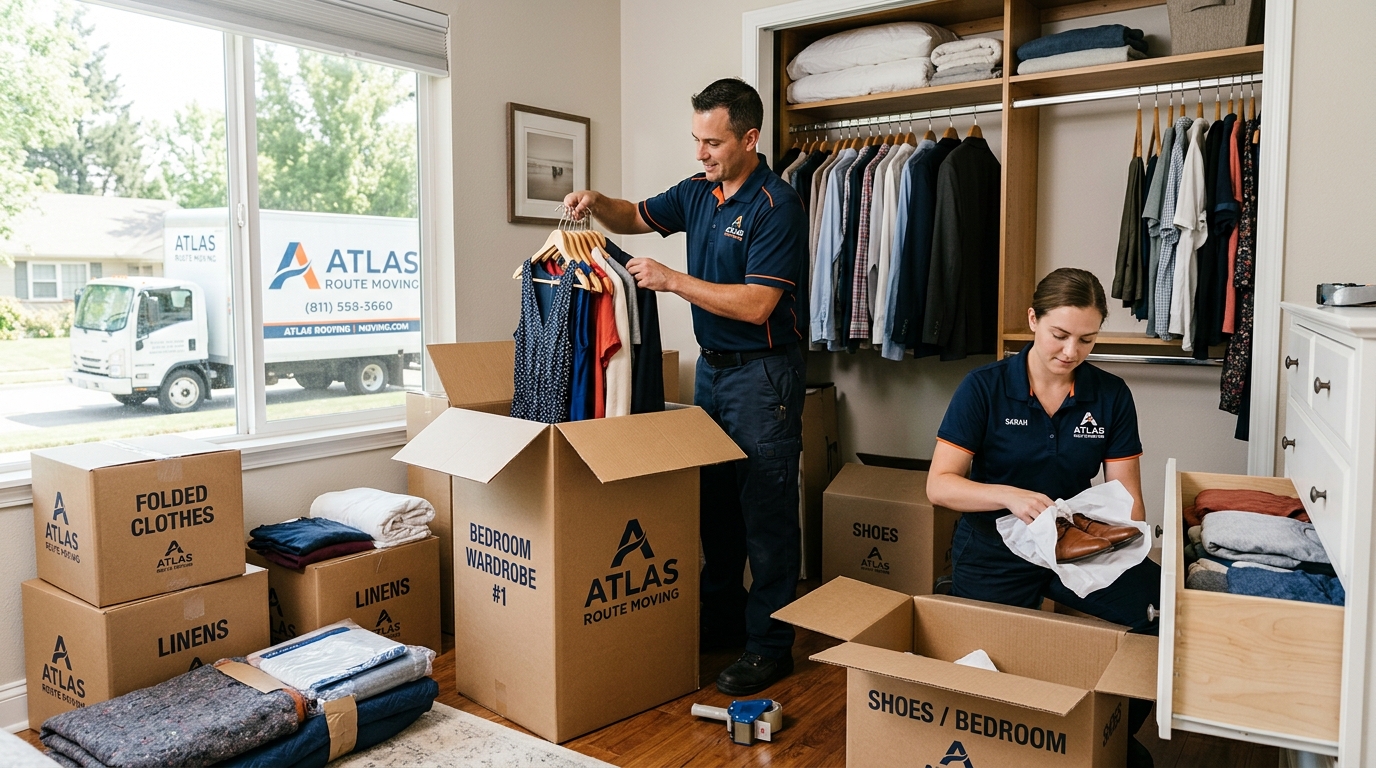
Clothes are usually the biggest category of stuff people own, but they are also the category most often tossed into boxes at the last minute. That is when clothes get wrinkled, shoes get crushed, drawers break, and unpacking becomes overwhelming. Knowing how to pack clothes for moving the right way makes your move smoother, faster, and less stressful.
This guide walks you through packing closets, dresser drawers, and shoes step by step. You will see when wardrobe boxes are worth it, when it is fine to leave drawers full, and how to avoid common problems like musty boxes, lost socks, or damaged heels. The strategies here apply whether you are moving yourself or hiring professional movers like Atlas Route Moving.
We will cover different options for moving clothes on hangers, how to protect delicate fabrics, smart ways to sort seasonal wardrobes, and how to keep the first week in your new home simple and organized. You will also find practical checklists, comparison tables, and sample labels you can copy.
Use this as a field guide: scan the checklists, follow the timelines, and adjust for your home. If you decide you would rather have professionals handle the packing, Atlas Route Moving can provide full or partial packing services so you can focus on the rest of your move.
Key takeaways
- Sort and declutter your wardrobe before you pack; do not pay to move clothes you never wear.
- Use wardrobe boxes or hanger bundles in bags to move clothes on hangers with minimal wrinkles.
- Drawers can sometimes stay partially full, but only with soft clothing and when furniture is sturdy.
- Pack shoes for moving in sturdy, well-padded boxes, keeping pairs together and labeling clearly.
- Pack a separate first-week clothing box so you are not digging through every box on day one.
- Mark boxes clearly by room, season, and owner to make unpacking fast and organized.
- Professional packing services can handle closets, drawers, and shoes in a fraction of the time.
Creating a clothing packing strategy
Before you grab boxes and start throwing clothing into them, take an hour to create a simple strategy. Clothes can be moved a few different ways, and your choices affect cost, wrinkle levels, and how easy it is to unpack.
Decide your priorities
Most people want a balance of three things:
- Minimize wrinkles on work clothes, suits, and special outfits
- Reduce the number of boxes and overall volume
- Keep packing time manageable
Think about which matters most for you. If you have a lot of business attire, you might invest in more wardrobe boxes. If you mostly wear casual clothes, you may prefer compact, folded packing.
Sort by season and importance
Before you decide how to pack clothes for moving, decide what is actually worth moving and when you will need it. A quick sort by season and importance will reduce your volume and simplify unpacking.
- Everyday essentials: Clothes you wear weekly; these should be easy to reach in your new home.
- Work and formal wear: Suits, uniforms, dresses, and garments that should not be crushed.
- Seasonal clothing: Off-season coats, swimsuits, bulky sweaters, and holiday outfits.
- Rarely worn items: Clothes you have not worn in a year; consider donating or selling.
Sample label wording:
- «Bedroom – Closet – Everyday tops & jeans – Owner: Alex»
- «Bedroom – Closet – Winter coats – Off-season»
- «Bedroom – Dresser – Kids PJs & underwear – First week»
Declutter before you pack
Clothing is one of the cheapest categories to replace and one of the easiest to overpack. Every bag you donate is one fewer box to carry and pay for.
- Donate items with good life left that you just do not wear.
- Recycle stained, torn, or unwearable clothing instead of packing it.
- Set aside a small pile of old T-shirts or towels you can use as packing padding.
Once you have edited your wardrobe, you can decide which categories belong in wardrobe boxes, which can be folded into standard boxes, and which can stay in drawers.
Essential supplies for packing clothes
The right supplies keep clothes clean, dry, and organized. You do not need everything on this list, but it helps to understand your options before you buy or rent materials.
| Supply | Best use | Notes |
|---|---|---|
| Wardrobe boxes (tall with metal bar) | Hanging clothes, suits, dresses, coats | Fast, wrinkle-minimizing; bulkier and costlier than regular boxes. |
| Medium and large moving boxes | Folded clothes, linens, kids clothing, T-shirts | Do not overpack; clothes get heavy fast. |
| Small or shoe boxes | Shoes, belts, small accessories, hats | Protects shoes from crushing; easier to stack if uniform sizes. |
| Vacuum or compression bags | Bulky items like comforters and heavy sweaters | Saves space but can get heavy; avoid for delicate fabrics. |
| Garment bags or large trash bags | Covering hanger bundles or special pieces | Budget option; still label clearly so you know what is inside. |
| Packing paper and tissue | Wrapping shoes, purses, and delicate fabrics | Avoid using newspaper ink on fabric. |
| Tape and labels or markers | Sealing boxes and clear labeling by room and season | Color-coding by room or family member speeds up unpacking. |
Atlas Route Moving can supply standard moving boxes and packing materials as part of a move. If you prefer not to shop for materials or you want uniform boxes that stack well in the truck, ask about supplies when you request your estimate.
Wardrobe boxes and moving clothes on hangers
Wardrobe boxes are tall boxes with a metal hanging bar across the top. They let you move clothes on hangers directly from your closet into a box and back onto a rod in your new home. They are one of the fastest ways to move a closet with minimal wrinkles.
When wardrobe boxes are worth it
Wardrobe boxes are especially useful when you have:
- Business or professional clothing you cannot risk crushing
- Formal dresses, gowns, or tailored suits
- Delicate or structured items that do not fold well
- A large closet and a short packing timeline
Because they are larger and more expensive than regular boxes, you do not have to use them for every item you own. Reserve them for your higher-value or hard-to-iron items.
How to use wardrobe boxes efficiently
- Assemble the box securely and install the hanging bar before loading.
- Group clothing by type (e.g., suits together, dresses together) and by owner.
- Transfer hangers onto the bar a armful at a time; do not overload the bar.
- Use the bottom of the wardrobe box for light items like folded sweaters or shoes in bags if there is room, but do not make it too heavy.
- Label the box on multiple sides: room, owner, and clothing type.
Example label: «Primary Bedroom – Wardrobe – Work jackets & shirts – Owner: Jordan»
Budget alternatives: hanger bundles and bags
If you want to save on wardrobe boxes, you can still move clothes on hangers with simple supplies.
- Hanger bundles with bags: Group 10–15 hangers, rubber-band the hooks together, slip a trash bag or garment bag over the clothes with a hole at the top for the hooks, and tie the bottom loosely.
- Lay-flat method: Lay bundled hangers in the back seat of your car or flat on top of boxes in the truck, keeping them covered to avoid dust.
Movers can handle these bundles if they are secured and labeled. Let your crew know what is inside so they can load them in a safe spot.
Should you leave dresser drawers full?
Deciding whether to leave clothes in drawers is one of the most common questions about how to pack clothes for moving. The right answer depends on your furniture, the weight of items, and whether you are moving locally or long-distance.
Pros and cons of leaving drawers full
| Option | Advantages | Risks / drawbacks |
|---|---|---|
| Leave drawers full (soft clothes only) | Saves packing time and boxes; easy unpacking. | Furniture heavier; risk of drawer warping or sliding open if not secured. |
| Partially empty drawers | Balances weight and convenience; reduces strain on furniture. | Still need some boxes for removed items. |
| Empty all drawers and pack separately | Safest for furniture, especially particle board or older pieces. | More packing time, more boxes, more labeling. |
When it is usually safe to leave clothes in drawers
It is often acceptable to leave soft, non-breakable items like T-shirts, socks, and underwear in drawers when:
- The dresser is solid wood or otherwise sturdy.
- The drawers glide well and are not already sagging.
- You are moving locally, not across the country.
- The movers can lift and carry the piece safely at its loaded weight.
Drawers should be secured shut with stretch wrap or straps so they do not slide open during the move. Avoid tape directly on finished wood, which can damage the surface.
When drawers should be emptied
Plan to empty drawers when:
- The furniture is particle board or inexpensive flat-pack furniture.
- The piece is already wobbly or has damaged rails.
- The drawers contain non-clothing items (jewelry, documents, electronics).
- You are moving long-distance or putting furniture into storage where humidity can change.
Ask your moving consultant how their crews prefer to handle drawers. Atlas Route Moving can advise you during your estimate based on your specific furniture and whether your move is local or long-distance.
How to pack folded clothes and linens
Most households have far more foldable clothing than hanging clothing. Getting these items into boxes efficiently will make your home feel packed and ready.
Choosing the right box sizes
Clothes are deceptively heavy. It is better to use more medium boxes than a few oversized, overloaded ones that are hard to lift.
- Small boxes: Great for books and heavy items, but usually too small for most clothes.
- Medium boxes: Ideal for folded clothing, kids clothes, and accessories.
- Large boxes: Best for bulkier, lighter items like comforters and pillows.
Folding methods that work for moving
You do not have to use any special folding system, but consistent folds help you fit more into each box and unpack neatly.
- Flat fold: Fold items into rectangles and stack them like files in a drawer; easy to see at a glance.
- Roll method: Roll T-shirts, gym clothes, and casual items; reduces wrinkles and fills gaps in boxes.
- Bundle method: Wrap smaller items inside a larger garment for extra padding.
Line the bottom of each box with a layer of packing paper or a clean trash bag for extra dust protection, especially if items will go into storage.
Example packing layout for a clothing box
| Layer | What to include | Tips |
|---|---|---|
| Bottom layer | Heavier items like jeans, sweatshirts, and hoodies | Distribute weight evenly; avoid overfilling. |
| Middle layer | T-shirts, long-sleeve shirts, casual tops | Use stacking or rolling to fill gaps. |
| Top layer | Light items like scarves, PJs, and kids clothes | Add a final layer of paper before closing box. |
Labeling clothing boxes clearly
Because clothing looks similar across boxes, labels are essential. Consider including:
- Room (e.g., Primary Bedroom, Bedroom 2, Nursery)
- Owner (e.g., Sam, Taylor, Guest)
- Season (e.g., Summer, Winter, All-season)
- Priority (e.g., First week, Storage, Off-season)
Sample box label: «Bedroom 2 – Clothes – Owner: Mia – Summer & fall – First week»
How to pack shoes for moving
Shoes are easy to damage during a move. Heels can snap, leather can crease, and pairs can get separated. Taking a little time to pack shoes for moving correctly keeps them ready to wear in your new home.
Sort and clean before you pack shoes
- Match up all pairs and get rid of singles.
- Donate shoes that are worn out or do not fit.
- Wipe down soles and surfaces so dirt does not transfer to clothes.
Decide which shoes you will need during the move (such as sneakers and one pair of nicer shoes) and keep them in your personal overnight bag.
Best ways to pack shoes
- Original boxes: If you have them, they offer excellent protection. Stack inside a medium moving box with labels facing out.
- Shoe-specific moving boxes: Use small or divided boxes and wrap each pair in paper.
- Soft shoes in bags: Flip-flops, slippers, and canvas shoes can be bundled in drawstring bags or pillowcases.
Stuff delicate shoes (like leather boots or heels) with packing paper or clean socks to help them keep their shape. Wrap each shoe in paper or place them heel-to-toe to avoid scuffing.
Example shoe packing plan
| Shoe type | Packing method | Extra protection |
|---|---|---|
| Sneakers and casual shoes | Pair together, wrap in paper, place in medium box. | Line bottom of box with paper; avoid overstacking. |
| Heels and dress shoes | Wrap individually, store in small boxes or dividers. | Stuff toes, use tissue between shoes to prevent scuffs. |
| Boots | Place upright in tall box or lay sideways. | Stuff shafts with paper; wrap zippers and buckles. |
Label at least one box as high-priority shoes so you can find your daily pairs quickly at the new place.
Special care for delicates, suits, and bulky items
Not all garments should be treated the same. Some need extra padding or more space, and others can double as protective padding for fragile items.
Delicates and formal wear
- Use garment bags for gowns, tuxedos, and embellished clothing whenever possible.
- Place delicate pieces on hangers in wardrobe boxes or on top of other hanging clothes so they are not crushed.
- If you must fold a delicate item, use tissue paper between folds to reduce creasing.
Keep especially valuable pieces in your own vehicle when possible, just as you would with jewelry or important documents.
Suits, blazers, and uniforms
- Favor wardrobe boxes or garment bags over folding.
- If you fold, use a broad, gentle fold at the waist and avoid sharp creases.
- Unpack and hang these items as soon as you arrive; use a bathroom steam from a hot shower to relax wrinkles.
Bulky items: coats, sweaters, and bedding
Bulky items can eat up box space quickly. To manage volume:
- Place heavy winter coats in wardrobe boxes or use compression bags for off-season storage.
- Pack bulky sweaters in large boxes or compression bags but avoid over-compressing delicate knits.
- Use clean blankets and quilts as padding around fragile items in other boxes when appropriate.
Mark compressed bags clearly so you do not forget what is inside when they are densely packed.
Packing timeline for closets, drawers, and shoes
Packing clothing works best when you spread it out over several days rather than touching every drawer the night before your move. Here is a realistic timeline that you can adjust for your home and schedule.
| Time before move | Clothing tasks | Notes |
|---|---|---|
| 3–4 weeks | Declutter wardrobes, donate or recycle; sort by season; identify special-care items. | This is the best time to reduce volume. |
| 2–3 weeks | Pack off-season clothes, rarely worn outfits, and extra bedding. | You will not miss these before move day. |
| 1–2 weeks | Pack most folded clothes, extra shoes, and formal wear you will not need. | Leave only a 7–10 day capsule wardrobe accessible. |
| 3–5 days | Use wardrobe boxes for hanging clothes; finalize shoe packing; decide what stays in drawers. | Prepare a first-week clothing box. |
| 1–2 days | Pack laundry, last everyday outfits, sleepwear, and kids clothing; pack your overnight bags. | Keep one outfit per person in a personal bag for move day. |
Following a schedule like this prevents last-minute laundry marathons and panicked closet clean-outs on moving morning.
Cost factors when packing clothes
Even when you pack your own clothes, choices like wardrobe boxes versus folded boxes can affect your moving cost. Understanding these factors helps you decide where to invest and where to simplify.
Key cost drivers for packing clothes
- Number and type of boxes: Wardrobe boxes cost more per box than standard boxes, and more total boxes can increase truck space and loading time.
- Weight and volume: Large, overstuffed clothing boxes can add to total shipment weight and affect move pricing for long-distance moves.
- Packing labor: If movers pack your closets, expect charges based on time and materials.
- Access and stairs: Carrying very heavy dressers or large wardrobe boxes up and down stairs can add time to your move.
Clothing packing choices and their impact
| Choice | Pros | Potential cost impact |
|---|---|---|
| Heavy use of wardrobe boxes | Fast packing, fewer wrinkles, simple unpack. | Higher material cost; slightly more truck space. |
| Mostly folded into medium boxes | Lower materials cost, efficient stacking. | More packing time; more ironing later. |
| Leave drawers full (when safe) | Saves boxes and packing time. | Furniture heavier, may add carrying time. |
If you want help estimating how your clothing volume affects your move, you can use the Atlas Route Moving moving cost calculator as a starting point and discuss details with a moving specialist.
How to prepare your clothes before movers arrive
Whether you are packing everything yourself or having professionals assist, a little prep work keeps the day organized and efficient.
Clothing prep checklist for move day
- Finish all laundry at least 1–2 days before your move so you are not packing damp items.
- Confirm that off-season clothing and extra bedding are already boxed and labeled.
- Group empty hangers together in a box or bag so they are easy to grab at the new home.
- Decide in advance which drawers will stay full and which will be emptied.
- Set aside the clothing and shoes each person will wear on moving day.
- Pack overnight bags and first-week clothing boxes and place them in a no-pack zone.
Example no-pack note you can tape to a closet or room door:
«No-pack zone: Items in this closet and on this bed stay with us. Please do not load.»
Let your Atlas Route Moving crew know which boxes contain high-priority clothing so they can load them last and unload them first.
DIY vs. professional packing help
You can absolutely handle packing clothes on your own with enough time and supplies. Still, there are times when professional packing help is worth it, especially for large households, busy professionals, or tight timelines.
When DIY clothing packing makes sense
- You have a relatively small wardrobe or live alone.
- You have 2–3 weeks before your move and can pack a little each day.
- You are comfortable folding, sorting, and labeling.
When to consider professional packing services
- You have multiple closets, children, or a large family wardrobe.
- You are working long hours and cannot dedicate time to packing.
- You are moving on short notice or have back-to-back commitments.
- You prefer your apparel, shoes, and linens handled by trained packers.
Atlas Route Moving offers full and partial packing services. Some customers ask movers to pack only closets and breakables while they handle books, decor, and pantry items themselves. This hybrid approach can save time while keeping costs manageable.
Questions to ask your mover about packing clothes
Before move day, ask your mover a few targeted questions about how they handle clothing, boxes, and drawers. This prevents surprises and keeps everyone on the same page.
- «Do you provide wardrobe boxes, and if so, how many are included or available?»
- «Can you pack my closets for me, or should I plan to pack clothes in advance?»
- «Is it okay to leave certain dresser drawers full of clothing?»
- «Will your team wrap and protect dressers and wardrobes that still have clothes inside?»
- «How do you recommend I pack shoes for moving, especially heels and boots?»
- «If I label boxes by season and priority, can you load high-priority clothing boxes last?»
Write down their answers so you can plan your packing approach accordingly.
What clothing and shoes to keep with you on moving day
Not every piece of clothing should go in the moving truck. Keep one small set of essentials with you to cover the day of the move and the first couple of days at your new place.
Personal clothing essentials checklist
- 1–2 complete outfits per person (including underwear and socks)
- Sleepwear for the first 1–2 nights
- Comfortable shoes for moving day (closed-toe sneakers or work shoes)
- Weather-appropriate outerwear (coats, rain jackets, hats, gloves as needed)
- A nicer outfit for work or events within the first week
- Children’s favorite pajamas or comfort items
Pack these in an overnight bag or suitcase that travels with you in your car, not in the moving truck. Consider also putting any irreplaceable or sentimental clothing (such as wedding attire or heirloom garments) in your personal vehicle.
How Atlas Route Moving can help with packing clothes
For many people, closets and dressers are the most overwhelming part of preparing for a move. An experienced moving crew sees these setups every day and can pack them quickly while keeping your clothing protected.
Atlas Route Moving offers several ways to simplify how you pack clothes for moving:
- Full-service packing: Our team packs closets, drawers, and shoes using appropriate materials, labels boxes, and prepares furniture for safe transport.
- Partial packing: You pack everyday items, and we focus on complex areas such as wardrobes, formal wear, and delicate items.
- Packing supplies: We can provide moving boxes, including wardrobe boxes, packing paper, and tape, so you are not searching for materials.
- Clear labeling and organization: Crews can label boxes by room and priority, making it easier to locate essential clothing at your new home.
If you want experienced hands handling your closets and drawers, you can explore professional moving services and dedicated packing services through Atlas Route Moving. Our team can walk you through options and help you decide how much packing help you want.
Helpful Atlas Route Moving services
Frequently asked questions
How far in advance should I start packing clothes for moving?
Start 3–4 weeks before your move with decluttering and off-season items. By 1–2 weeks out, most folded clothes and shoes should be packed, leaving only a small capsule wardrobe and move-day outfits accessible.
Is it better to use wardrobe boxes or fold clothes in regular boxes?
Wardrobe boxes are best for suits, dresses, and delicate items you want to keep on hangers. For casual clothing, folded packing in medium boxes is more cost-effective. Most households use a mix of both.
Can I leave my clothes in dresser drawers when moving?
Sometimes. It is often fine to leave soft clothes in sturdy dressers for local moves, as long as drawers are secured. For weak or particle-board furniture, long-distance moves, or very heavy drawers, it is safer to empty them.
How should I pack shoes for moving so they are not damaged?
Clean and pair shoes, stuff them with paper, and wrap each pair. Use small or shoe-sized boxes so they do not get crushed. Protect heels and boots with extra padding and label boxes so you can find everyday pairs easily.
What clothes should I keep with me instead of sending on the truck?
Keep 1–2 outfits per person, sleepwear, undergarments, daily shoes, and weather-appropriate layers in personal bags. Also keep any sentimental or irreplaceable garments with you if possible.
Do movers pack clothes, or do I have to do it myself?
That depends on the service level you choose. Many customers pack their own clothing, but a company like Atlas Route Moving can provide full or partial packing services if you prefer professionals to handle closets and drawers.
How should I label boxes of clothes to make unpacking easier?
Include room, owner, season, and priority on each box, such as «Bedroom 2 – Clothes – Owner: Mia – Summer – First week.» Clear labels help movers place boxes in the right rooms and help you unpack in order.
Are trash bags okay for packing clothes?
Heavy-duty bags can work for soft, casual clothing in a pinch, especially for moving clothes on hangers as bundles. However, they tear more easily than boxes and are harder to stack, so use them sparingly and label them clearly.
What if I do not finish packing my clothes before movers arrive?
If you run out of time, let your moving company know as early as possible. Some movers, including Atlas Route Moving, can add packing help on or before move day when scheduling allows, with charges for materials and labor.
How do I keep my clothes from smelling musty after a move?
Make sure all clothes are dry before packing, use clean boxes and paper, avoid sealing damp laundry, and unpack clothing into closets and dressers as soon as your essentials are in place.
Sources referenced in this guide
Guidance in this article is based on practical field experience from professional moving crews and common recommendations from:
- Federal Motor Carrier Safety Administration consumer guidance on planning household moves
- U.S. Department of Transportation moving guidance for interstate relocations
- State transportation and consumer protection agency recommendations on working with licensed movers
- Building management move-in and move-out rules for elevator reservations and loading access
- Written moving estimates, bills of lading, and service agreements provided to customers
- Carrier valuation options and tariffs that outline how household goods are handled and protected
Related moving guides
For more room-by-room packing advice, you can also browse the Atlas Route Moving blog for checklists and detailed guides.
This guide is general moving information, not legal, insurance, or regulatory advice. Moving requirements, pricing, access rules, and coverage options may vary by location, move type, building rules, and service agreement.
If you are ready to plan your move, Atlas Route Moving can help you coordinate packing, moving, and storage. You can request a free moving quote, review available moving services, check our service areas, or use the moving cost calculator to start budgeting. From closets and drawers to furniture and boxes, you can choose the level of support that fits your move.