
How to Pack Books for Moving (Without Breaking Your Back)
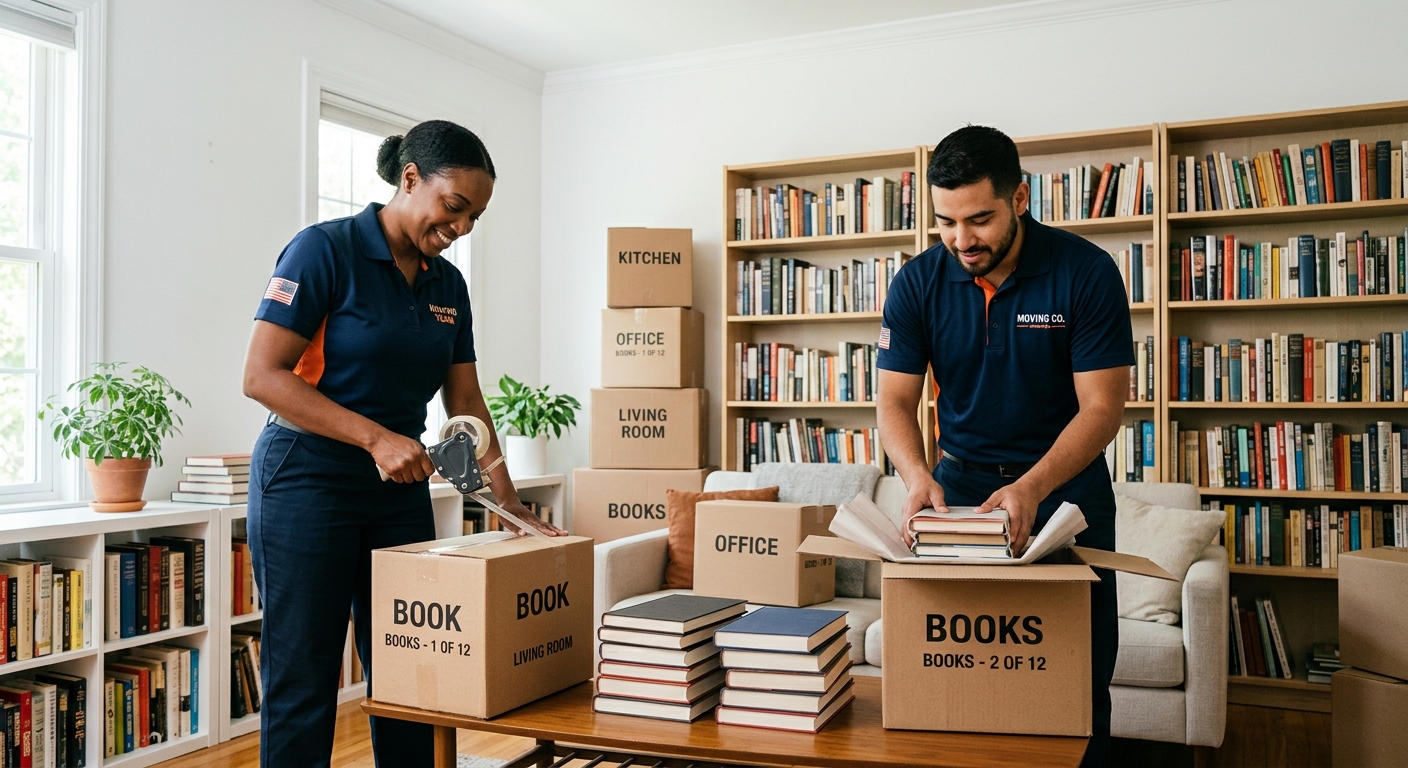
Books are some of the most deceptively difficult items to move. They look harmless on the shelf, but once they are stacked in a box, they quickly become heavy, awkward, and easy to damage. Pack them the wrong way and you can end up with ripped dust jackets, crushed corners, and strained backs on moving day.
Learning how to pack books for moving the right way is about more than just finding boxes. It is about controlling box weight, using the right packing techniques, deciding which books are worth bringing, and setting up your move so your back, your movers, and your collection all make it to the new place in good shape.
This guide from Atlas Route Moving walks you step by step through packing books for a local or long-distance move. You will learn how to choose the best moving boxes for books, when to pack books flat vs spine-up, how to protect rare or sentimental volumes, and how to avoid the heavy box weight mistakes that so many people make. You will also see where professional packing services can save you time and physical effort, especially if you have a large home library.
Whether you are packing a single shelf of cookbooks in a studio apartment or planning how to pack a home library with thousands of titles, this field-tested advice will help you stay organized, protect your collection, and make moving day smoother.
Key takeaways
- Use small, sturdy boxes for most books and keep each box around 35–40 lbs or less to protect your back and prevent box failures.
- Sort and declutter your collection before packing; books are heavy and expensive to move, so only move what you truly want.
- Pack heavier hardcovers flat or upright with spines supported, and avoid packing books spine-down, which can damage bindings.
- Fill gaps with soft materials so books cannot shift, and always top off boxes with light items or padding instead of more heavy books.
- Pack rare, signed, or sentimental books individually with extra padding and keep them with you instead of sending them on the moving truck when possible.
- Label book boxes clearly by room, category, and priority so you can quickly set up key shelves at your new home.
- If you have a large home library, limited time, or physical limitations, consider professional packing support from Atlas Route Moving.
Why books are tricky to move
If you have ever lifted a half-filled box of books and been surprised by the weight, you already understand the main challenge. Books are dense. A single shelf of hardcovers can weigh as much as a small piece of furniture. That makes planning how to pack books for moving especially important.
There are three main issues that come up when moving books:
- Weight: Too many books in a large box quickly create a heavy box weight that is tough to lift safely, even for professional movers.
- Fragility of bindings: While books feel sturdy, pages can warp with moisture, dust jackets tear easily, and older bindings can crack under pressure.
- Volume: A typical home library does not look huge on the shelf, but it can turn into dozens of boxes once everything is packed.
When these factors are not handled correctly, the result is strained backs, ripped boxes, and damaged collections. This guide focuses on controlling weight, using the right moving boxes for books, and using packing techniques that support the spine and corners of each book.
Step 1: Declutter your home library before you pack
Before you even tape the first box, it is worth taking time to decide which books should actually make the trip. Because books are so heavy, reducing your volume by just a few boxes can lower moving costs and make the physical work much easier.
Questions to ask as you sort your books
- Have I read this book in the last 3–5 years?
- Is this book easily available at the library or as an e-book if I want it again?
- Does this copy have sentimental value, notes, or signatures I care about?
- Will I have shelf space for this book in my new home?
- Is the book in good enough condition that I actually want to keep it?
As you work shelf by shelf, create clear piles:
- Keep – books you truly want in your new space
- Donate or gift – books you are done with but that someone else may enjoy
- Recycle – books that are heavily damaged or moldy
Sample wording when giving books away: “I am moving soon and slimming down my shelves. Would you be interested in any of these, or do you know a local place that could use book donations?”
Why decluttering books lowers moving stress
Each banker-size box of books might weigh 30–40 pounds, sometimes more. Cutting your collection by just five or six boxes can easily remove 200 pounds or more from your shipment. That can help:
- Lower labor needs for your move
- Reduce the number of trips movers take to and from the truck
- Open up shelf space at your new home so it feels less cluttered from day one
If you are not sure whether to keep a book, remember that you are about to pay to move it, carry it into a new home, and find it a home on your shelves. That simple lens often makes decisions easier.
Step 2: Choose the right moving boxes for books
Once you know what is staying, the next step in learning how to pack books for moving is picking the right boxes. This is where many moves go wrong. A large box stuffed with books might save on cardboard, but it can be nearly impossible to lift safely.
Best moving boxes for books
For most home libraries, focus on small, sturdy cartons. Here is a quick comparison of box sizes and how they work for books:
| Box type | Typical use for books | Pros and cons |
|---|---|---|
| Small book box (1.5 cu ft) | Best all-around box for most books | Easier to keep under safe heavy box weight limits; fewer strain risks, but may need more boxes overall. |
| Medium box (3.0 cu ft) | Mix of books and lighter items (linens, decor) | Works if filled only halfway with books and topped with light items; easy to overload if not careful. |
| Banker/file boxes with lids | Great for small to medium collections and office books | Comfortable handles and lids, but must be high quality to handle weight; tape the bottom well. |
In general, avoid packing books in large 4.5–5.0 cubic foot boxes unless you are only placing a single layer of large art books on the bottom and filling the rest with lightweight items.
How many boxes you might need for a home library
Every library is different, but this rough guide can help you estimate:
| Shelf length (approx.) | Book count | Small book boxes needed |
|---|---|---|
| One 3-foot shelf | 25–35 paperbacks or 15–20 hardcovers | About 1 box |
| Full 5-shelf bookcase (3 feet wide) | 120–200 mixed books | About 4–6 boxes |
| Room-sized library (3+ full bookcases) | 400–600+ books | Around 15–25+ boxes |
This estimate will help you plan ahead and purchase or request enough moving boxes for books. It can also help you understand the scope of the project and decide whether you want help from professional packers.
Book box weight limits and safe lifting
One of the most important parts of learning how to pack books for moving is managing weight. Even strong movers pay close attention to how heavy each carton is.
Safe target weights for book boxes
Every move is different, but these general guidelines are useful:
| Box size | Recommended max weight | Notes |
|---|---|---|
| Small book box (1.5 cu ft) | 35–40 lbs | Most people find this heavy but manageable when using good lifting technique. |
| Medium box (3.0 cu ft) | 35–45 lbs total (with only part books) | Fill half with books, half with light items to stay in a safe range. |
| Banker/file box | 30–40 lbs | Sturdy banker boxes handle weight well, but tape the bottom and avoid overfilling. |
If you are not used to lifting, aim for the lower end of these ranges. When in doubt, it is perfectly fine to leave a book box a bit underfilled and use extra padding rather than forcing in more weight.
Safe lifting basics for book boxes
- Always lift with your legs, not your back, and keep the box close to your body.
- Do not twist your torso while holding a heavy box; instead, take small steps to turn your whole body.
- Use hand trucks or dollies whenever stairs, long hallways, or parking lot distances are involved.
- Communicate clearly with anyone helping you: if a box feels too heavy, set it down and repack.
If you are worried about lifting heavy boxes at all, consider having Atlas Route Moving handle not only the packing, but also the full loading and unloading. Your back will thank you on moving day.
Step 3: Packing techniques – flat, spine-up, and more
Once you have sorted your collection and prepared your moving boxes for books, it is time to actually place books in cartons. This is where details like packing orientation, filling gaps, and layering matter.
Flat vs spine-up vs spine-down: what professionals recommend
Movers commonly use three basic orientations when packing books:
- Flat (stacked horizontally) – books stacked laying flat, one on top of another
- Spine-up (standing vertically) – like on a shelf, spines facing up or to one side and snug together
- Spine-down – standing vertically with spines down and pages up
Here is how those options compare:
| Orientation | When to use | Pros and cautions |
|---|---|---|
| Flat (horizontal) | Heavy hardcovers, art books, large textbooks | Distributes weight evenly and protects spines; do not create stacks so high they crush lower books. |
| Spine-up (vertical) | Most hardcovers and paperbacks of similar size | Easy to pack and unpack, great for mixed collections; must be snug so they do not shift. |
| Spine-down | Generally avoid for most books | Can stress bindings and warp pages if weight presses down on open edges; not recommended for valuable books. |
Step-by-step: how to pack a standard book box
- Prep the box
Reinforce the bottom with extra tape, especially along the center seam. If you worry about moisture or dust, place a sheet of clean packing paper or a thin towel along the bottom. - Start with a solid, flat layer
Place your heaviest, largest books flat on the bottom, or pack a row of similar-size hardcovers upright with spines snugly against the box side. Do not place heavy books on their edges with pages down. - Fill gaps tightly
Use smaller books, bundles of paperbacks, or crumpled packing paper to fill gaps so nothing can tip over during transit. - Add a second, lighter layer
On top of the heavy base, add lighter books or lay a sheet of cardboard before adding a mix of lighter items (magazines, notebooks, or other soft items). This helps keep the load even. - Check the weight
Before topping off, gently tip the box or try lifting a corner. If it already feels heavy, stop adding books and use only light items or padding for the rest of the space. - Pad the top and seal
Add a final layer of crumpled paper or soft items, then close the flaps and use at least two strips of tape along the seam and one across the edge for support.
If you prefer a simple rule of thumb: pack heavy and large books flat, and medium books upright with their spines protected. Avoid packing any book in a way that bends the spine or forces the cover to warp.
Special cases: magazines, comics, and oversized art books
Some formats need extra attention when you pack a home library:
- Magazines and thin paperbacks: Bundle into small stacks with a band of paper or place them in folders. If packed upright, make sure they are tightly sandwiched so they cannot slump and crease.
- Comic books and graphic novels: For collectibles, use backing boards and sleeves if you have them, then pack flat in small boxes and avoid stacking heavy items on top.
- Oversized art, photography, or coffee-table books: Pack flat with a piece of cardboard or foam between each one. These are often heavy, so use the bottom of a small box or pack them alone.
Protecting valuable, rare, or sentimental books
Not every book is replaceable. Signed first editions, out-of-print volumes, family Bibles, and childhood favorites deserve extra care. For those, treat each one more like a fragile item than an everyday book.
Extra steps for protecting special books
- Wrap individually in clean, acid-free paper or high-quality packing paper to avoid scuffs and dust.
- Use snug, small boxes so they cannot slide around. Add padding under, around, and between books.
- Avoid extreme temperatures and moisture; if your move involves storage, ask about climate-controlled options.
- Keep the most valuable items with you in your personal vehicle when possible, rather than sending them on the moving truck.
For example: “These three signed novels are important to me. I am going to wrap them individually and pack them in a small, clearly labeled box that I will carry myself in the car.”
Insurance and valuation for rare books
If your collection includes rare or high-value items, talk with your moving consultant about valuation coverage before moving day. While movers work carefully, standard coverage is often based on weight, which may not fully reflect the value of a rare book collection. You may want to document and photograph specialty items and discuss higher valuation coverage or separate insurance options where appropriate.
Book packing supplies checklist
Having the right supplies on hand will make packing books faster, safer, and more organized. Here is a practical checklist you can follow as you prepare.
- Small moving boxes for books (1.5 cu ft)
- A few medium boxes for mixed loads (books plus light items)
- Quality packing tape and a tape dispenser
- Packing paper or clean newsprint
- Bubble wrap or foam sheets for valuable books
- Cardboard sheets for layering and protection
- Permanent markers for labeling (ideally in two colors)
- Color stickers or labels for room coding
- Stretch wrap or bands (optional, to keep sets together)
To help you plan costs and quantities, here is an example of supplies for a typical small-to-medium home library:
| Library size | Boxes recommended | Supplies to have ready |
|---|---|---|
| Up to 150 books | 6–8 small, 1–2 medium | 1 tape roll, 1 pack packing paper, 1 marker |
| 150–400 books | 10–20 small, 3–5 medium | 2 tape rolls, 2–3 packs packing paper, 2 markers |
| 400+ books | 25+ small, 5–8 medium | Bulk tape, multiple paper packs, room labels, inventory sheets |
If assembling all these supplies feels overwhelming or you simply do not have the time, Atlas Route Moving can provide the right materials and handle the entire packing process for you.
Labeling, inventory, and unpacking strategy
When you pack a home library, the work does not end when the boxes are sealed. Thoughtful labeling and a simple inventory system will make unpacking faster and more enjoyable at your new home.
How to label book boxes for easy unpacking
Every box with books should have, at minimum:
- Room – where it should go at your new place (Living Room, Office, Bedroom 2, etc.)
- Category – type of books (Fiction, Cookbooks, Kids, Work Files, etc.)
- Priority – when box should be unpacked (High, Medium, Low)
Example labels written on two adjacent sides and the top:
- «Office – Nonfiction – Research – High Priority»
- «Living Room – Fiction – Paperbacks – Medium Priority»
- «Kitchen – Cookbooks – Low Priority»
Basic inventory options
You do not need a complicated catalog system, but a simple list can be helpful for large collections or special items.
- Box list: Number your boxes (e.g., Books 1, Books 2) and write a few key titles or categories on a separate sheet or in a note on your phone.
- Digital note: Quickly type the main contents of each box as you seal it: “Books 4 – Office history texts A–D, binders, desk reference.”
- Photo inventory: Take a quick photo of each shelf before you pack and label it by room and shelf level (Office Shelf 1, etc.). This also helps when you want to recreate a similar layout at your new home.
For particularly valuable or sentimental books, consider a more detailed record including titles, editions, and current condition, especially if you are discussing valuation coverage with your moving company.
Common book-packing mistakes and how to avoid them
Even people who have moved several times often repeat the same book-packing mistakes. Being aware of them in advance will save you effort and help keep your collection safer.
| Common mistake | Why it is a problem | Better approach |
|---|---|---|
| Using large boxes for books | Creates very heavy box weight, hard to lift, higher risk of box failure or injuries. | Use small book boxes and limit medium boxes to partial book loads. |
| Packing books spine-down | Stress on bindings and pages; long-term warping and damage. | Pack books flat or spine-up with pages supported. |
| Leaving empty space in boxes | Books can shift, causing bent corners, torn dust jackets, and crushed pages. | Fill all gaps with packing paper or small soft items. |
| Not labeling boxes clearly | Hard to find important books at the new home; slows down unpacking. | Label by room, category, and priority on at least two sides and the top. |
Simply being aware of these issues before you start packing books can dramatically improve your moving experience.
When to hire professional packers for your books
Many people can handle packing a small collection on their own. However, there are clear situations where getting help from professional packers makes sense.
Signs you may want professional help with packing books
- You have a large home library spanning several rooms or bookcases.
- You are on a tight timeline and need everything ready quickly.
- You have back issues, injuries, or mobility concerns that make lifting difficult.
- You own rare, fragile, or high-value books and want professional packing expertise.
- You prefer to focus on other parts of the move (kids, work, logistics) while a crew handles the packing.
Atlas Route Moving offers professional packing services that can include just your library, or your entire home. Crews bring the right moving boxes for books, packing materials, and labeling systems so your collection is protected and organized from shelf to shelf.
Partial vs full-service packing for books
Book packing can be customized to your needs:
- Partial packing – Movers pack only your books and other heavy, dense items while you handle lighter belongings. This is a good balance for many customers.
- Full-service packing – Movers pack every room in your home, including books, kitchen items, decor, and more. This option is ideal for busy schedules or long-distance relocations.
During a consultation, you can walk through your home library with a moving specialist, discuss any special requirements, and receive a clear estimate so you know what to expect.
Helpful Atlas Route Moving services
What to do the day before and day of the move
Once your books are packed, there are a few final steps to keep everything running smoothly through moving day.
The day before moving
- Finish sealing and labeling all book boxes so there is no last-minute scramble.
- Separate important reading material (work files, school books, bedtime stories) into a small «open first» box.
- Stage book boxes near the exit in a clear area to make loading efficient and avoid tripping hazards.
- Double-check valuable books you plan to keep with you in the car; make sure they are packed in small, easy-to-carry cartons or bags.
On moving day
- Walk your movers through your library and let them know which boxes are especially heavy or fragile.
- Point out priority boxes so movers can load them in a way that makes them accessible at the new home.
- Confirm placement at the destination – Office, Living Room, or other rooms where bookcases will go.
- Keep your most valuable or sentimental books with you as planned.
Once you are in your new space, you can unpack book boxes at your own pace. Many people like to set up a few key shelves early on to make the home feel settled, and then enjoy rebuilding the rest of the library over time.
Frequently asked questions
How heavy should a box of books be?
For most people, a book box should stay around 35–40 pounds or less. Using small moving boxes for books and stopping before the box feels overly heavy is the safest approach.
What is the best way to pack hardcover books?
Pack hardcovers either flat in a stack or upright with their spines supported snugly against the box side. Avoid packing them spine-down, which can stress the bindings.
Can I use grocery store boxes to pack books?
You can, but be cautious. Many grocery boxes are not designed for heavy loads and may have weak points. If you use them, reinforce the bottom with extra tape and avoid overloading.
Should I pack books in suitcases instead of boxes?
Rolling suitcases can safely handle some books, especially if the suitcase is sturdy and has good wheels, but it is easy to overload them. Keep weight reasonable and mix in lighter items.
How do I pack old or fragile books?
Wrap each old or fragile book individually in clean paper, use plenty of padding in a small box, and avoid stacking heavy items on top. Consider keeping them with you rather than on the truck.
What should I do with moldy or damaged books before moving?
Moldy or severely damaged books are usually best disposed of or recycled. Bringing them can spread mold to other items and create odors during transport or storage.
How early should I start packing books before a move?
Books can be packed 2–4 weeks before a move, starting with low-priority titles. Keep only your current reading and essential work or school books out until the final week.
Can movers pack my books for me?
Yes. Many customers choose to have movers handle their library. Atlas Route Moving can bring appropriate boxes, pack your books safely, and label everything clearly.
Is it cheaper to move books or rebuy them later?
It depends on quantity and value. For common paperbacks, donating and rebuying may be reasonable. For reference works, favorites, and out-of-print titles, moving is often the better choice.
How should I pack books for long-term storage?
Use small, sturdy boxes, keep them off concrete floors, avoid moisture, and choose climate-controlled storage when possible. Pack books flat or spine-up and avoid overfilling cartons.
Sources referenced in this guide
This guide is based on practical moving experience and typical guidance used across the professional moving industry. For customers planning interstate relocations or large shipments, it can also be helpful to review:
- Federal Motor Carrier Safety Administration consumer guidance on household moves
- U.S. Department of Transportation moving guidance and consumer rights information
- State transportation or consumer protection agencies for any local moving rules
- Building management move-in and move-out requirements for apartments and offices
- Written moving estimates, service agreements, and valuation options provided by your chosen mover
How Atlas Route Moving can help with packing books
Atlas Route Moving works with customers across the United States on local, long-distance, and interstate moves. That includes helping people who are not sure how to pack books for moving or who simply do not want to handle dozens of heavy boxes on their own.
Depending on your needs, Atlas Route Moving can:
- Provide the right moving boxes for books and other packing supplies
- Pack part or all of your home library using proven, protective methods
- Label and stage your book boxes for efficient loading and unloading
- Coordinate storage if you need to keep books off-site temporarily
- Handle full-service moving for apartments, homes, and offices
If you are planning a move, you can explore complete moving services, confirm that your new address is within the service areas, and use the moving cost calculator to get a starting estimate.
When you are ready, you can request a free moving quote and discuss your home library, packing preferences, and timeline with a moving specialist. If you would rather not lift a single book box, you can also ask about full packing services for your books and the rest of your home.
Related moving guides
For more practical advice on planning, packing, and organizing your next move, you can also visit the Atlas Route Moving blog. The more you prepare ahead of time, the smoother moving day tends to be.
This guide is general moving information, not legal, insurance, or regulatory advice. Moving requirements, pricing, access rules, and coverage options may vary by location, move type, building rules, and service agreement.