
How to Label Moving Boxes the Smart Way
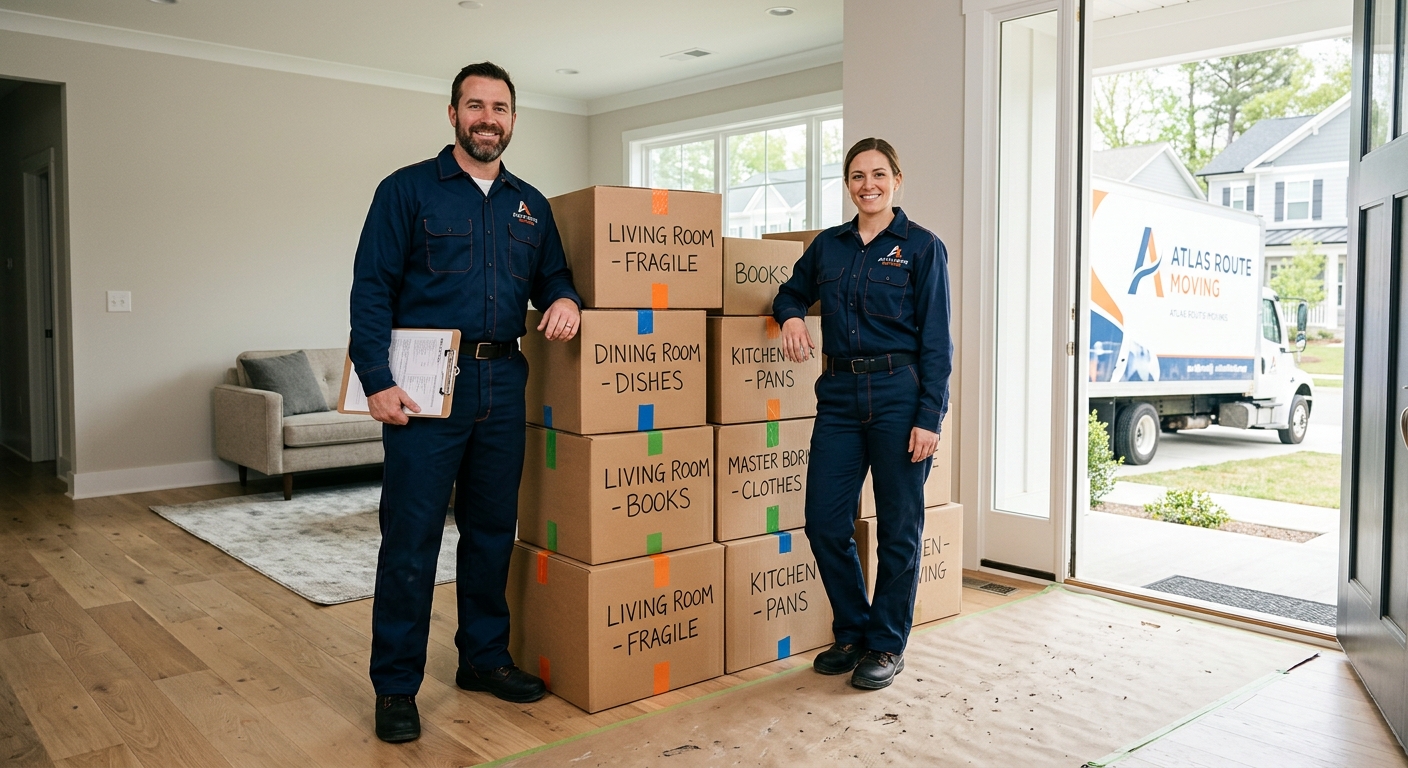
Most people spend hours carefully packing their belongings, then rush through labeling at the last minute. The result? A mountain of mystery boxes, a stressful move-in day, and hours wasted hunting for essentials. Learning how to label moving boxes the smart way can completely change your moving experience.
Clear, consistent labels help movers know exactly where things go, protect fragile items, and make unpacking faster and more organized. With a simple system that combines colors, numbers, and an inventory list, you can turn a chaotic move into a controlled process.
This guide walks you step-by-step through labeling boxes for moving like a professional: how to color code moving boxes by room, how to create a simple numbering and moving box inventory system, what to write on each box, and how to use apps or spreadsheets without overcomplicating things.
We will also point out where professional help, like the professional packing services from Atlas Route Moving, can take the labeling and packing workload off your plate when time or energy is limited.
Key takeaways
- Use a simple, consistent system that combines color coding by room plus box numbers tied to an inventory list.
- Label at least three sides and the top of each box so movers can read labels no matter how boxes are stacked.
- Mark every box with room, brief contents, box number, and special handling notes like Fragile or Heavy.
- Set aside clearly labeled First Night and Open First boxes so you are not digging for essentials.
- Create a master moving box inventory that matches your box numbers to contents for easier tracking and claims support.
- Avoid last-minute labeling; build labeling into your packing schedule from day one.
- If time is tight, consider professional packing and labeling help for kitchens, fragile items, and complex rooms.
Why smart labeling matters more than you think
When people ask how to label moving boxes, what they are really asking is how to avoid chaos on moving day and during unpacking. A good labeling system solves several real-world problems at once:
- Faster move-in: Movers can place boxes directly into the correct rooms instead of piling them in the living room.
- Safer handling: Boxes marked Fragile, This Side Up, or Heavy get more careful handling and smarter stacking.
- Easier unpacking: You can prioritize which boxes to open first and which can wait.
- Better tracking: A numbered and inventoried box system makes it easier to spot if something is missing or damaged.
Labeling is also where your moving plan becomes visible. Even if you do not have time for complicated spreadsheets, a straightforward color + number system will dramatically improve your move without adding much extra work.
Essential supplies for labeling moving boxes
Before you start packing, gather the right supplies. The tools you choose will determine how easy it is to read and follow your labels on moving day.
Core labeling supplies
- Thick permanent markers: Wide-tip, dark ink markers in black and one or two additional colors.
- Colored tape: Painter's tape or colored packing tape for color coding by room.
- Pre-printed labels or blank label sheets: Optional but helpful for consistency and legibility.
- Notebook or clipboard: For your handwritten moving box inventory.
- Digital device: Phone or tablet if you prefer a spreadsheet or app-based inventory.
Optional but helpful extras
- Fragile and This Side Up stickers: Make special handling instructions stand out.
- Color dot stickers: Faster than tape if you only need small color markers.
- Clear tape: To cover labels and protect them from smudges or moisture.
Here is a quick comparison of labeling tools and when each works best:
| Tool | Best Use | Pros |
|---|---|---|
| Permanent markers | Writing room, contents, and numbers directly on boxes | Cheap, quick, highly visible when written large |
| Colored tape | Color coding boxes for each room | Instant visual cues, easy for movers to follow |
| Pre-printed labels | Standardized labels for common rooms and Fragile items | Neat, consistent, saves time on frequently used labels |
Make sure your labeling supplies stay together in a small caddy or box that travels from room to room with you. Lost markers are one of the simplest reasons people stop labeling halfway through packing.
How to color code moving boxes by room
Color coding is one of the easiest and most effective ways to organize moving boxes. Even if handwriting is hard to read or boxes get stacked tightly, color stands out from across the room.
Step 1: Assign a color to each room
Choose simple, high-contrast colors. Use the same colors on a small "key" posted near your front door so movers quickly understand the system.
| Room | Color | Example Label |
|---|---|---|
| Kitchen | Green tape or sticker | Green stripe + "KITCHEN" |
| Living room | Blue tape or sticker | Blue stripe + "LIVING ROOM" |
| Primary bedroom | Yellow tape or sticker | Yellow stripe + "BEDROOM 1" |
Step 2: Mark boxes consistently
- Wrap a short strip of colored tape around at least two adjacent corners or place large color stickers on two sides and the top.
- Write the room name next to the color code in big, clear letters.
- Use the same color on the doorframe or wall of the matching room at your new home so movers can match box color to room color.
Example: "Kitchen = green. Every kitchen box has a green tape stripe and KITCHEN written in bold letters on three sides."
Color coding is also helpful for multi-story homes. For example, use warm colors (red, orange, yellow) for upstairs rooms and cool colors (blue, green, purple) for downstairs.
Numbering boxes and creating a moving box inventory
Color tells you where a box goes. Box numbers and an inventory list tell you what is inside each box.
Why numbering is worth the effort
- Helps you track how many boxes you have for each room.
- Makes it easier to locate a specific item without opening multiple boxes.
- Supports documentation if you ever need to file a claim for loss or damage.
Simple box numbering system
Combine the room code with a number. For example:
- K-01, K-02, K-03 for kitchen boxes
- LR-01, LR-02 for living room boxes
- B1-01, B1-02 for Bedroom 1 boxes
Write the box number in the same place on each box, such as the top right corner of two sides and the top panel.
Creating a moving box inventory
You can keep a handwritten list or use a spreadsheet on your phone or computer. The goal is not perfection; it is to have a quick reference that connects each box number with key contents.
Here is a simple structure you can copy for your moving box inventory:
| Box ID | Room | Key Contents |
|---|---|---|
| K-01 | Kitchen | Pots, pans, baking sheets |
| K-02 | Kitchen | Plates, bowls, mugs (FRAGILE) |
| B1-01 | Bedroom 1 | Everyday clothes, shoes |
When you are busy, keep your descriptions short. You do not need to list every fork and shirt—just the types of items so you can find categories easily.
Example quick entry: "LR-02 – Living room – Books: travel, cookbooks, paperbacks".
Exactly what to write on each moving box
When deciding how to label moving boxes, consistency is everything. If each box looks different, movers will be confused and you will forget what your own notes mean.
The four essentials for every box
- Room: Matching your color code (e.g., KITCHEN, BEDROOM 2).
- Box ID: Your numbering system (e.g., K-03).
- Contents: 2–4 words on what is inside (e.g., "Pots and lids," "Winter coats").
- Handling notes: Fragile, Heavy, This Side Up, or Priority.
Write this information on at least three sides and the top. Boxes shift in the truck, so you want labels visible no matter how they end up stacked.
Sample box label formats
Here are two simple formats you can copy directly onto your boxes.
Format 1 (large text, great for quick moves):
ROOM: KITCHEN (GREEN)
BOX: K-02
CONTENTS: Plates, bowls, mugs
NOTES: FRAGILE – THIS SIDE UP
Format 2 (for detailed inventory users):
ROOM: BEDROOM 1 (YELLOW)
BOX ID: B1-05
SUMMARY: Everyday clothes – dresser, top two drawers
PRIORITY: OPEN FIRST
Choose one format and stick with it throughout your home. If you are using professional movers like Atlas Route Moving, consistency makes it easier for the crew to follow your system exactly.
Fragile, heavy, and priority box labels
Not all boxes are equal. Some need to stay upright. Some should be kept light. Others must be opened as soon as you arrive. Labeling these clearly makes a significant difference on move day.
Fragile items
- Write FRAGILE in large, bold letters on at least three sides.
- Add THIS SIDE UP if orientation matters (for dishes, electronics, and decor).
- Combine with an inventory note like "Glasses and stemware" or "TV accessories."
Heavy boxes
- Write HEAVY on sides and top so movers know to lift carefully and stack them on the bottom.
- Aim to keep most boxes under 40–50 lbs, but when some boxes are heavier (e.g., books), the label is very important.
- Consider smaller boxes for dense items such as books and tools to avoid excessively heavy cartons.
Priority and Open First boxes
When you are planning how to label moving boxes for arrival day, plan on a few special categories:
- Open First – Kitchen (coffee maker, basic cookware, a few plates and utensils)
- Open First – Bathroom (toiletries, towels, toilet paper, shower curtain)
- First Night – Bedroom (sheets, pajamas, a change of clothes)
- Essentials Box (medications, chargers, devices, important paperwork)
Label these with bright tape or stickers and words like PRIORITY or OPEN FIRST so they stand out from the stack.
| Special Label | Use When | Benefits |
|---|---|---|
| FRAGILE | Glassware, dishes, decor, electronics | Encourages careful handling and smarter stacking |
| HEAVY | Books, tools, dense items | Reduces risk of injury, signals stacking order |
| OPEN FIRST / PRIORITY | First night supplies and everyday essentials | Faster access, smoother first night in new home |
Room-by-room labeling strategy
The smartest way to organize moving boxes is to label them as you pack, room by room. Trying to label everything at the end usually leads to vague or missing labels.
Kitchen
- Use your designated kitchen color tape and "K" box codes.
- Group items by type (cookware, pantry, dishes, small appliances).
- Label fragile dishware and glasses clearly and number these boxes sequentially.
Example label: "KITCHEN – K-04 – Spices and baking supplies – MEDIUM".
Living room
- Separate electronics, decor, and books into different boxes.
- Mark TV, gaming, and cable boxes with "TV Cables/Remotes" for easy setup.
- Use Fragile labels for framed art and decor.
Bedrooms
- Label boxes by occupant or room name (Bedroom 1, Guest Room, Kids Room).
- Note "Seasonal" vs. "Everyday" clothes so you know what to unpack first.
- Create a clearly labeled First Night box for each bedroom.
Bathroom
- Separate liquids and toiletries from linens and decor.
- Mark boxes with "Leak Risk" for items like shampoos and cleaning products and keep them upright.
- Use "Open First – Bathroom" for daily essentials.
Garage, storage, and shed
- Label boxes with both the original area (Garage) and the new home destination if different (e.g., "Garage > Basement Storage").
- Mark any hazardous materials that movers cannot move and plan to transport those yourself if allowed.
- Use HEAVY labels for tools and hardware.
Using apps and digital tools to organize moving boxes
If you like technology, you can enhance your system with simple digital tools without making it complicated.
Spreadsheet-based inventory
A basic spreadsheet can function as a powerful moving box inventory:
- Column A: Box ID (K-01, B1-03, etc.)
- Column B: Room
- Column C: Contents summary
- Column D: Priority (High/Medium/Low)
- Column E: Notes (Fragile, Heavy, This Side Up)
Because it is searchable, you can quickly type "blender" or "tax documents" and jump to the box number where those items are stored.
Moving and inventory apps
Some people prefer moving checklist or inventory apps for labeling boxes for moving. These can add features like photo attachments and digital barcodes. If you use an app:
- Keep your box IDs simple and still write them clearly on the boxes.
- Use photos for especially valuable or complex items so you remember how they were packed.
- Back up your data or sync it to the cloud before moving day.
Whether you choose paper or digital, the key is consistency. A half-finished app inventory is less helpful than a simple but complete handwritten list.
Common labeling mistakes and how to avoid them
Even people who think they know how to label moving boxes often fall into the same traps. Here are common mistakes Atlas Route Moving crews see on real moves—and how to avoid them.
| Mistake | Problem It Causes | Better Approach |
|---|---|---|
| Labeling only the top of boxes | Labels are hidden when boxes are stacked | Label at least three sides plus the top |
| Writing "Misc" on boxes | No one knows what is inside during unpacking | Use brief, specific content summaries |
| Skipping box numbers | Harder to track boxes or use inventory lists | Assign a simple box ID to every box |
| Labeling at the last minute | Inconsistent labels, missed fragile or priority notes | Label as you pack each box before sealing it |
| Tiny handwriting or light ink | Movers cannot read labels from a distance | Use thick markers and large, clear letters |
If you notice you are getting tired or sloppy with labels, take a short break. Five minutes of rest is cheaper than boxes you cannot identify in your new home.
Pre-move labeling checklist and timeline
Labeling is easier when it is part of a plan. Here is a simple timeline you can adjust to your moving date and home size.
Four weeks before moving day
- Decide on your color code for each room.
- Set up your box numbering format and inventory template.
- Purchase markers, colored tape, labels, and a notebook or set up your digital file.
Two to three weeks before moving day
- Start with least-used rooms (guest room, storage spaces).
- Pack and fully label 3–5 boxes per day with room, box ID, contents, and notes.
- Update your moving box inventory at the same time you label.
One week before moving day
- Focus on everyday rooms: kitchen, bedrooms, living room.
- Prepare and clearly label First Night and Open First boxes.
- Review each room to confirm there are no unmarked boxes.
Day before moving day
- Walk through your home with your inventory list and confirm that every box is numbered and assigned to a room.
- Place Open First and Essentials boxes near the front so they are loaded last and unloaded first.
- Post your color key by the front door for movers to see.
Here is an example of how you might structure your labeling tasks across weeks:
| Timeframe | Labeling Tasks | Goal |
|---|---|---|
| 4 weeks out | Create color code, box ID system, and inventory template | Lay the foundation for consistent labeling |
| 2–3 weeks out | Label as you pack low-priority rooms | Build momentum and refine system |
| 1 week out | Label high-use rooms; create priority boxes | Ensure everyday items are easy to find |
| Day before move | Final label check; post color key | Confirm readiness for moving crew |
How to label boxes when working with professional movers
If you are hiring professional movers, a clear labeling system makes their work more efficient and protects your belongings. Atlas Route Moving crews are used to following customer labeling systems, and a little preparation goes a long way.
Share your system with the crew
- Show the color key at the front door and explain which color matches which room.
- Point out where you wrote box IDs and how they correspond to rooms.
- Highlight boxes labeled Fragile, Heavy, and Open First.
Example wording when the crew arrives: "Green tape is kitchen, blue is living room, yellow is Bedroom 1. Each box has a code like K-02 in the top corner. The boxes marked 'Open First' should come off the truck first, please."
If movers are packing for you
If you choose full or partial packing services, you can still influence how to label moving boxes:
- Ask the crew to use room-based labels plus brief content descriptions.
- Request that they number boxes and give you a copy of the inventory list if one is created.
- Point out priority items and anything you will need within the first 24–48 hours.
When you work with professionals, your main job becomes deciding priorities and destinations. Clearly communicating your labeling preferences up front helps align the crew with how you want your new home organized.
Helpful Atlas Route Moving services
How Atlas Route Moving can help with packing and labeling
Not everyone has time to plan a full color-coded, numbered inventory system on their own. If your schedule is tight, if you are moving with young children, or if you simply want professional help, Atlas Route Moving can step in.
Professional packing and labeling support
Our crews can handle:
- Supplying appropriate moving boxes and packing materials for each room.
- Packing your items securely, especially fragile kitchenware, decor, and electronics.
- Labeling each box with room, basic contents, and handling notes.
- Following any color code or numbering system you prefer, or using a simple professional standard if you want us to design it.
For many customers, using professional packing services for high-effort areas like the kitchen, glassware, and decor while packing simpler rooms themselves provides the best balance between control, cost, and time.
Coordinated move-in
When labeling is done well, your move-in day is much smoother:
- Boxes go directly to the correct rooms instead of piling up near the front door.
- Open First and essentials boxes are easy to locate immediately after unloading.
- Unpacking can be done room by room over a few days without feeling overwhelming.
If you would like help creating a plan that includes packing, labeling, and moving support, you can request a free moving quote and discuss your needs with an Atlas Route Moving coordinator.
Related moving guides
Frequently asked questions
How early should I start labeling moving boxes?
Start labeling as soon as you begin packing, ideally two to four weeks before moving day. Build labeling into your packing routine so every box is labeled before it is sealed. Waiting until the end leads to rushed, incomplete labels.
What is the best way to label moving boxes for a big house?
For larger homes, combine color coding by floor and room (for example, warm colors upstairs, cool colors downstairs) with box numbers tied to an inventory list. This helps movers quickly see where each box belongs and gives you a way to track dozens of boxes per room.
Should I label boxes by room or by person?
For most moves, label boxes by room first (Bedroom 1, Office, Kitchen). For shared rooms, you can add a second line indicating the person, such as "Bedroom 2 – Alex." This keeps your system easy for movers to follow while still helping family members find their own items.
How detailed should the box contents description be?
Aim for short, specific phrases that describe categories, not every item. For example, "Pots and pans" or "Office supplies and printer ink" is usually enough. If an item is especially important or valuable, add it by name or note it in your inventory list.
Where should I write labels on the box?
Write labels on the top and at least two adjacent sides of each box. Place room names and box IDs in the same general spot on every box, such as the top right corner, so movers and family members know exactly where to look.
How do I label fragile items so movers handle them carefully?
Use large, bold letters to write FRAGILE and, when needed, THIS SIDE UP on at least three sides and the top. Combine this with clear content descriptions like "Glasses and mugs" or "Framed art" so movers understand what they are handling, not just that it is fragile.
What should I put in my Open First or Essentials box?
Pack items you will need within the first 24–48 hours: basic cookware, a few dishes, toiletries, medications, a change of clothes, towels, sheets, phone chargers, and important documents. Label these boxes clearly as OPEN FIRST or ESSENTIALS and keep them easy to access.
Can professional packers handle labeling for me?
Yes. Many customers ask professional packers to handle both packing and labeling. With Atlas Route Moving, crews can label boxes by room, include brief content notes, and follow a color or numbering system that you prefer, especially for complex areas like kitchens and fragile items.
What is the simplest labeling system if I am short on time?
If time is limited, at minimum write the room and a two- to four-word contents summary on at least two sides and the top of each box. Use a single color of tape or sticker to mark priority boxes and anything fragile. Even this basic approach will be much better than unlabeled or "Misc" boxes.
Do I really need a moving box inventory?
You do not have to list every item, but a simple inventory that connects box numbers to general contents is very helpful, especially for larger moves. It makes finding specific items easier and can support you if anything needs to be located or documented after the move.
How can I keep my labeling system consistent if multiple people are helping pack?
Create a quick written guide and post it where everyone can see it: list the color code, show an example label, and explain your box numbering system. Give each helper their own marker and tape, and do a quick walk-through after packing sessions to correct any inconsistent labels.
Sources referenced in this guide
Professional recommendations in this guide are based on the practical experience of moving crews and coordinators, as well as commonly referenced industry materials such as:
- Federal Motor Carrier Safety Administration consumer guidance for household moves
- U.S. Department of Transportation moving guidance and brochures
- State transportation and consumer protection agency recommendations about preparing for a move
- Standard written moving estimates, bills of lading, and carrier tariffs
- Typical building management move-in and move-out requirements for labeling and elevator use
These sources emphasize planning, documentation, and clear communication, all of which are supported by a strong labeling and inventory system.
This guide is general moving information, not legal, insurance, or regulatory advice. Moving requirements, pricing, access rules, and coverage options may vary by location, move type, building rules, and service agreement.