
How to Pack Artwork, Mirrors and Frames for Moving
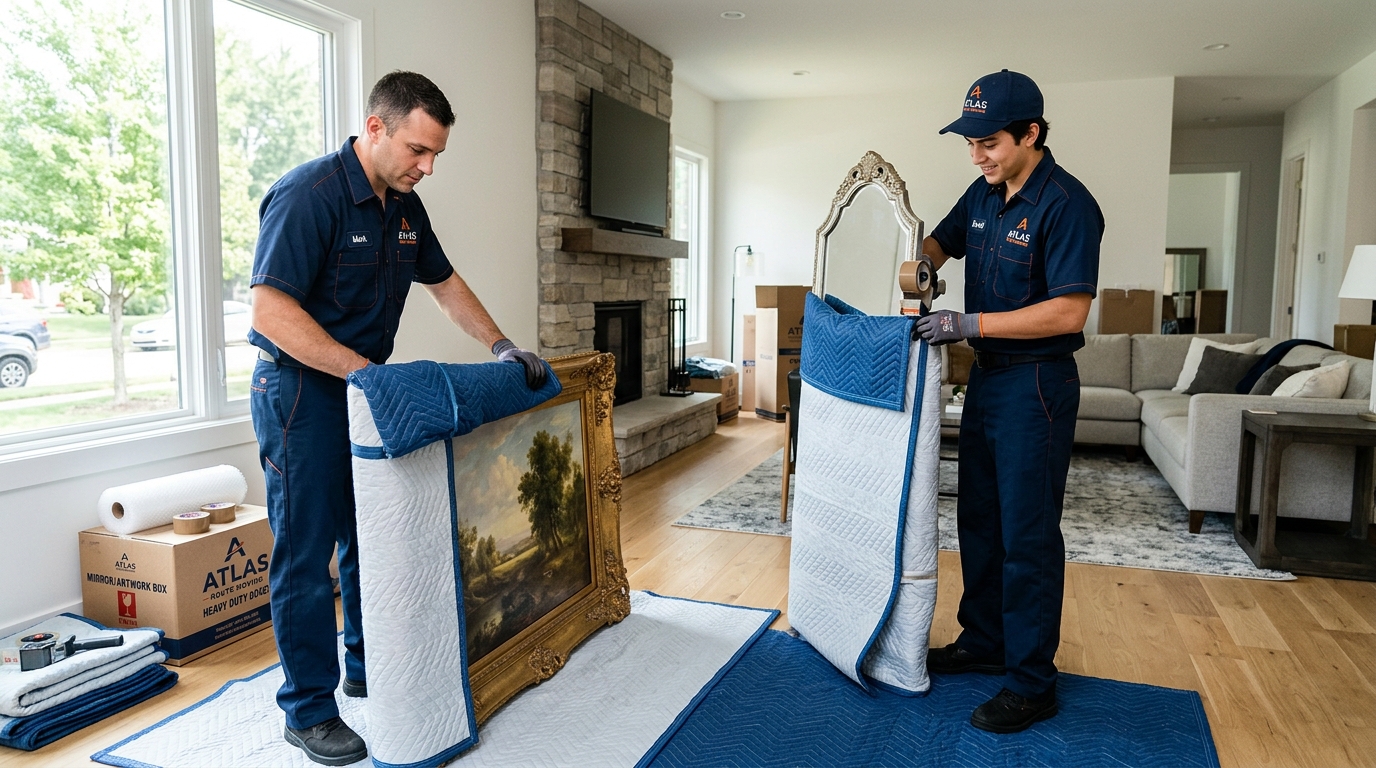
Artwork, mirrors, and framed photos are often the most sentimental and fragile items in a home. They are also among the first pieces to be damaged in a move when they are packed in a rush or placed loosely on top of other boxes. A cracked mirror or torn canvas can turn an exciting moving day into a stressful one.
Knowing exactly how to pack artwork, mirrors, and frames the right way makes a big difference. With the correct boxes, padding, taping, and labeling, you can greatly reduce the chance of chips, cracks, and scratches while your belongings are loaded, transported, and unloaded.
This guide walks through practical, step-by-step methods for packing mirrors for moving, preparing paintings and framed pictures, choosing mirror boxes and corner protectors, and deciding when it makes sense to let professionals handle the packing for you. It is written from the perspective of a moving company that sees what actually survives a move and what tends to get damaged.
Whether you are moving a few family photos or a collection of valuable art, the strategies below will help you protect your pieces, stay organized, and communicate clearly with your movers so everything is handled carefully from start to finish.
Key takeaways
- Use the right materials: mirror/art boxes, corner protectors, glass tape, foam, and packing paper are essential to protect paintings when moving.
- Always tape a large X or star pattern on glass before wrapping to help keep shards together if the glass breaks in transit.
- Pack artwork and mirrors upright in snug-fitting boxes with no empty space that allows shifting.
- Label all sides of boxes with FRAGILE, GLASS, and THIS SIDE UP, and tell your movers which pieces are high priority.
- For valuable or irreplaceable art, consider custom crating and professional packing services instead of DIY methods.
- Load framed items last and unload them first so they are not buried or crushed under heavier household goods.
- If you are unsure how to pack artwork or a specific piece, ask your moving consultant for guidance or full-service packing options.
Why artwork and mirrors need special packing
Artwork, mirrors, and frames may look sturdy when they are hung on a wall, but during a move they face very different stresses: vibration in the truck, shifts during loading, temperature changes, and the risk of pressure from other items. Standard moving boxes and casual wrapping are usually not enough.
Here are the main risks these items face during a move:
- Glass breakage: Even a small bump can crack unprotected glass in frames and mirrors.
- Frame damage: Wooden or metal frames can warp, chip, or separate at the corners if they are not supported.
- Surface abrasions: Canvas, prints, and photos can be scratched by rough materials or rubbing during transit.
- Moisture and temperature changes: For some art, humidity and temperature swings can cause warping or surface damage.
- Punctures: A loose object inside the truck can pierce a box and damage the piece inside if it is not well padded.
Because of these risks, professional movers treat artwork and mirrors as a separate category of fragile items, with their own materials and packing steps. Learning how to pack artwork and mirrors the way a professional crew does will help you avoid preventable damage and give your movers a better starting point when they load the truck.
When you should not cut corners
There are some pieces where it rarely makes sense to improvise:
- Original artwork or signed prints
- Custom-framed family portraits
- Large wall mirrors or mirrored furniture panels
- Antique frames or gilded wood frames
- Oversized canvas pieces
If you are debating whether to spend on better materials or professional packing, ask yourself: «Would I be okay if this piece was scratched or broken?» If the answer is no, treat it as a high-priority item.
Essential supplies for packing artwork and mirrors
The right supplies make packing artwork and mirrors for moving much more secure and much less stressful. Below is a breakdown of what you need and when to use each item.
| Supply | Purpose | When to use |
|---|---|---|
| Mirror/artwork boxes | Tall, narrow boxes designed to hold flat items upright | For most framed art, prints, and mirrors |
| Corner protectors (foam or cardboard) | Protect frame corners from impact and pressure | Any framed piece, especially wood or ornate frames |
| Glass tape (painter’s tape or masking tape) | Helps hold glass together if it cracks; shows stress points | All glass-fronted artwork and mirrors |
| Bubble wrap or foam wrap | Cushions the item and absorbs impact | Around the frame after glass taping and padding |
| Packing paper or soft tissue | Protects surfaces without leaving marks | Between glass and wrap; around canvas or photos |
| Packing tape (high-quality) | Secures wrapping and closes boxes firmly | All boxes and wrapped items |
| Permanent marker and FRAGILE labels | Clearly mark contents and handling instructions | Every box containing artwork and mirrors |
Choosing the right mirror and artwork boxes
Mirror and artwork boxes are typically adjustable, allowing you to fit different widths and heights by overlapping pieces. When you are planning how to pack artwork and mirrors, measure your biggest pieces first and purchase (or request from your mover) boxes that will accommodate those dimensions.
- Pieces under about 20 inches can often share a medium artwork box if they are well padded and separated.
- Larger pieces (especially over 30–36 inches) usually need their own box for proper protection.
- Extremely large or heavy items may require a custom-built crate rather than a standard box.
If you are using Atlas Route Moving for your relocation, you can discuss box sizes and counts with a moving consultant in advance so the crew arrives with the right materials or you can request materials ahead of time.
Basic artwork and mirror packing checklist
- Mirror/artwork boxes in multiple sizes
- Foam or cardboard corner protectors
- Painters or masking tape for glass taping
- Bubble wrap or foam wrap rolls
- Unprinted packing paper or tissue
- High-quality packing tape and tape gun
- Permanent marker, FRAGILE labels, and arrows (THIS SIDE UP)
- Clean, dry surface to pack on (table, bed, or floor with blanket)
Step-by-step: How to pack artwork
When you are planning how to pack artwork, especially framed pieces with glass, it helps to follow a consistent process. This reduces mistakes and makes it easier to train family members or helpers who are assisting with packing.
1. Prepare your workspace
- Clear a table, bed, or clean section of floor.
- Lay down a soft blanket or moving pad to prevent scratching while you work.
- Group artwork by size so you can choose the right boxes.
2. Inspect and clean the artwork
Before packing, check each piece for loose glass, wobbly frames, or existing cracks. It is helpful to know about any existing damage before the move. Lightly dust frames and glass with a soft cloth so you are not trapping debris under the packing materials.
3. Tape the glass in an X or star pattern
For any framed piece with glass, use painter’s tape or masking tape to create a large X across the glass, corner to corner. For larger pieces, add a horizontal and vertical line to form a star or grid pattern. Do not tape directly onto the artwork or frame surface, only on the glass.
This step helps keep glass pieces together if they break and can show stress points after the move, making it easier to assess whether something may have happened in transit.
4. Protect the face and corners
- Lay a sheet of clean packing paper or soft tissue over the front of the piece.
- Gently tape the paper in place on the back of the frame, avoiding artwork and frame surfaces.
- Attach foam or cardboard corner protectors to all four corners.
Corner protectors are especially important when you move framed pictures with delicate moldings or ornate details that can chip easily.
5. Wrap the entire piece
- Place the protected artwork face down on a layer of bubble wrap or foam wrap.
- Wrap the piece completely, overlapping the wrap so no part of the frame is exposed.
- Secure the wrap with tape on the back, never directly on painted or finished surfaces.
For canvas paintings without glass, consider two layers of soft packing paper or tissue closest to the artwork, then a layer of bubble wrap. This helps protect the painted surface from impressions that heavy bubble wrap can sometimes leave if pressed tightly against the canvas.
6. Prepare and pack the box
Assemble your mirror or artwork box and tape one end securely. Add a layer of crumpled packing paper or foam along the bottom to create a cushion.
- Place the wrapped artwork upright into the box.
- Fill any space on the sides and top with more crumpled paper or foam so the piece does not shift.
- If packing multiple small pieces in one box, separate each piece with a layer of cardboard or sturdy foam boards and ensure they fit snugly.
Once full, gently shake the box. If you hear or feel movement, add more padding. The artwork should feel snug but not forced.
7. Seal and label clearly
- Tape all seams of the box securely.
- Write FRAGILE and GLASS on multiple sides and the top.
- Add THIS SIDE UP arrows.
- Note the room (e.g., LIVING ROOM) and a brief description (e.g., LARGE FRAMED LANDSCAPE).
Sample label wording: «FRAGILE ART – GLASS – THIS SIDE UP – LIVING ROOM – BLUE LANDSCAPE»
Artwork packing process overview
| Step | Main action | Key reminder |
|---|---|---|
| 1 | Set up workspace and sort by size | Work on a soft, clean surface |
| 2 | Inspect and dust frames | Note any pre-existing damage |
| 3 | Tape glass in X or star pattern | Only tape on glass, not on artwork |
| 4 | Add face protection and corners | Use corner protectors on all frames |
| 5 | Wrap fully in bubble or foam | Avoid taping on finished surfaces |
| 6 | Place upright in padded box | Fill all gaps with padding |
| 7 | Seal and label clearly | Mark FRAGILE, GLASS, THIS SIDE UP |
How to pack a mirror safely
Packing mirrors for moving is similar to packing framed artwork, but mirrors are often larger, heavier, and more prone to shattering. They also tend to have unique shapes or frames that need extra attention.
1. Remove the mirror from the wall carefully
- Have two people handle large or heavy mirrors.
- Wear closed-toe shoes and consider work gloves for better grip.
- Place the mirror flat on a padded surface before you begin packing.
2. Tape the glass generously
Use painter’s tape or masking tape to create a large X on the mirror, and add horizontal and vertical strips across the face. This is especially important when you pack a mirror that is oversized or has thin glass.
3. Add a cardboard or foam face shield
Cut a piece of cardboard or foam board slightly smaller than the mirror surface and place it on top of the taped glass. Tape it in place using small pieces of tape on the back of the frame. This adds another layer of impact protection.
4. Wrap the mirror
- Wrap the entire mirror in at least one layer of bubble wrap or foam wrap.
- Pay special attention to the corners, adding extra padding if needed.
- Secure the wrap with tape on the back of the mirror.
5. Use a properly sized mirror box
Select a mirror box that closely matches the height and width of your mirror. For large mirrors, use two adjustable boxes that slide together for more strength.
- Pad the bottom of the box with crumpled packing paper or foam.
- Slide the wrapped mirror into the box upright.
- Fill the sides and top with padding so the mirror cannot move.
If you are packing multiple small mirrors together, separate them with cardboard dividers and ensure they are all individually wrapped and snug.
6. Seal and label
Just like artwork, mirrors should be labeled on all sides with FRAGILE, GLASS, and THIS SIDE UP. Consider adding HEAVY if the mirror is large enough that it takes two people to carry it safely.
Sample wording when you talk to your movers: «These tall boxes are large mirrors and glass-fronted artwork. Please keep them upright and load them last.»
Packing framed photos and small frames
Small framed photos and lightweight prints are easier to handle, but they can be overlooked during packing and end up tossed into boxes with unrelated items. Treat them as fragile even if they are not valuable in dollars; family photos are not easy to replace.
Best way to move framed pictures in bulk
- Group frames of similar sizes together.
- Wrap each frame in packing paper, then add a layer of bubble wrap if the glass feels thin.
- Place upright in a small or medium artwork box or a standard moving box lined with padding.
- Add crumpled paper between frames so they do not touch each other directly.
Do not lay stacks of frames flat at the bottom of a large box; pressure from items on top can crack the glass.
Ideal box arrangements for small frames
| Box type | Recommended contents | Notes |
|---|---|---|
| Small artwork box | 5–10 small frames (8″x10″ or smaller) packed upright | Add cardboard between frames; fill gaps with paper |
| Medium moving box | Mixed decor including small frames and non-fragile items | Keep frames along the sides, cushioned on both sides |
| Document/photo box | Flat photos, documents, and very small frames | Avoid bending; use rigid folders or boards |
Labeling tips for small frames
- Mark boxes with FRAGILE – SMALL FRAMES.
- Include the room name and note if there are glass-front pieces inside.
- If the box contains both fragile and non-fragile items, mark it FRAGILE so movers handle it with extra care.
Special considerations for valuable art and antiques
Some pieces require more than standard packing. If you have fine art, antiques, or highly valuable items, take extra time to plan how to pack artwork of that caliber safely. In some cases, professional packing and custom crating are the best options.
When to consider professional packing or crating
- Large, heavy oil paintings on canvas
- Collection pieces with high appraised value
- Antique or ornate gilded frames
- Mixed-media pieces with delicate protruding elements
- Art behind non-standard glass (such as museum glass)
Professional packers can design custom crates or multi-layer packaging to help protect paintings when moving long distance or into storage. They also understand how to balance protection with breathability so artwork materials are not trapped under plastic for extended periods.
Insurance and documentation
- Take clear photos of valuable pieces from multiple angles before packing.
- Keep any appraisals, purchase receipts, or documentation in a separate folder you carry with you.
- Discuss valuation and coverage options with your moving company for these items in particular.
Example phrase to use with your mover: «These three pieces are valuable originals. I would like to know what packing options and valuation coverage you recommend for them.»
Climate and storage considerations
If your items will be in storage before or after the move, ask about climate conditions. Extreme temperatures and humidity can affect certain art materials and frames. For high-value pieces, climate-controlled storage and professional packing can be a worthwhile investment.
Labeling, loading, and storing fragile wall items
Even the best packing job can be undermined by poor loading or labeling. Clear communication and thoughtful placement on the truck are key to helping your packed artwork and mirrors arrive safely.
How to label artwork and mirror boxes
- Use large, legible writing on multiple sides.
- Include: FRAGILE, GLASS, THIS SIDE UP, and the room name.
- Use arrows to show orientation (top vs. bottom).
- Optionally note: LOAD LAST / UNLOAD FIRST for especially important pieces.
How professionals usually load mirrors and artwork
Moving crews typically load boxed artwork and mirrors upright along the walls of the truck, never flat on the floor. Boxes are often placed between stable, sturdy furniture pieces or secured with straps to prevent shifting.
If you are handling any part of the loading yourself, follow these guidelines:
- Never lay mirrors or framed art flat on the truck floor.
- Do not stack heavy items on top of artwork boxes.
- Use straps or wedges to keep boxes from sliding.
- Keep especially fragile items where they will not be crushed if something shifts.
Short-term storage tips
If artwork and mirrors will sit in a garage or storage unit for a few days or weeks:
- Store boxes upright against a wall, not flat on the ground.
- Keep them away from moisture and off bare concrete if possible.
- Avoid stacking heavy boxes against them.
- Do not leave them in direct sunlight or near heat sources.
Common mistakes and how to avoid them
After handling many moves, movers see the same avoidable mistakes with artwork and mirrors. Understanding these pitfalls will help you plan how to pack artwork and mirrors more safely.
| Common mistake | Risk | Better approach |
|---|---|---|
| Using thin, generic boxes | Less protection from impacts and pressure | Use mirror/artwork boxes or custom crates |
| Skipping glass taping | Glass may shatter and damage artwork or cause injury | Always tape an X or star pattern on glass |
| Packing frames flat at the bottom of boxes | Weight from above can crack glass or frames | Pack frames upright with padding between them |
| Leaving empty space inside boxes | Items can slide and hit each other, increasing breakage | Fill all voids with paper or foam |
| Using newspaper directly against artwork | Ink transfer can stain surfaces | Use clean packing paper or tissue |
- Do not rely on blankets alone without boxes for large pieces; blankets help, but boxes provide structure.
- Avoid stacking unboxed frames behind car seats or loosely on truck shelves.
- Do not assume movers know which pieces are most important; tell them explicitly.
DIY packing vs. professional packing services
You do not have to pack every item yourself. Deciding whether to handle packing mirrors for moving and artwork on your own or to use professional help depends on your time, comfort level, and the value of your pieces.
When DIY packing makes sense
- You have mostly inexpensive decor and prints.
- You are comfortable following detailed packing instructions.
- You have time to gather proper materials and pack carefully.
- You prefer full control over how and when items are packed.
When professional packing is worth it
- You own valuable or irreplaceable artwork.
- You are moving long distance or into storage for an extended period.
- You are short on time before moving day.
- You want your movers to be responsible for the packing as well as the transport.
Professional packers bring specialized materials, experience, and efficient techniques. For example, Atlas Route Moving can provide professional packing services for your entire home or just for fragile categories like artwork, mirrors, and other breakables.
Comparing DIY and professional packing for artwork and mirrors
| Option | Pros | Considerations |
|---|---|---|
| DIY packing | Lower cost, full control, flexible timing | Requires time, proper materials, and attention to detail |
| Partial pro packing (fragiles only) | Pros handle the most delicate items, you pack the rest | Slightly higher cost but focused on high-risk pieces |
| Full-service packing | Max convenience and professional techniques for everything | Higher cost; ideal for busy schedules or large homes |
Helpful Atlas Route Moving services
What to ask your mover about artwork and mirrors
Even if you are handling most of the packing yourself, it helps to talk to your moving company about your artwork and mirrors specifically. Clear communication sets expectations on both sides.
Key questions to cover
- Do you provide mirror and artwork boxes, or should I purchase them?
- Can your crew help with dismounting large mirrors or wall art on moving day?
- Do you offer partial packing just for fragile items like artwork and mirrors?
- How are artwork and glass items typically loaded on the truck?
- What valuation or coverage options are available for valuable art?
- Is there anything you recommend I keep with me instead of sending on the truck?
Sample email wording: «We have several large mirrors and a few original paintings. Can you let me know what packing options you recommend and whether your crew can bring mirror boxes and corner protectors?»
Moving day checklist for artwork and mirrors
By moving day, your goal is to have everything packed, labeled, and ready for efficient loading. Use this checklist to confirm that framed items are prepared properly.
Pre-loading checklist
- All artwork and mirrors are removed from walls.
- Glass is taped on every framed item and mirror.
- Each piece is wrapped and boxed upright with padding.
- Boxes are clearly labeled with FRAGILE, GLASS, and room names.
- Especially valuable or sentimental pieces are identified for the crew.
- You have a plan for what (if anything) travels with you in your vehicle.
During loading
- Walk the crew through which boxes contain artwork and mirrors.
- Confirm they will be loaded upright and not at the very bottom of heavy stacks.
- Ask which section of the truck they plan to use for fragile wall items.
On arrival at your new home
- Direct movers where to place artwork and mirror boxes (by room).
- Keep boxes away from high-traffic areas where they could be bumped.
- Unpack and inspect higher-value items as soon as practical.
Frequently asked questions
How early should I start packing artwork before moving?
Plan to pack artwork and mirrors one to two weeks before moving day, after you pack non-essentials but before everyday items. This gives you time to gather proper materials, pack carefully, and avoid a last-minute rush that can lead to mistakes.
Can I use regular moving boxes instead of mirror boxes?
You can use sturdy, well-sized regular boxes for small framed photos or prints, but mirror and artwork boxes are better for larger pieces. They are stronger, sized for flat items, and easier for movers to handle upright, which helps reduce breakage risk.
Is bubble wrap enough to protect paintings when moving?
Bubble wrap is helpful, but it should not go directly against delicate surfaces. For paintings, use a layer of packing paper or soft tissue first, then bubble wrap, then a properly padded box. For high-value art, consider professional packing or custom crating.
How do I pack a mirror without it breaking?
Tape the glass in an X or star pattern, add a cardboard or foam face shield, wrap the mirror completely in bubble wrap, then place it upright in a snug mirror box with padding on all sides. Label it clearly as FRAGILE and GLASS and let movers know which boxes are mirrors.
Can I stack framed pictures in one box?
Yes, you can pack several framed pictures in one box if each is individually wrapped and separated by cardboard or foam, and the box is packed upright. Ensure there is enough padding between frames and that they cannot shift or rub against each other.
Should I remove artwork from frames before moving?
Usually, it is safer and easier to move framed artwork intact, especially if it was professionally framed. Removing art from frames can introduce new risks like bending, creasing, or touching the surface. Consider removal only if recommended by an art professional.
What should I do with very expensive or irreplaceable art?
For high-value or irreplaceable art, talk with your mover about professional packing, custom crating, valuation options, and possibly climate-controlled transport or storage. In some cases, you may also choose to transport particularly small and valuable pieces yourself.
Can movers pack artwork and mirrors for me?
Many moving companies, including Atlas Route Moving, offer professional packing options for fragile items. You can choose full packing or focus just on categories like artwork, mirrors, and glass items if you want extra protection and expert handling.
How do I label boxes so movers treat them carefully?
Write FRAGILE and GLASS on multiple sides, add THIS SIDE UP arrows, and include the room name and brief description of contents. When your crew arrives, walk them through which boxes contain artwork and mirrors so they can plan how to load them safely.
What if I am short on time and supplies?
If time is tight, prioritize packing the most valuable and fragile pieces first. Then ask your mover whether they can bring materials and provide packing help on moving day. It is better to slow down or get assistance with artwork and mirrors than to rush and risk avoidable damage.
Sources referenced in this guide
Professional recommendations for packing artwork and mirrors are based on common industry practices, including guidance from Federal Motor Carrier Safety Administration consumer information, U.S. Department of Transportation moving resources, state transportation and consumer protection agencies, and the practical experience of licensed moving carriers using written estimates, bills of lading, and carrier tariffs that address handling of fragile items and valuation options.
Related moving guides
When you are ready to plan your move, you can explore Atlas Route Moving moving services, check estimated costs with the moving cost calculator, confirm that your origin and destination are within the service areas, and request a free moving quote tailored to your home and the items you want packed.
If you prefer to focus on your family and schedule while professionals handle the details, Atlas Route Moving can provide full or partial packing for artwork, mirrors, and other fragile items, along with organized loading and unloading so your most important pieces are treated with the care they deserve.
This guide is general moving information, not legal, insurance, or regulatory advice. Moving requirements, pricing, access rules, and coverage options may vary by location, move type, building rules, and service agreement.
Return to Atlas Route Moving home | Visit the Atlas Route Moving blog