
How to Pack a Moving Day Essentials Box (First-Night Kit)
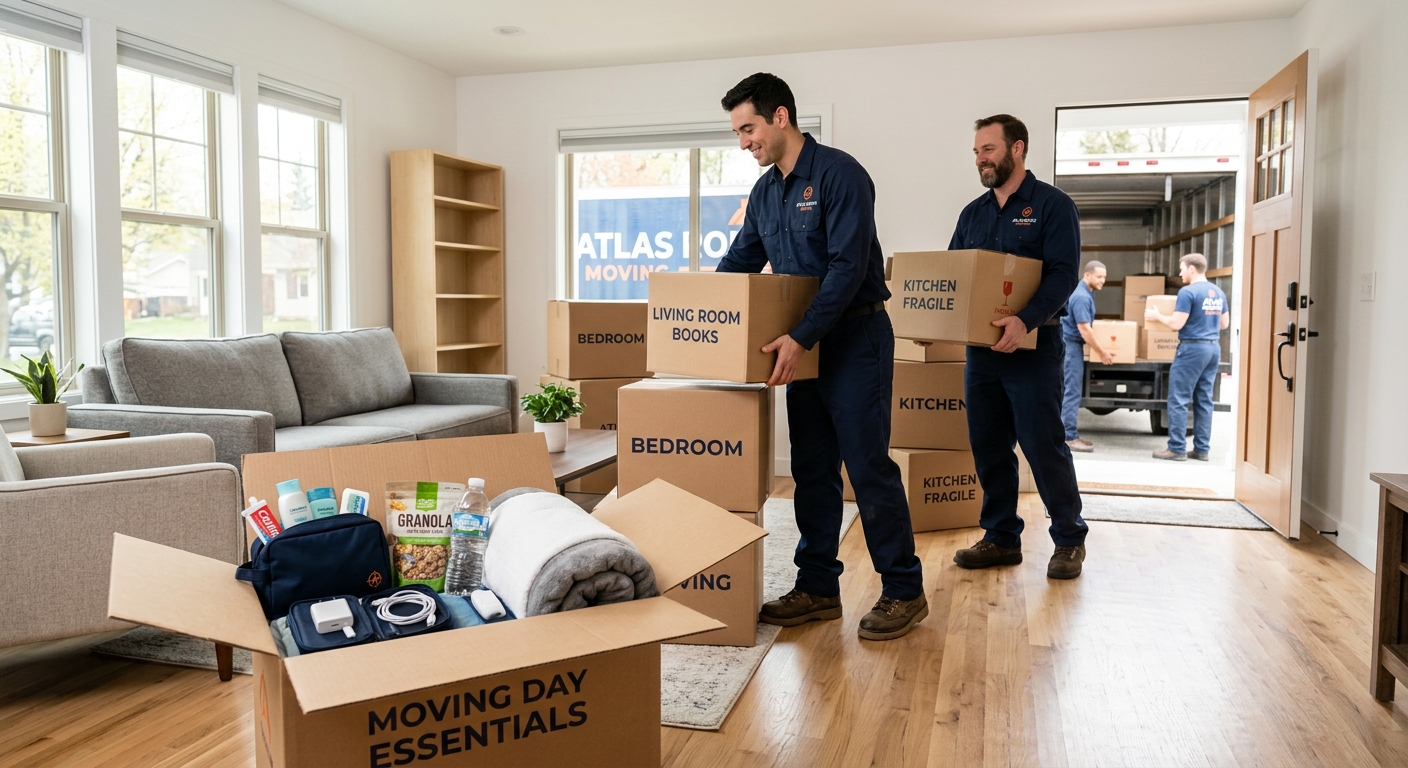
By the time moving day arrives, most people have the same realization: the items they need most are buried at the back of the truck. Toothbrushes, phone chargers, bed sheets, coffee, kids’ pajamas, pet food, basic tools – all packed away in identical boxes.
A well-planned moving essentials box (sometimes called a first-night box, open first box, or moving day survival kit) solves this problem. Instead of digging through dozens of cartons when you are tired and overwhelmed, you simply open one or two clearly labeled boxes and have everything you need to get through the first 24–48 hours comfortably.
This guide from Atlas Route Moving walks you through how to plan, pack, label, and use a moving essentials box for your household. We will cover room-by-room checklists, how many essentials boxes you really need, how to separate what rides with you vs. with the movers, and how our professional team can help make the process easier.
Whether you are moving across town or across state lines, a thoughtful moving essentials box makes your first night feel less like chaos and more like a soft landing.
Key takeaways
- A moving essentials box is a clearly labeled «open first» box (or set of boxes) that keeps 24–48 hours of must-have items easy to reach on moving day.
- Plan essentials room by room: bedroom, bathroom, kitchen, kids, pets, work, and tools, so you do not forget small but critical items like chargers or medications.
- Most households need 1–3 shared essentials boxes plus a personal first-night bag for each family member.
- Pack and seal your moving day survival kit 2–5 days before moving, then keep it separate from regular boxes so the crew does not load it by mistake.
- Label the boxes clearly on all sides with phrases like «OPEN FIRST» and communicate this to your movers so they load them last and unload them first.
- Important documents, jewelry, medications, and high-value electronics should ride with you, not in the moving truck.
- Professional movers like Atlas Route Moving can help you organize, pack, label, and prioritize essentials as part of our packing and moving services.
What is a moving essentials box?
A moving essentials box is a container specifically packed with the items you will need right away at your new home, before you start fully unpacking. Think of it as your household’s first-night kit or moving day survival kit.
Instead of packing these things with the rest of your belongings, you intentionally group them into a small number of easily identifiable boxes or bins labeled «OPEN FIRST.» This simple step can save hours of searching through cartons when you just want a shower, a snack, and your bed assembled.
Typical goals of a moving essentials box
- Help everyone sleep comfortably the first night (bedding, pajamas, nightlights).
- Allow basic hygiene without hunting for products (toiletries, towels, toilet paper).
- Keep phones and devices powered (chargers, power strips, extension cords).
- Provide quick meals and snacks while the kitchen is still packed.
- Give you basic tools for furniture and minor fixes.
- Keep pets and kids calm with familiar items.
- Keep critical documents and valuables close at hand.
Think of your moving essentials box as what you would pack for a short hotel stay – plus a few extra items to set up a functioning home base.
Why your moving essentials box matters
Many people underestimate how exhausting moving day can be. Even with a smooth, well-organized move, by the time the last box comes off the truck you may be low on energy, patience, and daylight. An organized moving essentials box removes friction from that moment.
How a good essentials box improves your first 24 hours
- Less stress at the end of a long day. You know exactly where pajamas, soap, and sheets are – no frantic unpacking.
- Faster setup of key spaces. With tools, hardware, and cleaning supplies handy, you can make bedrooms and bathrooms usable right away.
- Better sleep and recovery. Having your own pillows, blankets, and basic comforts ready helps you recover faster after the move.
- Less clutter. You focus on essentials first instead of opening many boxes you are not ready to deal with.
- Happier kids and pets. Favorite toys, snacks, and routines make a huge difference in how smoothly they adjust.
Stress, timing, and access
Access is the biggest issue on moving day. Even when you know a certain box contains important items, it may be at the back of the truck or buried behind furniture in a new room.
By clearly marking and separating your moving essentials box from the rest, you control access. You can choose to keep it in your vehicle, ask movers to load it last and unload it first, or designate a specific corner in the new home for essentials only.
How many essentials boxes do you need?
The right number of essentials boxes depends on your household size, move distance, and how quickly you plan to unpack. For most homes, one big box is not enough and ten is too many.
General guidelines
| Household type | Suggested essentials boxes | Notes |
|---|---|---|
| Single person / studio | 1 shared essentials box + 1 personal bag | Combine kitchen, bathroom, and bedding into one box if possible. |
| Couple / 1–2 bedroom | 2–3 shared essentials boxes + 1 bag each | Usually best to have one box for bathroom/cleaning, one for kitchen/snacks, and one for tools/tech. |
| Family with kids or pets | 3–5 shared essentials boxes + 1 bag per person | Consider separate small bins for kids and pets so their items are easy to grab. |
It is usually better to have a few well-organized essentials boxes than one oversized carton that is too heavy and cluttered. Aim to keep each box a manageable weight so you can easily carry it yourself.
Types of essentials containers
- Sturdy cardboard boxes (3.0–4.5 cubic feet) labeled «OPEN FIRST».
- Clear plastic bins with lids so you can see contents quickly.
- Suitcases or duffel bags for clothes, bedding, and personal items.
- Backpacks for kids’ and personal work items.
Label each container by function, for example: «Bathroom Essentials,» «Kitchen & Snacks,» or «Tools & Tech – Open First.»
When to pack your first-night kit
Timing matters. Pack your moving essentials box too early and you will constantly dig into it; pack it too late and it will get mixed into general boxes.
Suggested timeline for packing a moving essentials box
| Time before move | What to do | Why it helps |
|---|---|---|
| 2–3 weeks out | Create your essentials checklist for each room and each person. | You will be less likely to forget small but important items like nightlights or a can opener. |
| 1 week out | Set aside a dedicated space (table or counter) and place essentials there as you come across them. | Keeps essentials from accidentally getting packed into regular boxes. |
| 2–5 days out | Pack, label, and tape up your shared moving essentials box and first-night kit. | Gives you time to double-check your list and make last-minute additions. |
| 1 day out | Pack personal overnight bags with clothes, medications, and daily-use items. | Ensures nothing essential gets put on the truck on moving day. |
Once your moving essentials box is sealed and labeled, move it to an area clearly marked «Do Not Load» or place it directly in your vehicle so it does not get mixed into the truck.
Room-by-room moving essentials checklist
Packing by room is the easiest way to build a complete moving day survival kit. Use the lists below as a starting point and customize for your household.
Bedroom essentials
Your goal in the bedroom is simple: make sure everyone can sleep comfortably the first night, even if the rest of the house is still in boxes.
- Sheets for each bed (fitted and flat)
- Pillows and pillowcases
- Blankets or comforters
- Sleepwear for each person
- A change of clothes for the next day
- Small alarm clock (if you do not rely on your phone)
- Nightlights, especially for kids
- Window covering solution (temporary paper shades or a sheet and tape if needed)
If your beds will be disassembled, put any special tools or hardware for reassembly (Allen keys, specific bolts) in a clearly labeled bag and place it into your moving essentials box.
Bathroom essentials
The bathroom is usually the first room people want functioning. Include enough for at least one full day, ideally two.
- Toilet paper (at least 2–3 rolls)
- Hand soap and body soap
- Shampoo and conditioner (travel bottles are fine)
- Toothbrushes and toothpaste
- Face wash and moisturizer
- Razor and shaving cream (if used daily)
- Deodorant
- Hairbrushes/combs and hair ties
- Makeup basics and remover wipes (if needed)
- Bath towels and hand towels for each person
- Shower curtain and rings (if your new place needs one)
- Bath mat or small towel for the floor
- Basic first aid kit (bandages, pain reliever, any prescription medications)
For more detailed bathroom packing, you can also review the dedicated guide on how to pack a bathroom on the Atlas Route Moving blog, then select just the first-day items for your moving essentials box.
Kitchen and food essentials
Even if you plan to order takeout on moving day, you will still want access to some basic kitchen items and snacks.
- Disposable plates, bowls, cups, and utensils (enough for 1–2 days)
- A couple of real mugs if you prefer
- Dish soap and a sponge
- Dish towel and a roll of paper towels
- Trash bags
- Can opener
- Basic knife (with protective cover), cutting board
- Salt, pepper, and a small selection of favorite seasonings
- Coffee, tea, sugar, creamer
- Electric kettle or small coffee maker (if important to you)
- Nonperishable snacks like granola bars, nuts, crackers
- Easy-to-make breakfast items (instant oatmeal, cereal)
- Water bottles or a water filter pitcher if needed for the new place
Kids essentials
Moves are a big change for kids. A dedicated open first box for them helps keep routines stable.
- Favorite stuffed animals or comfort objects
- Bedtime books or stories
- Pajamas and a change of clothes
- Snacks and kid-friendly cups/plates
- Diapers, wipes, and diaper ointment (for little ones)
- Small selection of toys or games
- Nightlights or white noise machine if they use one
- Any specific blanket or pillow they associate with sleep
You might say to your child, «This is your special open first box. When we get to the new house, this is the very first box we open together.» That simple framing can make the move feel more secure.
Pet essentials
Pets can get anxious with all the new smells and sights. Keep their moving essentials easy to access.
- Food for 1–3 days in a sealed container
- Food and water bowls
- Leash, collar, and ID tags
- Litter box and litter (for cats)
- Waste bags (for dogs)
- Favorite toys and blanket/bed
- Any medications or supplements
- Copies of vet records if you are moving long distance
Work, tech, and charging essentials
If you work from home or need to be reachable shortly after the move, prioritize your tech in the moving essentials box.
- Phone chargers (at least one per device)
- Laptop, charger, and mouse
- Power strips and extension cords
- Portable battery pack
- Wi-Fi router and modem (label wires clearly when disconnecting)
- Headphones or headset
- Basic office supplies (pens, notepad, tape, scissors)
Tools and setup essentials
These items will help you assemble furniture, hang curtains, and handle quick household fixes.
- Box cutter or scissors
- Small toolkit (screwdrivers, pliers, adjustable wrench)
- Allen key set (for furniture)
- Hammer and a small bag of nails/hooks
- Measuring tape
- Painters tape (for temporary labels and notes)
- Flashlight or headlamp with fresh batteries
- Basic cleaning supplies (multi-surface cleaner, disinfecting wipes)
- Gloves and a few extra rags
Important documents and valuables
These items are critical and should usually travel with you, not in the moving truck, even if you consider them part of your moving essentials.
- Wallet, IDs, and driver’s licenses
- Passports and birth certificates
- Moving paperwork (estimates, contracts, inventory, contact information for your mover)
- Lease or home purchase documents
- Insurance policies and contact numbers
- Checkbook or emergency credit card
- Spare keys, garage door opener, and any access cards
- Small valuables and sentimental items (jewelry, heirlooms, irreplaceable photos)
Keep these together in a secure folder, document organizer, or small lockbox that stays with you at all times.
Essentials kits for each family member
In addition to shared boxes, it is smart for each person to have a personal bag or «mini moving essentials box» with items they use daily.
What to include in personal first-night bags
- 2–3 days of clothing and underwear
- Basic toiletries (toothbrush, travel-size toothpaste, deodorant, contacts/solution)
- Medications and supplements
- Phone and charger
- Glasses, contacts, or hearing aids
- Small comfort items (book, earbuds, favorite snack)
- For kids: a stuffed animal, a small toy, and pajamas
A helpful rule: if you would be upset not having it for a couple of days, it goes in your personal bag, not the moving truck.
Coordinating shared and personal kits
Use the shared moving essentials box for household-level items (tools, cleaning supplies, kitchen basics) and personal bags for daily use items. This approach keeps your essentials organized and avoids overloading any single box.
Labeling, color-coding, and access tips
How you label and handle your moving essentials box is just as important as what goes into it. Clear labeling and good communication help you, your family, and your movers treat these boxes differently from regular cartons.
Labeling your moving essentials box
- Write «OPEN FIRST» or «ESSENTIALS» in large, bold letters on all four sides and the top of each box.
- Use a bright marker color (orange, red, or neon) so it stands out from regular labels.
- Include your name and room (for example: «Smith – Bathroom Essentials – OPEN FIRST»).
- List 4–5 of the most crucial items on the outside («Sheets, Towels, Toiletries, TP, Tools»).
Using color-coding
Color-coding can make it even easier to find your moving day survival kit.
- Use brightly colored tape just for essentials boxes.
- Assign a color to each room and add a special pattern for essentials (for example, blue tape for kitchen boxes, blue tape with an orange X for kitchen essentials).
- Use matching colored sticky notes on doors in the new home so boxes get placed in the right room.
Access and placement strategy
| Access option | Pros | Considerations |
|---|---|---|
| Keep essentials box in your vehicle | Maximum control; you always know where it is; ideal for important documents and medications. | Limited space; heavier boxes might be harder to handle yourself. |
| Have movers load it last and unload first | Stays with your shipment while remaining easy to reach at the new home. | Requires clear communication with your moving crew and very obvious labeling. |
| Designated «essentials corner» at new home | All open first boxes are placed together in one spot for easy access. | Make sure everyone knows not to stack heavy furniture on top of this area. |
Talk with your movers at the start of the day so they know which boxes make up your moving essentials and how you want them handled.
What should ride with you vs. the movers
Some moving essentials are simply too important or sensitive to go on the truck. Use this guideline to decide what stays with you.
Items that should stay with you
- Important documents (IDs, passports, financial records, moving paperwork)
- Medications and medical devices
- Small valuables and sentimental items (jewelry, heirlooms, irreplaceable photos)
- Electronics you cannot easily replace (laptop, work devices, external hard drives)
- Personal overnight bags for each family member
- Pet essentials and carriers
- Basic cleaning supplies if you plan to clean before movers arrive
Items that can safely go with the movers
- Larger tools and toolboxes
- Bulk paper goods and extra toiletries
- Most kitchen items (pots, pans, dishes)
- Additional bedding and towels beyond the first set
- Decor, extra clothes, books, and nonessential items
If you are using professional packing services, let the crew know ahead of time which categories you plan to keep with you so they can leave those items out of regular cartons.
Common moving essentials mistakes to avoid
Even organized movers sometimes overlook key details when building a moving essentials box. Being aware of these common mistakes can save you frustration later.
| Common mistake | What happens | Better approach |
|---|---|---|
| Packing essentials too early and using them daily | Box gets constantly opened; items get scattered; some end up in regular boxes. | Stage essentials on a shelf first; formally pack and seal 2–5 days before moving. |
| Letting movers load the essentials box by accident | Essentials might end up at the back of the truck or mixed into a different room. | Clearly mark «Do Not Load» area or keep essentials in your vehicle from the start. |
| Forgetting chargers, cables, or power strips | Devices die; you cannot work, navigate, or contact people easily. | Create a specific «Tech Essentials» sub-list and pack it last into the moving essentials box. |
| Packing too much in one huge, heavy box | Box is hard to move; items get jumbled; more difficult to find things quickly. | Use 2–3 medium boxes grouped by room or category instead of one oversized carton. |
Other frequently overlooked items include:
- Toilet paper and paper towels
- Trash bags
- Nightlights
- Pet food and litter
- Basic cleaning spray and a sponge
- Small amount of cash for tips or emergencies
Before you tape up your moving essentials box, do a quick mental walkthrough of your usual night and morning routines to catch anything missing.
How Atlas Route Moving can help with essentials
Planning a moving essentials box adds one more task to a long to-do list. Atlas Route Moving can lighten that load in several ways while keeping you in control of what matters most.
Professional packing that respects your moving essentials
If you choose professional packing support, our crews can:
- Help you identify what belongs in your moving essentials box vs. general packing.
- Set aside an «essentials staging area» while we pack the rest of your home.
- Pack a clearly labeled moving essentials box or first-night kit at your direction.
- Make sure open first boxes are loaded last and unloaded first, according to your instructions.
To see how packing help fits into your move, explore our packing services options. We can handle everything from full-house packing to just a few key rooms you want done quickly and correctly.
Coordinating essentials with other moving services
Because Atlas Route Moving offers local and long-distance moving, storage, and packing services, we can help you build a plan where your essentials box works with the rest of your move strategy. For example:
- Keeping essential seasonal items accessible if part of your shipment goes into short-term storage.
- Separating boxes that need climate control from those that can go into regular storage.
- Ensuring senior family members have simple, easy access to medications, mobility aids, and comfort items on arrival.
Helpful Atlas Route Moving services
Building your essentials plan with our team
During your estimate, you can walk our move consultant through your priorities for your moving essentials box. We can note:
- Which boxes or bins are designated as open first.
- Which items must travel only with you.
- Any medical, work, or pet-related timing needs.
- How quickly you want bedrooms and bathrooms set up on move-in day.
We can then share those notes with your moving crew so everyone is on the same page.
CTA: Planning your essentials with Atlas Route Moving
If you are still building your moving plan, the team at Atlas Route Moving can help you fit your moving essentials box into a larger, organized strategy. Review our full range of moving services, explore your service areas, and use the moving cost calculator to start budgeting. When you are ready, you can request a free moving quote and talk through the details with our team.
Related moving guides
Frequently asked questions
How early should I pack my moving essentials box?
Most people do best packing their moving essentials box 2–5 days before moving day. That gives you enough time to gather everything without constantly opening the box. Until then, stage items in a dedicated area so they do not get packed with regular boxes.
What is the difference between a moving essentials box and a first-night box?
They are usually the same idea. Some people say moving essentials box, first night box moving, open first box, or moving day survival kit. All refer to a small set of clearly labeled containers that hold the items you need during your first 24–48 hours in your new home.
Can I have more than one moving essentials box?
Yes. In fact, most households are more comfortable with two or three medium boxes instead of one large one. You might have separate boxes for bathroom supplies, kitchen and snacks, and tools/tech, plus a personal overnight bag for each family member.
What size box is best for moving essentials?
Medium-size cartons or clear plastic bins work well for a moving essentials box. They are large enough to hold bedding and towels but not so heavy that they are difficult to carry. Avoid overpacking one oversized box that is hard to move and organize.
Should my moving essentials box go on the truck?
It depends on what is inside. Items like documents, medications, and valuables should ride with you. Shared items such as paper goods, towels, and simple tools can go on the truck if they are clearly labeled and loaded last/unloaded first. Many people choose to keep at least one small essentials box in their own vehicle for peace of mind.
What should I never put in a moving essentials box on the truck?
Do not place passports, IDs, financial records, prescription medications, high-value electronics, cash, or jewelry into a moving essentials box that will be loaded onto the truck. Keep these in a personal bag that never leaves your control during the move.
How do I keep movers from loading my essentials box by mistake?
First, clearly label it on all sides with «OPEN FIRST» and consider using bright tape. Second, tell your crew at the start of the day which boxes are your moving essentials and whether they should be left out or loaded last. You can also place essentials in a separate room or directly in your vehicle before movers arrive.
Can Atlas Route Moving help me pack my essentials box?
Yes, our team can help you identify and set aside items for your moving essentials box while we handle the rest of your packing. With your direction, we can pack and label an open first box, keep it separate from the main load, or load it last so you can access it quickly at your new home.
Do I need a separate essentials box if I am moving locally?
Even for local moves, a moving essentials box is extremely helpful. You may not feel like unpacking right away after a full day of moving. Having toiletries, a change of clothes, basic food, and bedding in one place makes your first night smoother, whether you moved across town or across the country.
How can I make sure I do not forget anything for my essentials box?
Use a written checklist and do a mental run-through of your evening and morning routines. Ask each family member what they must have those first two days. You can also keep a notepad on the counter for a week before you move and write down any item you reach for daily; most of those belong in your moving essentials or personal bag.
Sources referenced in this guide
This guide is based on Atlas Route Moving field experience plus general consumer recommendations from:
- Federal Motor Carrier Safety Administration consumer guidance on planning household moves
- U.S. Department of Transportation moving and relocation guidance
- State transportation and consumer protection agency recommendations on planning household moves
- Typical building management move-in and move-out requirements for apartments and condos
- Common moving company written estimates, bills of lading, and service agreements
This guide is general moving information, not legal, insurance, or regulatory advice. Moving requirements, pricing, access rules, and coverage options may vary by location, move type, building rules, and service agreement.